Mars Odyssey Team Marks 25 Years With Unveiling of New Global Map
A giant map generated by the THEMIS infrared camera was displayed during the anniversary event at the Jet Propulsion Laboratory in Southern California.
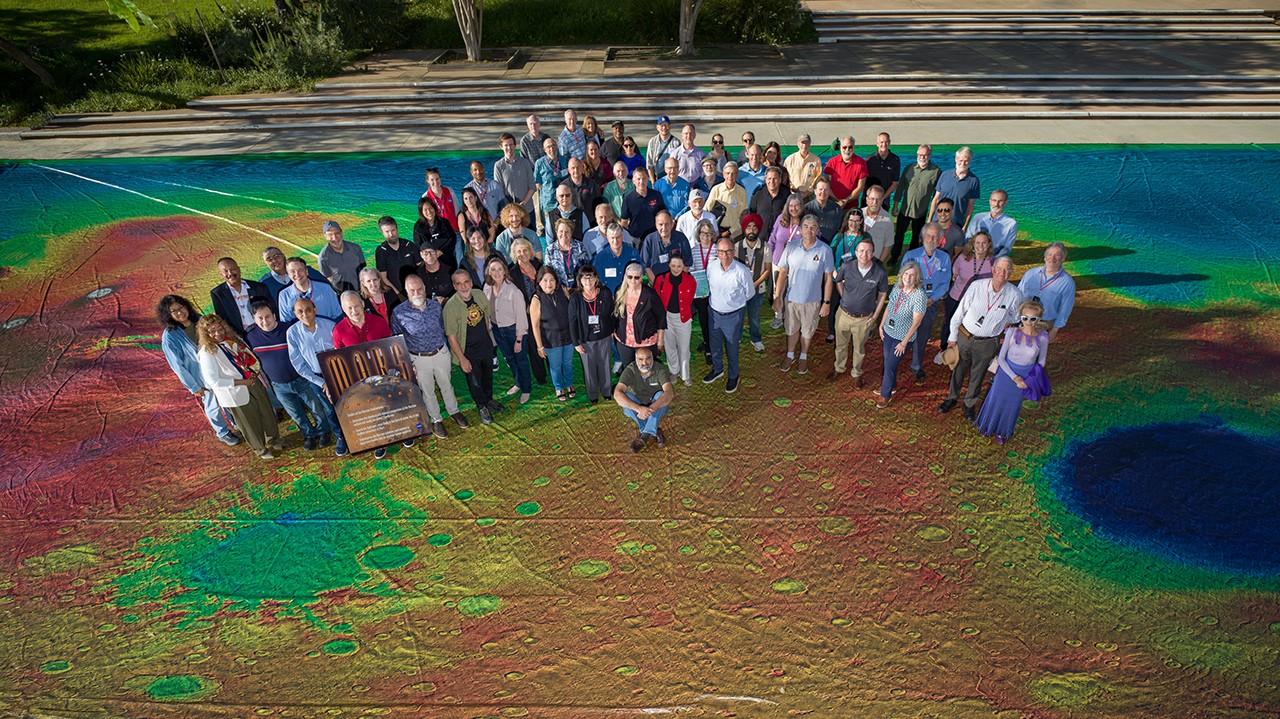
Past and present members of the NASA 2001 Mars Odyssey orbiter mission gathered on 15 April 2026 to commemorate a significant milestone: the 25th anniversary of the spacecraft's launch. The celebration took place at the Jet Propulsion Laboratory (JPL) in Southern California, the facility that leads the long-running exploration effort.
During the event, the team unveiled a giant global map of Mars created specifically for the occasion. This visual representation was generated using imagery captured by the mission's Thermal Emission Imaging System, or THEMIS, infrared camera. The map serves as a tangible record of the data collected over the last quarter-century since the orbiter arrived at the Martian surface.
The gathering brought together individuals who have worked on the mission throughout its history, bridging the gap between the original launch team and current researchers. This convergence of past and present personnel highlighted the enduring legacy of the project that began on 7 April 2001.
JPL continues to manage the mission, ensuring that the data returned by Odyssey remains accessible for scientific study. The unveiling of the new map underscores the laboratory's commitment to preserving and communicating the visual history of Mars exploration to the global community.
The event marked a quiet but significant moment in planetary science, focusing on the accumulation of knowledge rather than new hardware deployment. By celebrating the longevity of the mission, the team acknowledged the sustained effort required to maintain such a successful observatory in deep space.