Mali's military leader assumes defence portfolio following minister's assassination
State television reports presidential decree formalises the shift as General Oumar Diarra is appointed delegate minister amid escalating conflict in the north
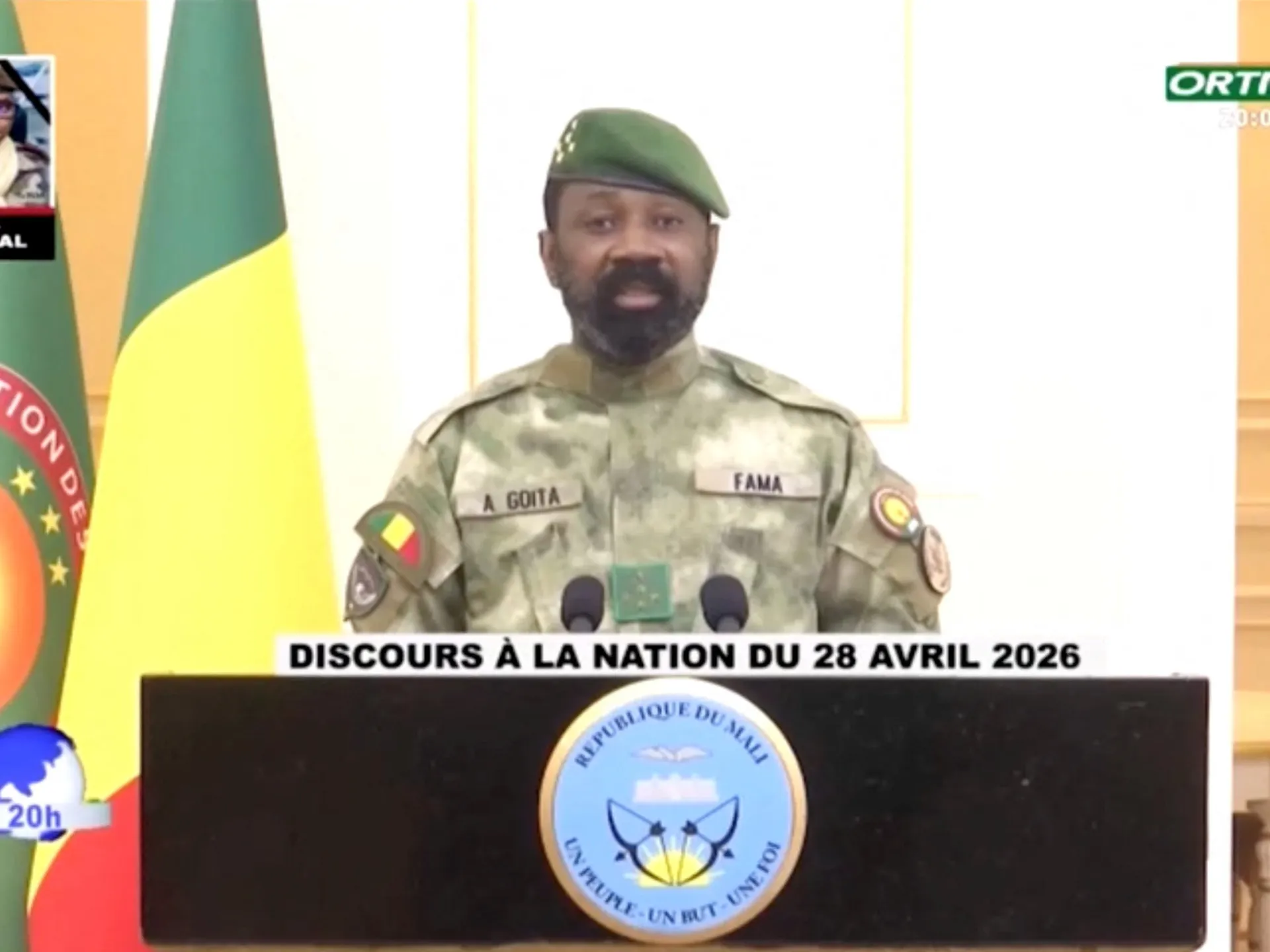
Mali's military leader, Assimi Goita, has formally assumed the role of defence minister following the assassination of the previous minister, Sadio Camara. This structural shift within the security apparatus was confirmed by state television channel ORTM on Monday, which reported that Goita issued a presidential decree to retain his position as president while simultaneously taking on the defence portfolio. The move consolidates executive and defence authority in the hands of the head of the military government.
The reorganisation comes in the wake of a series of large-scale attacks by al-Qaeda-linked groups and Tuareg separatists last week. During the assault, Camara was killed in a car bomb blast at his residence, an event that precipitated the immediate vacancy in the defence ministry. State media noted that the attacks were carried out by armed factions working in tandem, specifically targeting strongholds of the military government.
In response to the leadership vacuum, General Oumar Diarra, the former military chief of staff, has been appointed as the delegate minister to the defence ministry. This appointment ensures continuity in the administration of the portfolio while the central government manages the fallout from the violence. Diarra's role as delegate minister is intended to oversee the ministry's functions during this period of heightened instability.
The security crisis that led to these developments has seen rebel groups capture the northern town of Kidal, marking the largest attack in the West African country in nearly 15 years. The fighting resulted in at least 23 deaths, with the United Nations children's agency UNICEF reporting that civilians and children were among the casualties. The capture of Kidal represents a significant territorial gain for the insurgents in the north.
Mali's current military government, led by Goita since coups in 2020 and 2021, operates in a complex security environment where al-Qaeda-linked Jama'at Nusrat al-Islam wal-Muslimin (JNIM) and Tuareg separatists control significant rural territory. The government has expelled French forces and UN peacekeeping missions, relying instead on Russian mercenaries, previously the Wagner Group and now the Africa Corps, to aid Malian forces against the armed groups.
Recent reports indicate that the rebels have announced a partial blockade of the capital, Bamako, in retaliation for civilian support of the army. While the blockade has only been partially effective according to correspondent reports, the ongoing combat in areas such as Bamako, Kati, Gao, and Sevare underscores the severity of the situation. Goita was granted a five-year renewable presidential mandate last July without an election, a move that has been central to the current administration's strategy to restore security.