Mali's military government faces existential crisis as rival armed groups capture Kidal and kill defence minister
Coordinated assaults across the nation have resulted in the death of Defence Minister Sadio Camara and the fall of the northern stronghold of Kidal, prompting two days of national mourning
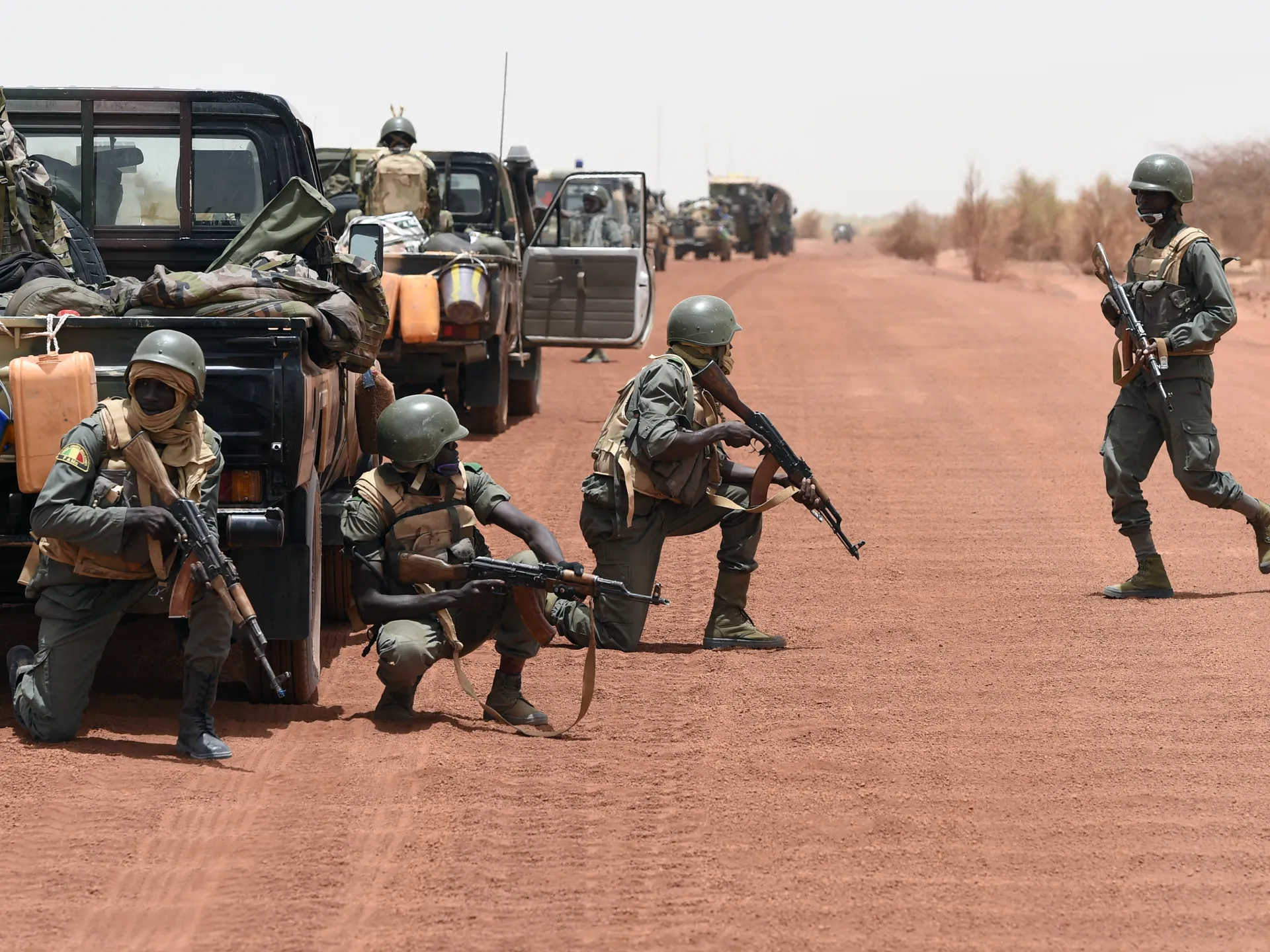
Rival armed groups have launched a coordinated offensive across Mali, resulting in the confirmed death of Defence Minister Sadio Camara and the capture of the northern city of Kidal. The attacks, which began on Saturday, 27 April 2026, were executed by Jama'at Nusrat al-Islam wal-Muslimin (JNIM) and the Azawad Liberation Front (FLA), exposing critical weaknesses in the security infrastructure of the military-ruled state. While the Malian army had previously described perpetrators as unidentified terrorist groups, JNIM has now explicitly claimed responsibility for the nationwide assaults, including strikes on military sites in the capital, Bamako.
The scale of the violence suggests a systemic failure in the government's ability to secure its territory. Analysts note that the groups managed to reach Kati, the residential hub for the President and key ministers, demonstrating that the centre of power remains exposed. The military government of Assimi Goita has declared two days of national mourning following the loss of the defence minister, a senior figure who has been instrumental in the administration's response to security tensions since the 2020 coup.
The current offensive marks a significant shift in the dynamics of the region's conflict. Historically, JNIM, an al-Qaeda-linked coalition, and the FLA, a Tuareg-dominated separatist force, have been ideological rivals with conflicting objectives. JNIM seeks to impose strict Islamic law across the country, while the FLA fights for the independence of the northern Azawad region. Despite these deep-seated differences, the two factions have set aside their differences to target the Malian state, driven by a shared enemy.
However, experts warn that this alliance is pragmatic rather than permanent. Mathias Hounkpe of the International Foundation for Electoral Systems described the cooperation as a temporary measure to secure territorial gains against the government. He noted that while the groups may stick together until they have consolidated control over regions like Kidal, their ultimate goals remain incompatible. The FLA aims to be viewed as republican forces fighting for regional autonomy, whereas JNIM utilises violence to enforce its ideological agenda.
The military regime of Assimi Goita now faces a precarious position with the withdrawal of French forces and the reluctance of Russian mercenaries to engage deeply in the conflict. Since 2023, French troops have left the country following a breakdown in relations, leaving a vacuum that Russian paramilitaries under the Africa Corps banner have filled but are hesitant to expand upon. Ulf Laessing of the Konrad Adenauer Foundation observed that Russian fighters are no longer private contractors and are wary of another defeat, leaving the Malian government largely on its own.
As the situation stabilises, the focus will shift to the government's ability to maintain citizen trust and review its strategic alliances. With the African Union, the Organisation of Islamic Cooperation, and the United States Bureau of African Affairs condemning the attacks, the military administration must decide how to communicate with its population. The collapse of Kidal, a Tuareg stronghold, and the death of the defence minister signal a severe escalation that could force the government to reconsider its reliance on foreign military support.