Mali military leader meets Russian ambassador as regime seeks stability after rebel offensive
Moscow claims Africa Corps mercenaries halted a coup attempt, though reports confirm Russian forces withdrew from Kidal
Malian military leader Assimi Goita has held his first public meeting with Russian Ambassador Igor Gromyko since coordinated rebel attacks over the weekend resulted in the death of Defence Minister Sadio Camara. The encounter, captured in photographs released by Goita's office on Tuesday, marks a significant moment for the regime as it attempts to project an image of stability following the largest offensive in nearly 15 years.
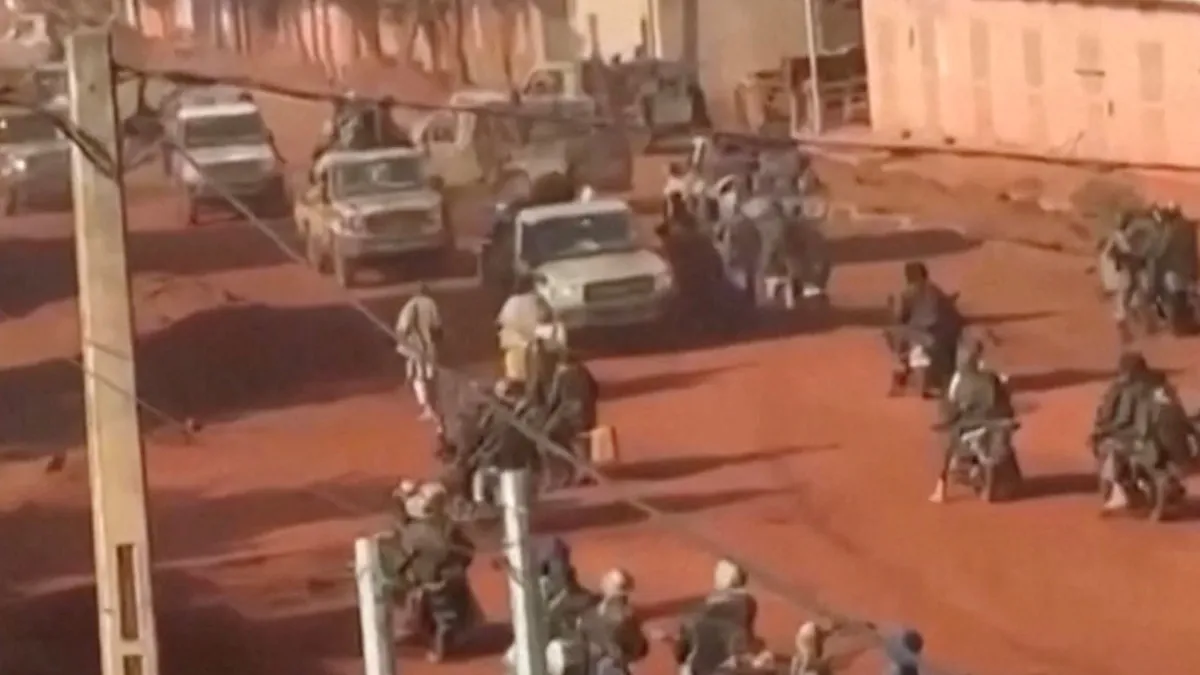
The meeting in Bamako arrives amidst conflicting narratives regarding the security situation. While the Russian Ministry of Defence issued a statement asserting that its Africa Corps mercenaries successfully halted a coup attempt and inflicted irreparable losses on enemy forces, other reports indicate that Russian paramilitary units were forced to withdraw from the northern town of Kidal. This divergence between Moscow's claims of retaining control and the reality of troop movements underscores the complexity of the ongoing conflict.
The recent assaults represented a rare and dangerous coordination between Tuareg separatists of the Azawad Liberation Front and al-Qaeda affiliates known as JNIM. These groups targeted military positions across Bamako, including areas near Modibo Keïta International Airport, as well as locations in Kati, Gao, and Sevare. The scale of the operation demonstrated an unprecedented ability to unify fighters with differing objectives to strike at the heart of the military government.
During the attacks, Defence Minister Sadio Camara was killed, leaving a power vacuum that the regime has sought to fill through diplomatic engagement with Moscow. Goita's office released images of his meeting with Ambassador Gromyko, a move analysts suggest is designed to reassure the public that the legitimate government retains authority and that mass civilian casualties have been prevented. The Kremlin has separately emphasised its urgent desire for peace and stability in a nation that has battled rebellion for over a decade.
Despite the diplomatic efforts, social media footage continues to emerge showing Russian mercenaries and Malian troops surrendering to the advancing armed groups. The Russian Ministry of Defence did not deny these reports but maintained that their units prevented the rebels from seizing key sites such as the presidential palace. The Kremlin has warned that the Tuareg separatists who captured Kidal are regrouping for fresh attacks, suggesting the immediate threat may not have been fully neutralised.
Since taking power in the 2021 coup, Goita's military government has relied heavily on Russian mercenaries for security support, particularly in the north. The current crisis highlights the fragility of this arrangement, as the coordinated offensive exposed vulnerabilities in the government's defensive posture. As the situation remains fluid, the focus remains on whether the regime can maintain its grip on power while reconciling Moscow's claims of victory with the on-ground reality of Russian withdrawal from key northern strongholds.