Mali Junta Grapples with Coordinated Insurgency Following Death of Defence Minister
The convergence of jihadist and Tuareg rebel groups has left the military government reeling as regional allies fail to deliver promised military support.
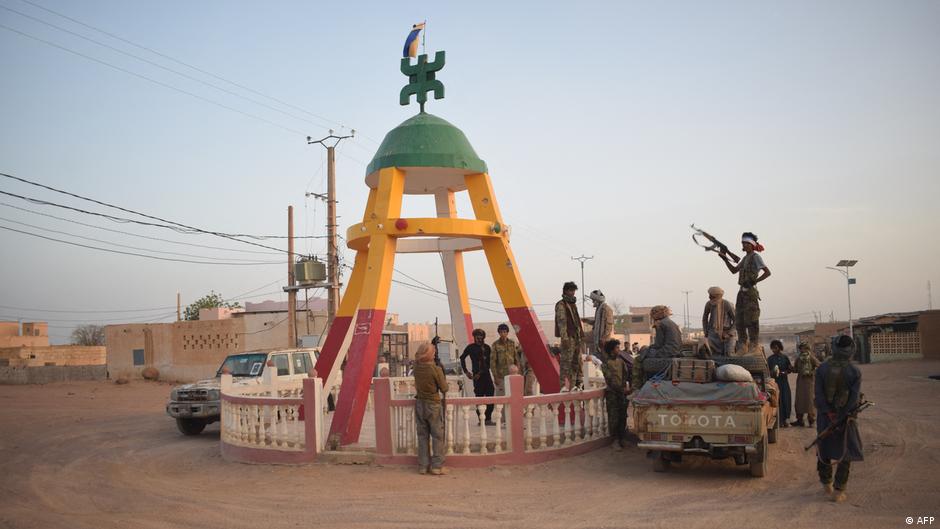
The military junta in Bamako is facing a severe governance crisis following the suicide bombing that killed Defence Minister Sadio Camara on 25 April. The attack, which occurred at the minister's residence in Kati, was part of a coordinated assault targeting five garrison towns including Kati, Bamako, Sevare, Gao, and Kidal. Responsibility for the violence was claimed by the Group for the Support of Islam and Muslims (JNIM) and the Azawad Liberation Front (FLA), marking a significant operational shift for the insurgency.
Analysts have described the simultaneous nature of the attacks as unprecedented in Mali's history, noting that military intelligence failed to detect the plot. The targeting of Camara, viewed as the second-in-command of the junta and a primary architect of relations with Russia, suggests a strategic rejection of Russian troop presence. This development has coincided with the confirmation that the Moscow-backed Africa Corps has withdrawn from Kidal following heavy fighting, reversing the momentum gained when the city was recaptured in 2023.
In response to the escalating violence, the government in Bamako has imposed a 72-hour night curfew and established roadblocks around key institutions, including police stations, the Armed Forces General Staff, and state television premises. While calm has reportedly returned to Mopti and Sevare following the recapture of specific positions by the Malian army air support, access to Kati remains severely restricted. The authorities have declared two days of national mourning and announced a state funeral for the fallen minister.
The operational success of the insurgents highlights a troubling convergence between historically rival factions. The FLA, primarily composed of Tuareg rebel independence movements seeking a breakaway state in the north, has renewed cooperation with JNIM despite past tensions where jihadists previously ousted Tuareg rebels. This alliance is driven by shared tribal backgrounds and a common enemy, allowing the groups to coordinate assaults that the Malian army has struggled to repel across its territory.
Regional stability is further compromised by the lack of concrete military assistance from the Alliance of Sahel States (AES). Although Burkina Faso and Niger have condemned the violence, they have not provided the military aid requested by the Malian government. Analysts suggest the alliance functions more as a political declaration than a practical defence mechanism, leaving Mali to manage the fallout of the insurgency largely alone.
International bodies and foreign governments have responded with condemnation and caution. The African Union and the United Nations have denounced the attacks, while Germany has urged its citizens to leave the country. Despite strong diplomatic rhetoric from the AES, the inability to translate political solidarity into operational support underscores the fragility of the current security arrangement in the Sahel region.