Macron marks historic shift in France’s reckoning with 1994 Rwanda genocide
Historian Juliette Bour says archival evidence confirms French officials received warnings of escalating violence, yet she warns that accountability remains incomplete and contested by former officials.
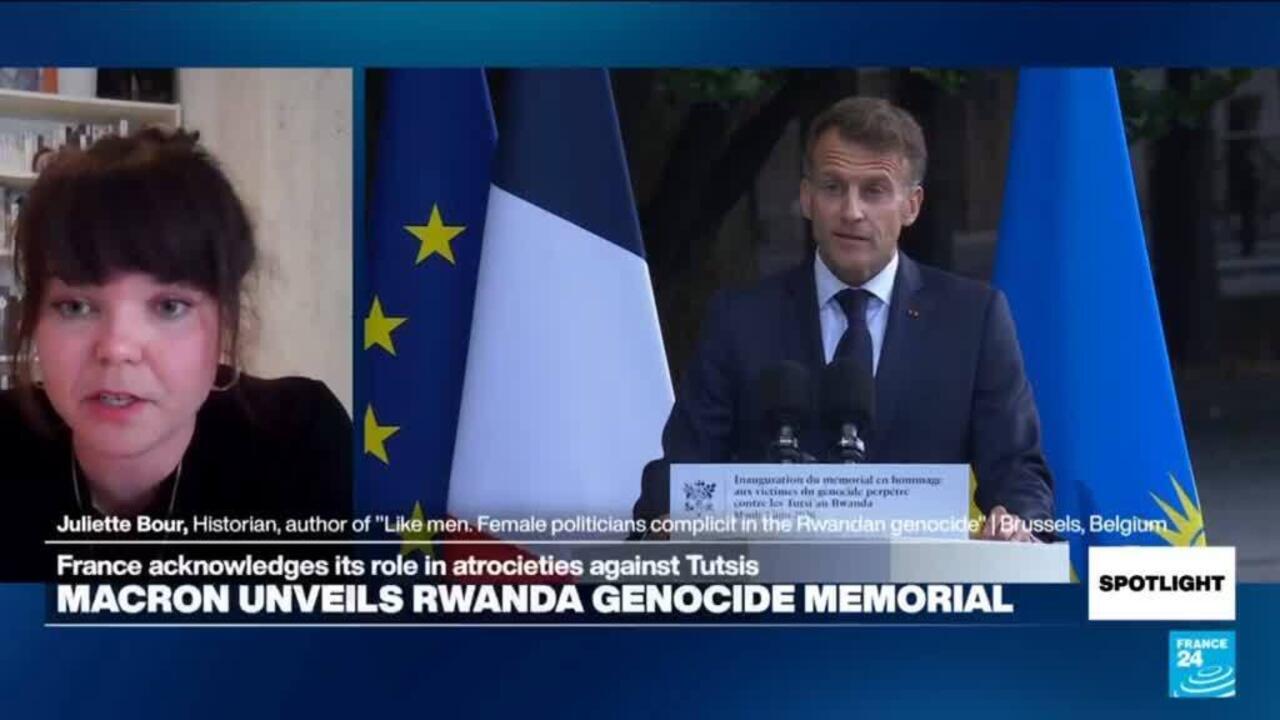
President Emmanuel Macron attended the inauguration of a memorial in Paris, marking a significant step in France’s institutional reckoning with its political, military and diplomatic role during the 1994 genocide against the Tutsi. The event underscores a shift in official posture more than three decades after the atrocities, as the state confronts long-standing questions regarding its conduct during the crisis.
Historian Juliette Bour, author of a forthcoming book examining the role of women politicians complicit in the genocide, stated that the publication of the Duclert Commission report and the opening of French archives have been pivotal in establishing the historical record. These developments have helped to clarify France’s involvement, although Bour noted that recognition of responsibility remains incomplete and is still contested by some former officials who defend decisions made in 1994.
Drawing on extensive fieldwork and archival research, Bour highlighted evidence indicating that warnings about escalating violence reached French officials prior to the onset of the genocide. This documentation challenges narratives that suggest a lack of awareness, pointing instead to a period where authorities were alerted to the deteriorating security situation before the mass killings began.
The discussion also drew a sharp contrast between France’s approach and that of its European neighbours. Bour pointed out that Belgium requested forgiveness for its role in the early 2000s, whereas France’s acknowledgment has been slower and more resistant to full admission of culpability. This divergence in diplomatic posture has remained a point of contention in the broader debate over historical accountability.
A focal point of the ongoing scrutiny is the case of Agathe Habyarimana, widow of former Rwandan President Juvénal Habyarimana, who has resided in France for decades. Bour argued that her long stay in the country is emblematic of broader failures in accountability, reflecting a policy environment that has delayed the prosecution of genocide suspects residing in France for many years.
The inauguration serves as a public milestone in a process that continues to evolve under pressure from historical truth-seeking initiatives. While the opening of archives and the release of commission reports have advanced the factual record, the political and legal mechanisms for addressing past failures remain subjects of intense debate within French governance circles.
As France continues to navigate this complex legacy, the distinction between symbolic gestures and substantive policy reform remains critical. The presence of the president at the memorial signals an official willingness to engage with the past, yet the unresolved issues surrounding accountability and the treatment of suspects indicate that the institutional reckoning is far from concluded.