Macron courts billions in AI capital as 'Choose France' summit opens
While France retains its position as Europe’s top destination for foreign direct investment, economists warn that structural challenges in traditional sectors and depressed corporate spending undermine the government’s reindustrialisation agenda.
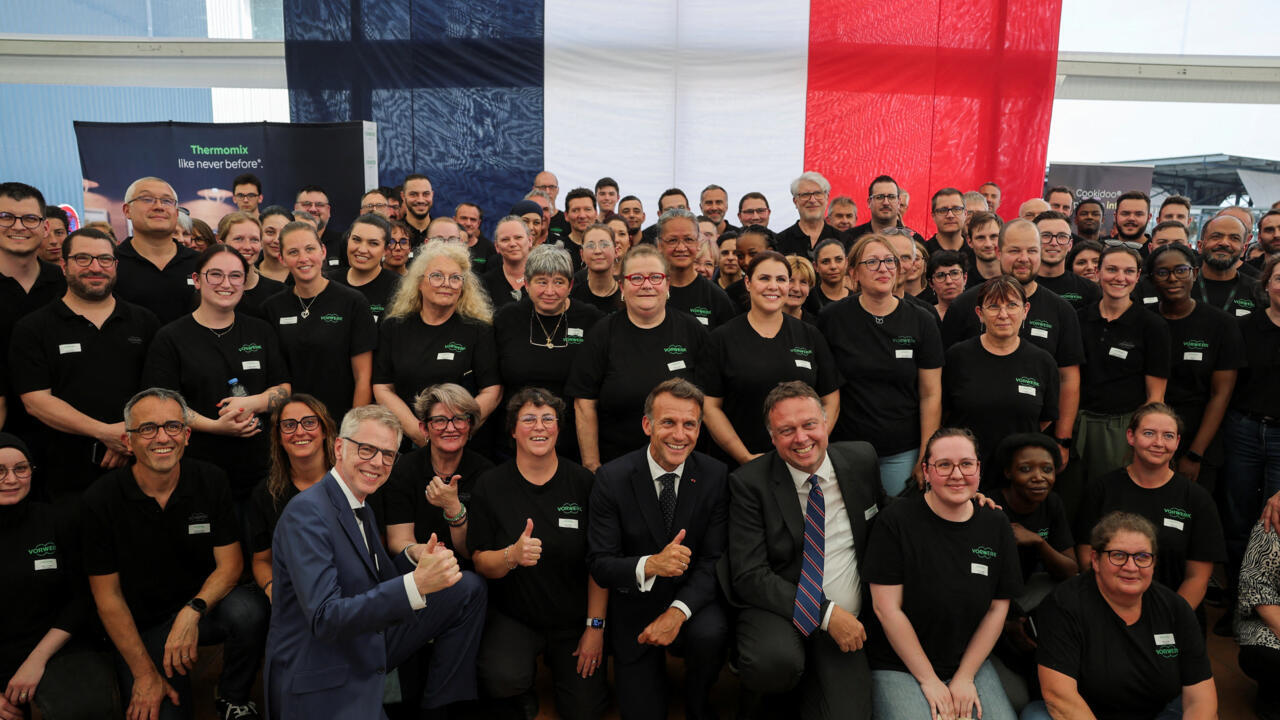
French President Emmanuel Macron opened the annual "Choose France" investment summit at Versailles Palace on Monday, welcoming approximately 200 global executives to a conference focused on securing foreign capital for artificial intelligence and data infrastructure. The event, a cornerstone of Macron’s economic diplomacy since 2018, has seen more than 230 projects announced over its history, representing roughly €87 billion in commitments and the creation of several thousand jobs, according to the Élysée Palace.
Foreign investors have already pledged significant capital for the summit, headlined by a €75 billion commitment from Japanese tech investment giant SoftBank to develop artificial intelligence infrastructure. SoftBank founder Masayoshi Son is scheduled to meet with Macron at the Élysée Palace on Monday to discuss the initiative. Additionally, Canadian asset manager Brookfield is expected to announce a $10 billion investment in a data centre in the Escaudain area of northern France, while investment firm Ardian and Nordic data platform Verne are set to invest $5 billion into a data centre in the Paris region.
Further announcements are anticipated regarding specific industrial applications, with Taiwanese group Foxconn expected to invest €120 million in Angers for a motherboard production line dedicated to AI in partnership with French supercomputer specialist Bull. The summit also serves as a platform for potential deals concerning rare earth investments, aligning with Macron’s broader strategy to position France as a world leader in advanced technologies. To support this ambition, the President has announced €1.55 billion in public investment aimed at developing quantum technologies and semiconductors.
The conference underscores France’s sustained appeal to international capital, with consultancy EY reporting that the country has attracted the most foreign investment in Europe for seven consecutive years. Last year alone, France secured 852 projects out of 5,026 recorded across 47 European nations. However, EY noted that this volume represents a 17 percent drop in activity compared to previous periods, reflecting a difficult international economic environment.
Despite these high-profile commitments, critics argue that the summit’s focus on technology masks deeper structural issues within the French economy. Economist Sylvain Bersinger cautioned that overall corporate investment in France remains depressed and that reindustrialisation efforts are more of a "pious wish than a reality." He pointed to the continued struggles in traditional industry sectors, particularly automotive, chemicals, and metallurgy, where factory closures have multiplied, suggesting that France does not necessarily appear more attractive to foreign investors than its European neighbours.