Macron and Kagame inaugurate Paris memorial marking 'quest for truth' on Rwanda genocide
French President Emmanuel Macron and Rwandan President Paul Kagame mark a milestone in historical accountability with the opening of a monument honouring the 1994 victims, while judicial probes into past complicity continue.
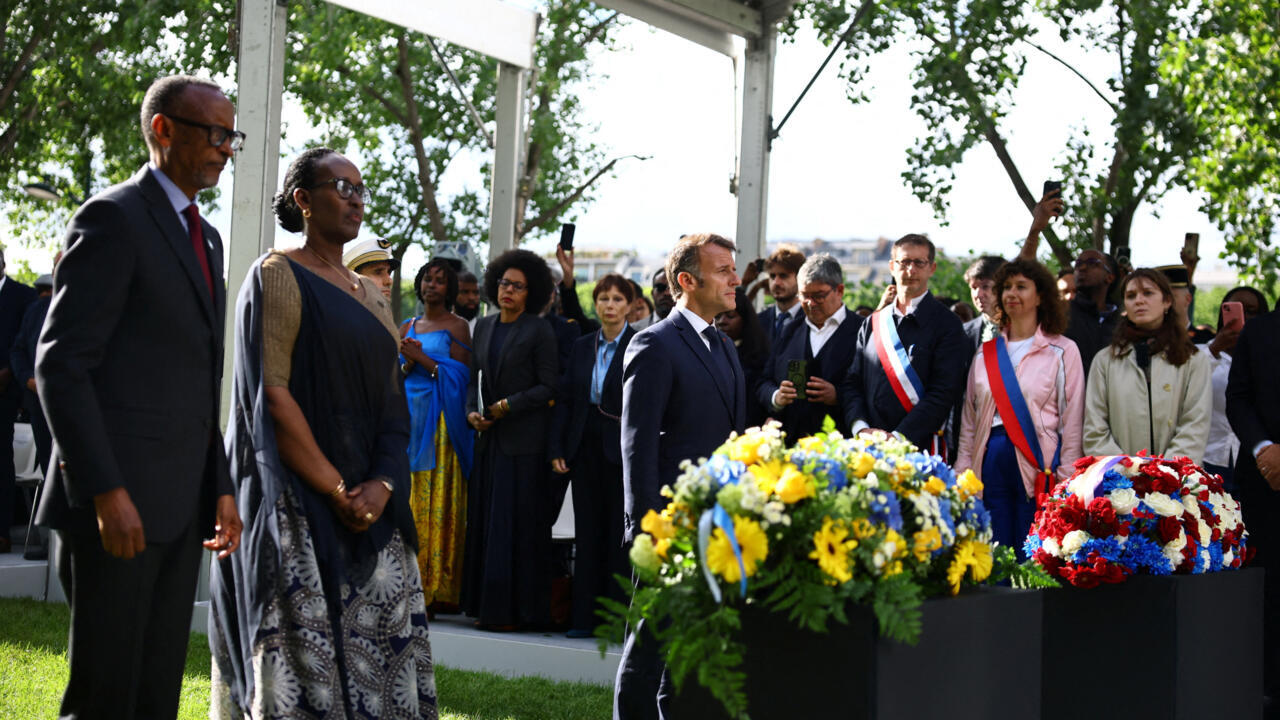
French President Emmanuel Macron and Rwandan President Paul Kagame inaugurated a memorial on the banks of the River Seine in Paris on Tuesday, honouring the victims of the 1994 genocide against the Tutsi. The event, featuring the unveiling of the monument titled 'L'Archive', was described by Macron as the culmination of a "long and patient quest for truth" regarding France's failure to heed warnings of the impending massacres more than 30 years ago.
Designed by Berlin-based Portuguese artist Grada Kilomba, the installation consists of two black brass steles bearing an engraved tribute to the hundreds of thousands of men, women and children massacred between April and July 1994. Macron hailed the occasion as evidence of an "unprecedented reconciliation" between the two nations, noting that while the monument is an achievement, it serves as a milestone on an open path rather than a final conclusion.
Kagame praised Macron’s "courage and humanity" in acknowledging France's share of responsibility for the tragedy. While noting that other nations also fell short in their response to the crisis, Kagame stated that France had gone furthest in setting the record straight. He emphasised that confronting historical responsibilities often generates fierce opposition from those with a case to answer, yet insisted on the necessity of such accountability.
The ceremony underscored the diplomatic rapprochement between Paris and Kigali, which has seen significant progress since a 2021 report by a commission led by historian Vincent Duclert. That report cited a French "failure" to act on warnings during the presidency of François Mitterrand but found no evidence of complicity in the killings. Duclert described the monument's unveiling as a "powerful" step, asserting that the genocide against the Tutsi is now fully part of France's public history.
Survivor testimony formed a central part of the proceedings, with Jeanne Uwimbabazi recounting her escape at age 16 and the "abandonment" by UN peacekeepers who left terrified Tutsis sheltering in a school surrounded by militias. Meanwhile, the legal dimension of historical accountability remains active, with French courts recently ordering the resumption of an investigation into Agathe Habyarimana, widow of former Rwandan President Juvenal Habyarimana, regarding accusations of her involvement in the genocide.