Luhansk dormitory strike triggers UN emergency session and retaliatory vows
Russia accuses Kyiv of a terrorist attack on civilians, while Ukraine maintains the strike targeted military infrastructure, prompting Moscow to demand a response from its defence ministry.
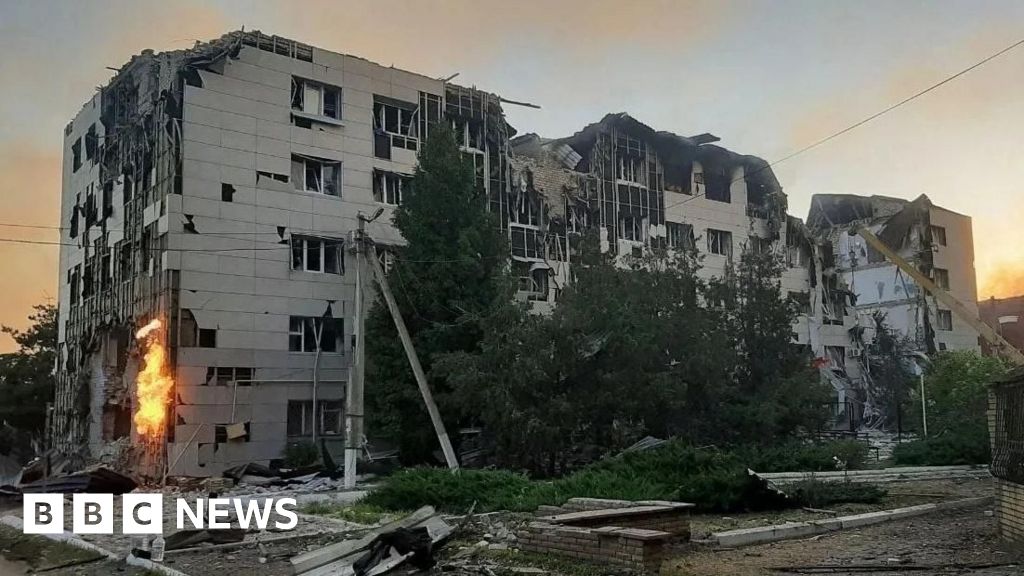
A strike on a college dormitory in Starobilsk, located in the Russian-occupied Luhansk region, has ignited a diplomatic crisis and renewed accusations of war crimes between Moscow and Kyiv. The incident, which occurred on the night of 21 to 22 May, resulted in between 18 and 21 deaths and 42 injuries, according to varying official reports. Emergency search and rescue operations were completed late on Saturday, leaving behind a scene of significant destruction that has become the focal point of intense geopolitical rhetoric.
Russian state media broadcast images of the five-storey building reduced to rubble, identifying survivors such as 21-year-old Olga Kovaleva, who was rescued from the debris. President Vladimir Putin condemned the event as a "terrorist strike," asserting that no military or intelligence facilities were present in the vicinity. He explicitly denied that Russian air defence or electronic warfare systems were responsible for the munitions striking the building, framing the incident as a deliberate attack on civilians.
In response, the General Staff of Ukraine’s Armed Forces acknowledged conducting an operation near Starobilsk during the specified timeframe but maintained that the target was a Russian military unit, not a civilian dormitory. This divergence in narratives has complicated efforts to establish a factual baseline, with casualty figures remaining inconsistent across sources, ranging from 18 to 21 fatalities.
The diplomatic fallout was immediate, with Russia convening an emergency session of the United Nations Security Council. Russian UN Ambassador Vasily Nebenyza presented photographs of the destroyed college, arguing that the attack constituted a war crime under international humanitarian law. The session drew sharp criticism from other members, including Denmark’s UN representative, who highlighted the hypocrisy of the request by citing the extensive destruction inflicted on Ukraine by Russian forces.
Amidst the diplomatic standoff, President Putin has ordered the Russian defence ministry to propose a response to the attack. The directive has emboldened pro-Kremlin commentators to call for broader retaliation. Sergey Karaganov, honorary chairman of the Council on Foreign and Defence Policy, urged the Kremlin to consider symbolic strikes against European targets, suggesting that punishment should extend beyond the immediate conflict zone.