Louisiana Senate approves new congressional map eliminating majority-Black district
Republicans aim to secure a fifth House seat by redrawing districts, a move Democrats and civil rights groups condemn as a partisan tactic masking racial discrimination.
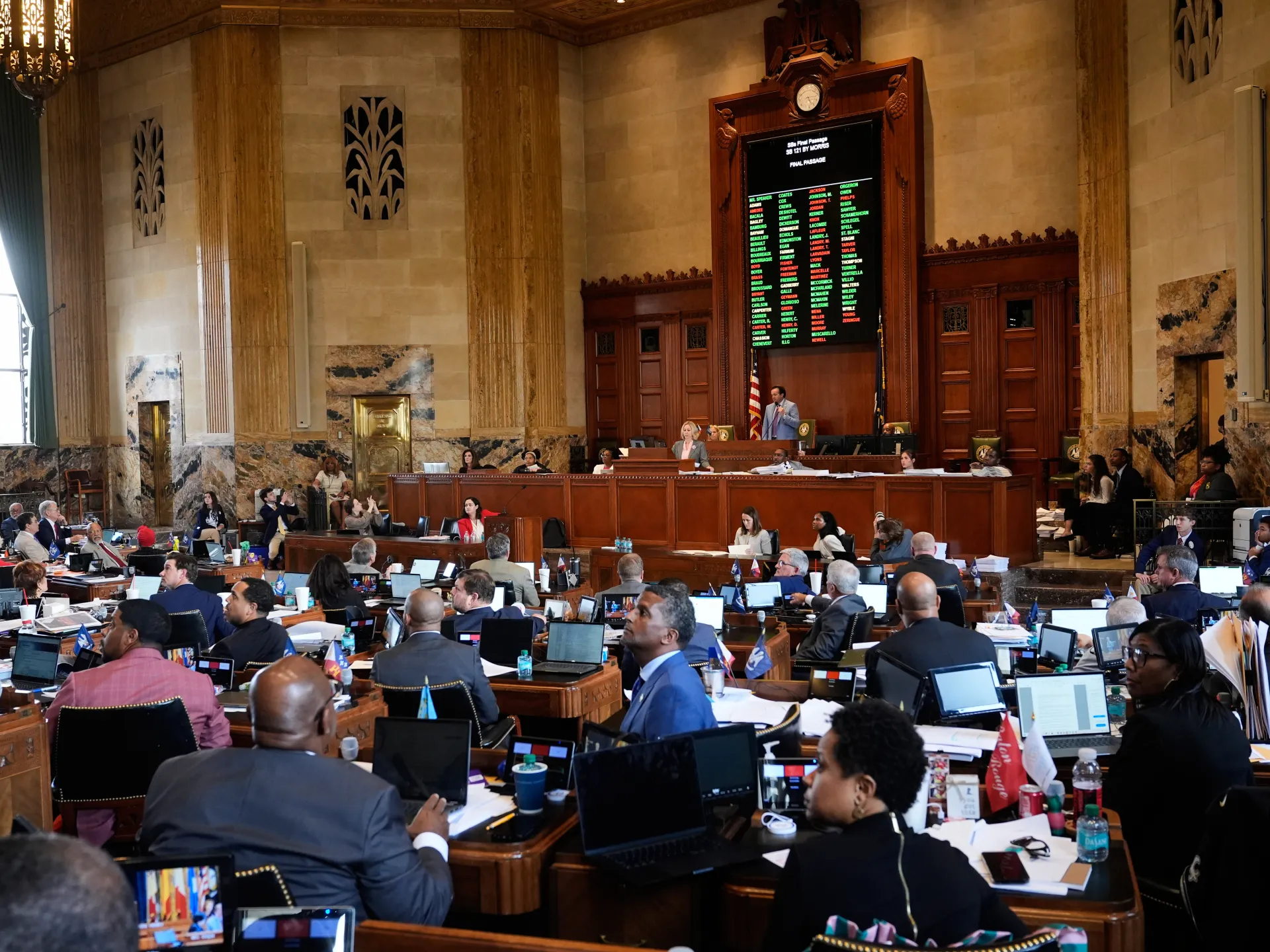
Louisiana lawmakers have passed a new congressional map designed to help Republicans gain a fifth seat in the US House of Representatives. The legislation, approved by the state Senate in a 28-to-10 vote on Friday, eliminates one of the state’s two majority-Black districts, both of which are currently represented by Democrats. The move follows an April 30 US Supreme Court ruling in *Louisiana v Callais* that struck down the previous map as an illegal racial gerrymander.
Republican Governor Jeff Landry is expected to sign the map into law. To accommodate the redistricting process, Landry had previously postponed the US House primary from May 16 to November 3. He also signed legislation converting the primary into an open election, meaning all candidates, regardless of party affiliation, will appear on the same ballot for voters in their district.
The new boundaries redraw the district currently represented by Democratic Representative Cleo Fields, clustering it around predominantly white communities in the Baton Rouge area and southern Louisiana. Conversely, part of Baton Rouge has been added to the heavily Democratic, majority-Black district in New Orleans, represented by Democratic Representative Troy Carter.
Republican state Senator Jay Morris, the bill’s sponsor, insisted that party affiliation, not race, drove the boundaries. Morris stated he instructed demographers to avoid using race data and claimed he deliberately placed more Democrats into District 2 to improve performance for Republicans in other districts. However, Democratic state Senator Royce Duplessis warned that Louisiana was participating in a “vicious, vicious race to the bottom” by redrawing maps mid-election year, noting that states such as South Carolina had refused to do so.
The American Civil Liberties Union (ACLU) of Louisiana has threatened litigation, calling the map a “racial gerrymander hiding behind the thin veneer of partisanship.” Plaintiffs who won the Supreme Court case have also criticised the new map for leaving a majority-Black district in place. The legislative action intensifies a national redistricting battle, with Republicans currently holding four of Louisiana’s six congressional seats and aiming to secure a fifth with the newly passed map.