LIV Golf’s Top Earners Revealed Amid Financial Uncertainty and Reduced Scale Operations
With the Public Investment Fund withdrawing support and an unnamed investor securing 2027, the restructured tour highlights the financial rewards for early joiners while facing operational instability.
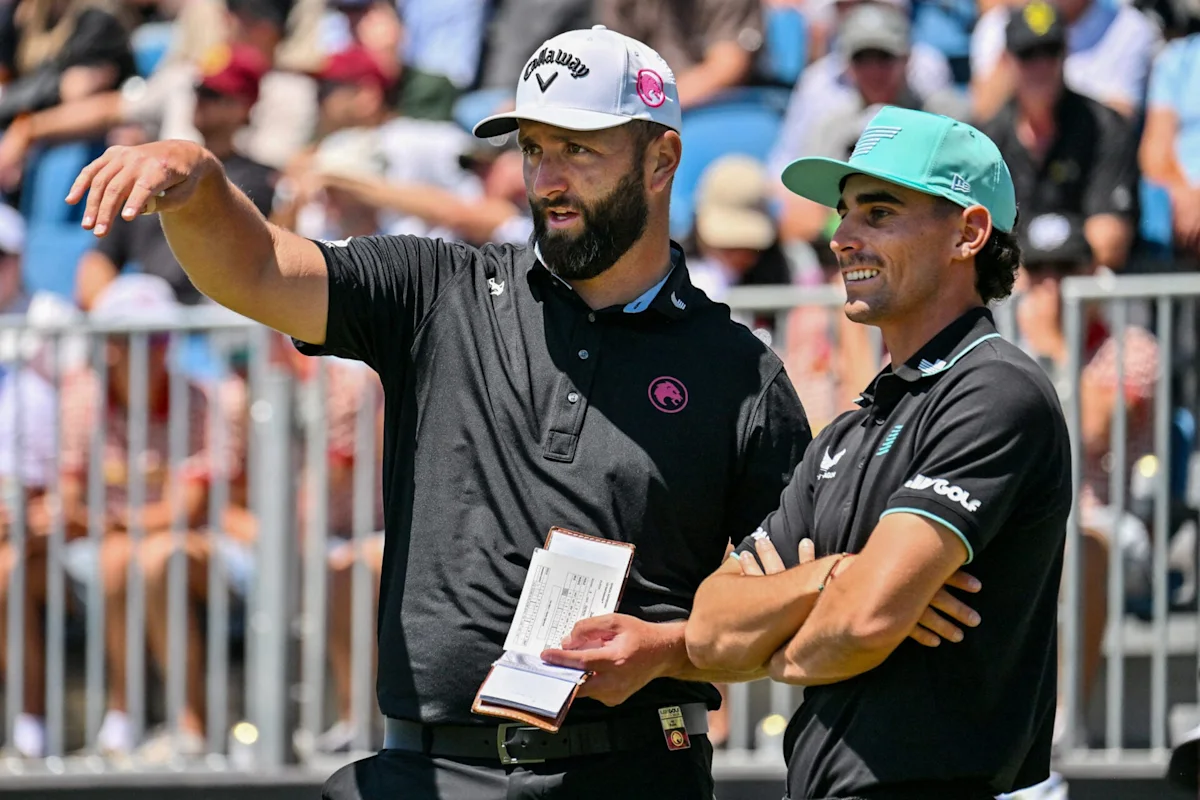
LIV Golf has released data detailing the earnings of its top five players since the league’s inception in June 2022, revealing significant financial distributions to those who defected from the PGA Tour. Jon Rahm leads the list with total earnings of $96,408,875, followed by Joaquin Niemann at $81,070,796, Talor Gooch at $74,282,278, Dustin Johnson at $64,575,695, and Bryson DeChambeau at $61,098,905.
The announcement comes at a critical juncture for the organisation, which has struggled to achieve its initial objective of becoming the dominant professional golf tour globally. While the league successfully attracted high-profile talent including Rahm, Johnson, and DeChambeau with substantial signing-on fees, it now faces an uncertain future as it prepares to operate on a significantly reduced scale.
Rahm, who joined the league in December 2023, has secured his position at the top of the earnings chart with three consecutive individual title wins. The Spaniard is reported to have received a signing-on fee exceeding £500 million, cementing his status as one of the highest-paid athletes worldwide. His consistent performance has contributed to the league’s payout structure despite the broader financial restructuring.
Joaquin Niemann sits second on the list with nine victories since joining in August 2022, establishing himself as a key performer for the tour. Talor Gooch and Dustin Johnson round out the top four, with four and three wins respectively since their initial recruitment in 2022. DeChambeau, an early recruit, completes the top five earners, having secured his financial position through the league’s distribution model.
The financial figures are released against a backdrop of significant organisational change. The Saudi Public Investment Fund (PIF) announced in April 2026 that it would end its multibillion-dollar backing at the conclusion of the current season. Although the league has secured an agreement with an unnamed lead investor for 2027 and beyond, the immediate operational landscape remains volatile.
Operational instability is further evidenced by the status of the season-ending Team Championship in Michigan. Tickets for the event have been withdrawn, and players have been warned of potential cancellation following reports of the event’s demise. This follows the postponement of the June New Orleans competition, which was not rescheduled, signalling a contraction in the league’s schedule.
Despite the withdrawal of major state-backed funding and the cancellation of upcoming events, the data underscores the immense wealth generated for early adopters. The league’s transition to a reduced scale will likely impact future earnings distributions, but the current figures highlight the financial rewards accrued by players who jumped ship from the PGA Tour in the league’s formative years.