Liberties Media Freedom Report 2026 flags persistent governance challenges in EU public broadcasting
Jonathan Day, Senior Advocacy Officer at CLUE, tells FRANCE 24 that political interference in public broadcasting remains a widespread issue affecting pluralism throughout the European Union
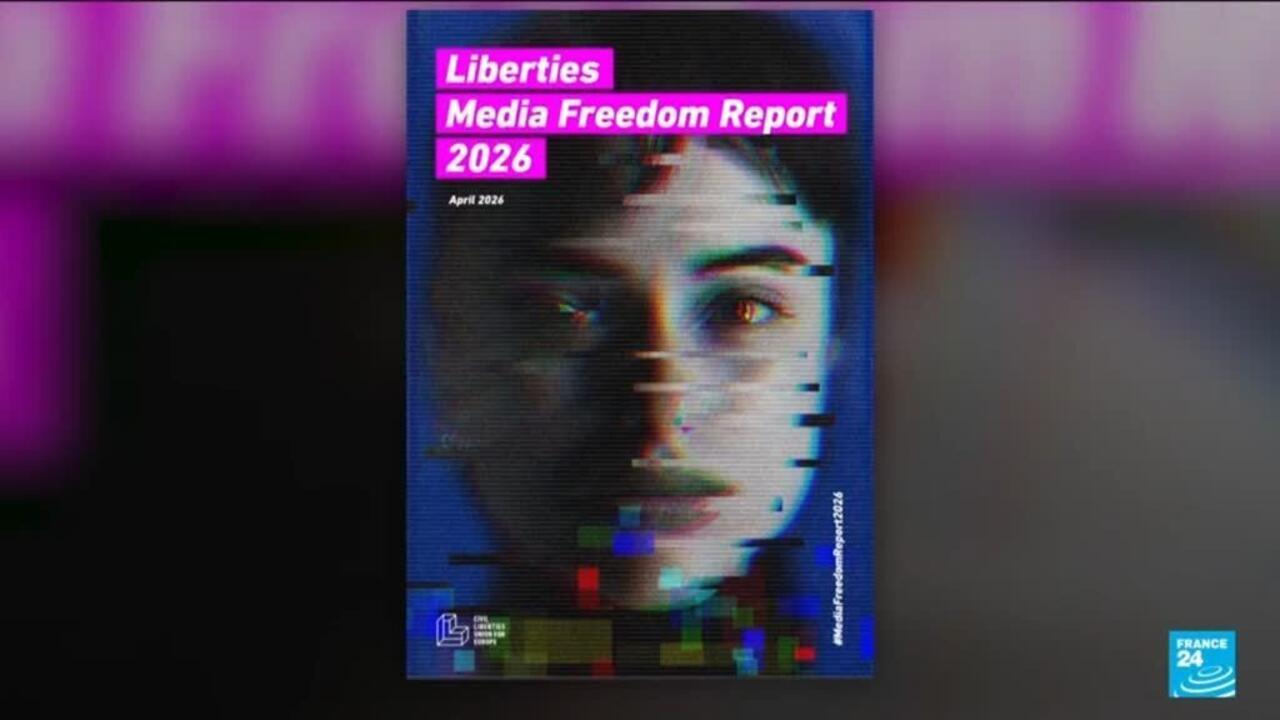
The Liberties Media Freedom Report 2026 has released its assessment of the media landscape within the European Union, concluding that freedom and pluralism remained compromised throughout 2025. Despite the passage of time, the annual review indicates that long-standing structural issues continue to hinder the independence of the sector across the bloc.
Jonathan Day, Senior Advocacy Officer at the Civil Liberties Union for Europe, addressed these findings in an interview with FRANCE 24. He argued that the current environment allows media outlets to be frequently utilised by politicians and wealthy individuals to project specific viewpoints rather than serving the public interest.
According to the report, the core of the problem lies in the governance of public broadcasting. Day noted that political interference within these institutions is not an isolated incident but a widespread phenomenon affecting the entire European Union. This systemic issue suggests that the separation between political agendas and editorial independence remains fragile.
The assessment highlights a qualitative shift in how media is perceived and operated within the region. Rather than functioning as a neutral forum for debate, the report suggests that the sector is increasingly instrumentalised by economic and political elites to advance narrow interests. This trend undermines the pluralism necessary for a healthy democratic discourse.
While the Civil Liberties Union for Europe does not provide specific quantitative metrics or a country-by-country breakdown in this summary, the qualitative evidence points to a stagnation in progress. The persistence of these issues from previous years into 2025 indicates that current regulatory frameworks may be insufficient to address the scale of political interference.
The report serves as a stark reminder that the integrity of the media sector is inextricably linked to the broader health of governance in Europe. As long as public broadcasting remains susceptible to external pressure, the promise of a free and pluralistic information environment will remain unfulfilled across the union.