Legal grey area looms over Israel's unilateral security buffer in southern Lebanon
While Israeli officials frame the 5 to 10 kilometre strip as a temporary self-defence measure, legal scholars argue the lack of explicit definition in international law allows for unilateral imposition that threatens sovereignty.
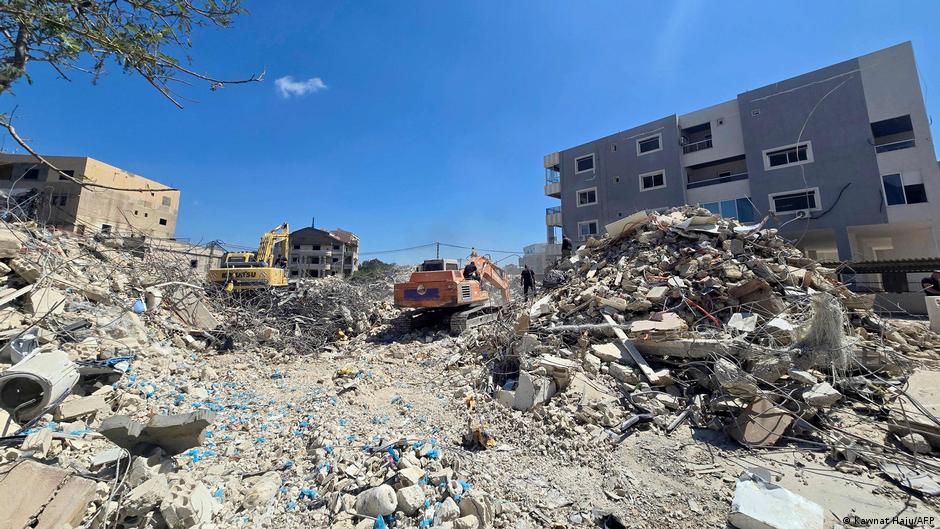
Since early March, Israeli troops have established control over a 5 to 10 kilometre strip in southern Lebanon, designating the area as a security buffer zone to counter threats from Hezbollah. The Israeli government, led by Prime Minister Benjamin Netanyahu and Defence Minister Israel Katz, asserts that this measure is a necessary step to thwart the threat of invasion and prevent further incursions.
However, the legal standing of this arrangement remains precarious due to the absence of explicit rules governing buffer zones in contemporary international humanitarian law. Gustav Meibauer, an assistant professor in international relations at Radboud University in the Netherlands, notes that standard sources such as the UN Charter, the Geneva Conventions, and the Hague Conventions do not explicitly cover buffer zones. This legislative vacuum creates a significant grey area where unilateral imposition by one state can be viewed as a direct threat to the sovereignty of another.
Legal commentary suggests that while buffer zones can serve positive functions like enhancing border integrity or containing war zones, they are frequently utilised as pretexts to broaden a state's sphere of influence. Eian Katz, a legal researcher and attorney for the US State Department, highlights that the ambiguity surrounding these zones makes them politically attractive to decision-makers who wish to avoid the explicit legal consequences associated with traditional occupation or annexation.
Despite the Israeli framing of the zone as a temporary security measure, the permanence of the arrangement and the treatment of civilians within it raise serious concerns. Defence Minister Katz has ordered the acceleration of the destruction of Lebanese homes near the border, citing the model used in Gaza. Janina Dill, co-director at Oxford University's Institute for Ethics, Law and Armed Conflict, warns that the deliberate, widespread destruction of civilian property without clear military necessity constitutes a war crime under the Geneva Conventions.
The definition of the zone's status further complicates the legal landscape. Under international law, an area is considered occupied when a foreign military establishes effective control without the host country's permission. Meibauer argues that if the buffer zone becomes a permanent arrangement where territory is rendered uninhabitable and remains under Israeli control, it would legally constitute an occupation, triggering specific legal obligations that Israel has stated it does not intend to accept.
Tensions regarding the future of the zone are evident in conflicting statements from key international figures. While senior Israeli officials have indicated that displaced civilians will not be able to return to their homes, US Secretary of State Marco Rubio has stated that Israel does not intend to hold territory in Lebanon permanently. This contradiction underscores the uncertainty surrounding the zone's operational lifespan and the potential for it to evolve into a de facto permanent occupation.