Lebanon faces humanitarian collapse as Israel escalates strikes ahead of Washington talks
With direct talks scheduled for June, Israel has increased drone strikes citing security threats, while Lebanon grapples with mass displacement, food insecurity, and internal political instability involving Hezbollah.
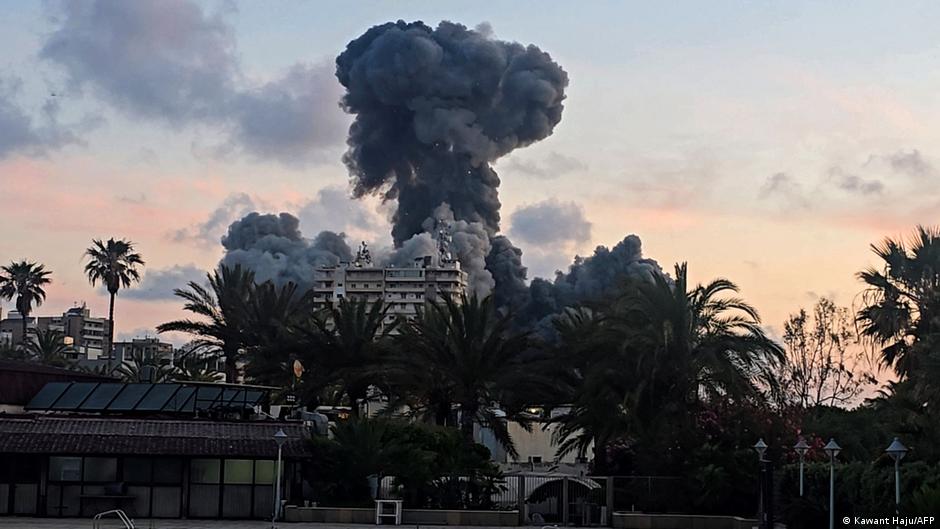
Israel has intensified military operations against Hezbollah in Lebanon, citing an increase in drone threats as justification for the escalation. Prime Minister Benjamin Netanyahu stated that the use of explosive drones by the Iran-backed group "requires of us now to increase the blows, to increase the intensity," vowing to "smite them hip and thigh." This military buildup occurs just days before direct peace talks between Israel and Lebanon are scheduled to take place in Washington on June 2-3, 2026, raising concerns among analysts that the conflict may undermine diplomatic efforts.
The humanitarian situation in Lebanon continues to deteriorate rapidly following the escalation that began in March 2026. According to the Lebanese Health Ministry, more than 3,213 people have been killed and over one million remain displaced. Kelly Petillo of the European Council on Foreign Relations described the current atmosphere as a "state of panic," noting that 31 people were killed on the eve of the Eid holiday. The Integrated Food Security Phase Classification (IPC) has warned that approximately 1.24 million people, or one in four of the population, face acute food insecurity between April and August 2026.
Compounding the crisis, the Lebanese Agriculture Ministry reported that 22 per cent of agricultural land in affected areas has been damaged, further undermining local food production. The United Nations reported that its $308.3 million Flash Appeal for March to May 2026 secured only 51.3 per cent of the required funding by May 26, 2026. Aid agencies warn that these funding shortages are forcing humanitarian groups to scale back essential services, with Action Against Hunger warning that water service provision to Syrian refugees will cease on June 1, 2026, raising the risk of outbreaks of hepatitis A, typhoid, and cholera.
Domestically, tensions are mounting between the Lebanese government and Hezbollah. President Joseph Aoun’s administration has banned all military action by the group since March 2026 and continues to push for disarmament, a stipulation of the November 2024 ceasefire. However, Hezbollah Secretary-General Naim Qassem has warned that his group would confront any attempt to shut down the Hezbollah-linked Al-Qard Al-Hassan financial institution. Qassem suggested that if the government cannot guarantee sovereignty, it should resign, while Sami Halabi of The Alternative Policy Institute noted that Hezbollah is "floating the idea" of taking down the government through popular revolt.
The fragile US-brokered ceasefire, which took effect on April 17, 2026, and was extended by 45 days on May 15, 2026, remains violated by near-daily attacks from both sides. David Wood of the International Crisis Group noted that Israel’s intensification of operations undermines the Lebanese government’s ability to deliver meaningful progress in the upcoming Washington talks. As Hezbollah argues that diplomacy is ineffective and retains its weapons for deterrence, the country remains caught in a dangerous escalatory cycle with little prospect of immediate resolution.