Lebanon Army Chief’s Pakistan Visit Amidst Ceasefire Talks and Soldier Funerals
As Beirut’s army chief travels to Pakistan for mediation efforts, Lebanese officials condemn the killing of soldiers as an attempt to derail peace negotiations, while attacks continue across southern Lebanon.
Lebanon’s army chief, Rodolphe Haykal, has departed for Pakistan on a surprise visit, positioning himself within the broader diplomatic framework of mediation efforts between the United States and Iran. The trip coincides with the scheduled funerals for three Lebanese soldiers killed in an Israeli strike on the Khardali-Nabatieh road in southern Lebanon. The victims were identified as Brigadier General Wissam Sabra, Captain Elie Khoury, and soldier Hussein Ghozal.
The incident has drawn sharp condemnation from senior Lebanese officials. President Joseph Aoun described the killing as an attempt to thwart all efforts to reach a solution, while Prime Minister Nawaf Salam labelled it a heinous crime and an attack on the Lebanese people. Despite these assertions, the Israeli army has stated it is investigating the strike on the military vehicle.
The visit to Pakistan occurs at a time when Washington and Lebanese leaders insist that ceasefire talks for Lebanon remain separate from US-Iran negotiations. However, Pakistan has emerged as a central mediator in the wider conflict, which commenced with joint US-Israeli attacks on Iran on 28 February 2026. Pakistan’s Interior Minister, Mohsin Naqvi, arrived in Tehran on Saturday as part of these ongoing diplomatic efforts.
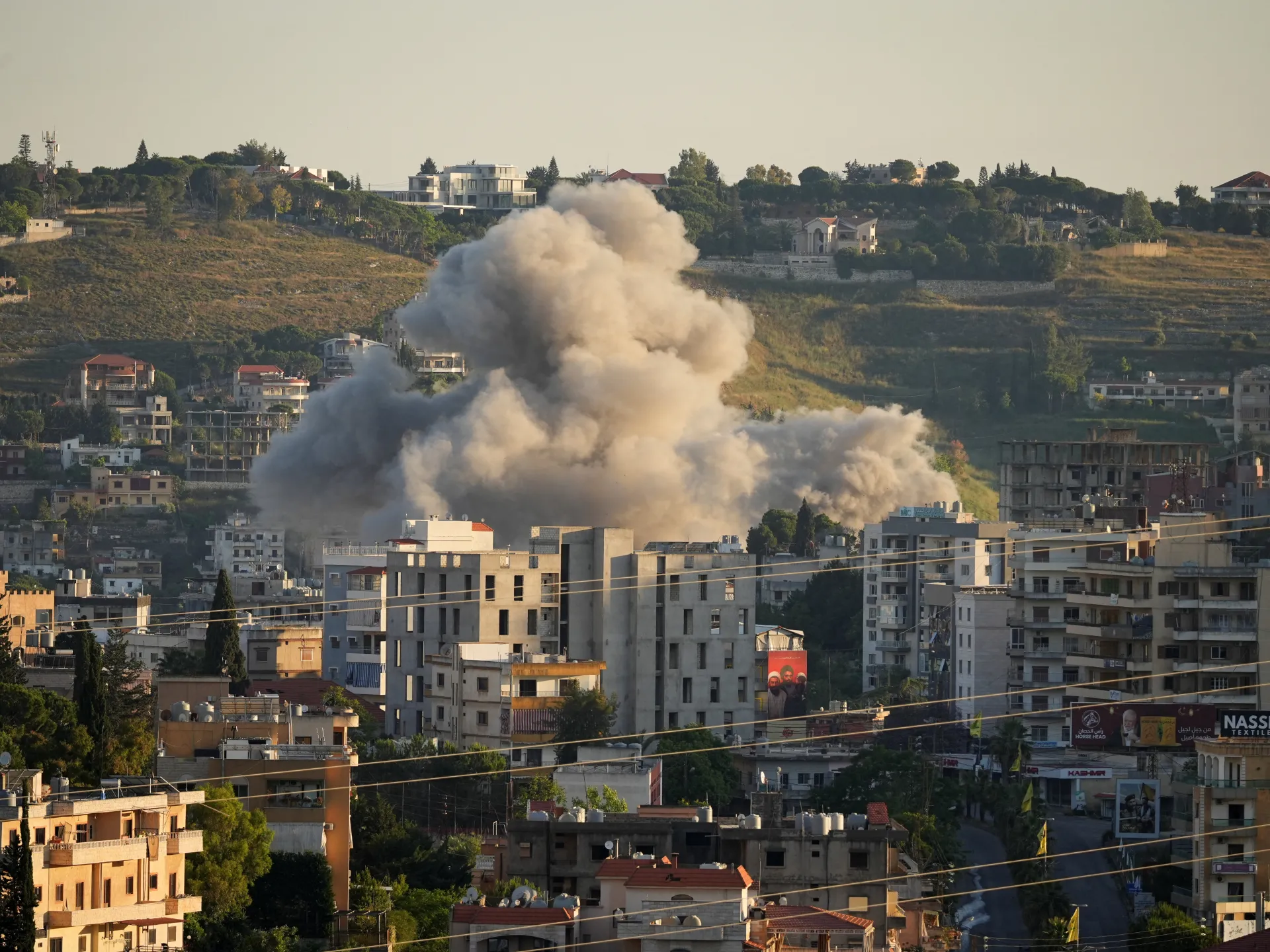
Meanwhile, hostilities persist across southern Lebanon and the western Bekaa. The Ministry of Public Health reported that an Israeli raid on Saksakiyeh killed at least two people and wounded 22 others, including three children. Additional casualties were reported in Shahabiyeh following a drone attack, while Israeli warplanes and artillery targeted towns including Qalawiya, Deir Kifa, and Srifa.
Independent MP Najat Aoun Saliba urged the government to pursue negotiations, citing the significant military imbalance between the Lebanese Armed Forces and Israel. She argued that dialogue is the only viable path given that Hezbollah has been unable to stop Israeli aggression or prevent what she termed war crimes.
A conditional ceasefire announced last week by Lebanese and Israeli envoys in Washington was rejected by Hezbollah, as it did not include the group or mandate Israel’s withdrawal from southern Lebanon. Al Jazeera reporter Nour Odeh described the pattern of attacks as the “Gazafication of Lebanon,” noting the targeting of schools, hospitals, and journalists, as well as the use of “double-tap” attacks on paramedics.
The conflict has taken a disproportionate toll on civilians, with more than 3,500 people killed since hostilities resumed on 2 March. The “Yellow Line,” a demarcation concept previously seen in Gaza, now encompasses nearly a fifth of Lebanon’s territory, further complicating the security landscape.