Lebanese President Seeks US Backing for Controversial Trilateral Framework Amid Sovereignty Concerns
President Joseph Aoun meets Donald Trump and Marco Rubio to advance an agenda involving Hezbollah disarmament and Israeli withdrawal, despite internal opposition and ambiguous US commitments.
Lebanese President Joseph Aoun is scheduled to meet US President Donald Trump at the White House on Tuesday, seeking Washington’s endorsement for a contentious trilateral framework involving Lebanon, Israel, and the United States. The diplomatic push comes as Lebanon grapples with internal political divisions and renewed regional tensions following the resumption of hostilities between the United States and Iran. Aoun’s primary objective is to secure US backing for a deal that stipulates Israeli withdrawal from south Lebanon in exchange for the disarmament of Hezbollah, an arrangement that has drawn sharp criticism domestically for allegedly compromising national sovereignty.
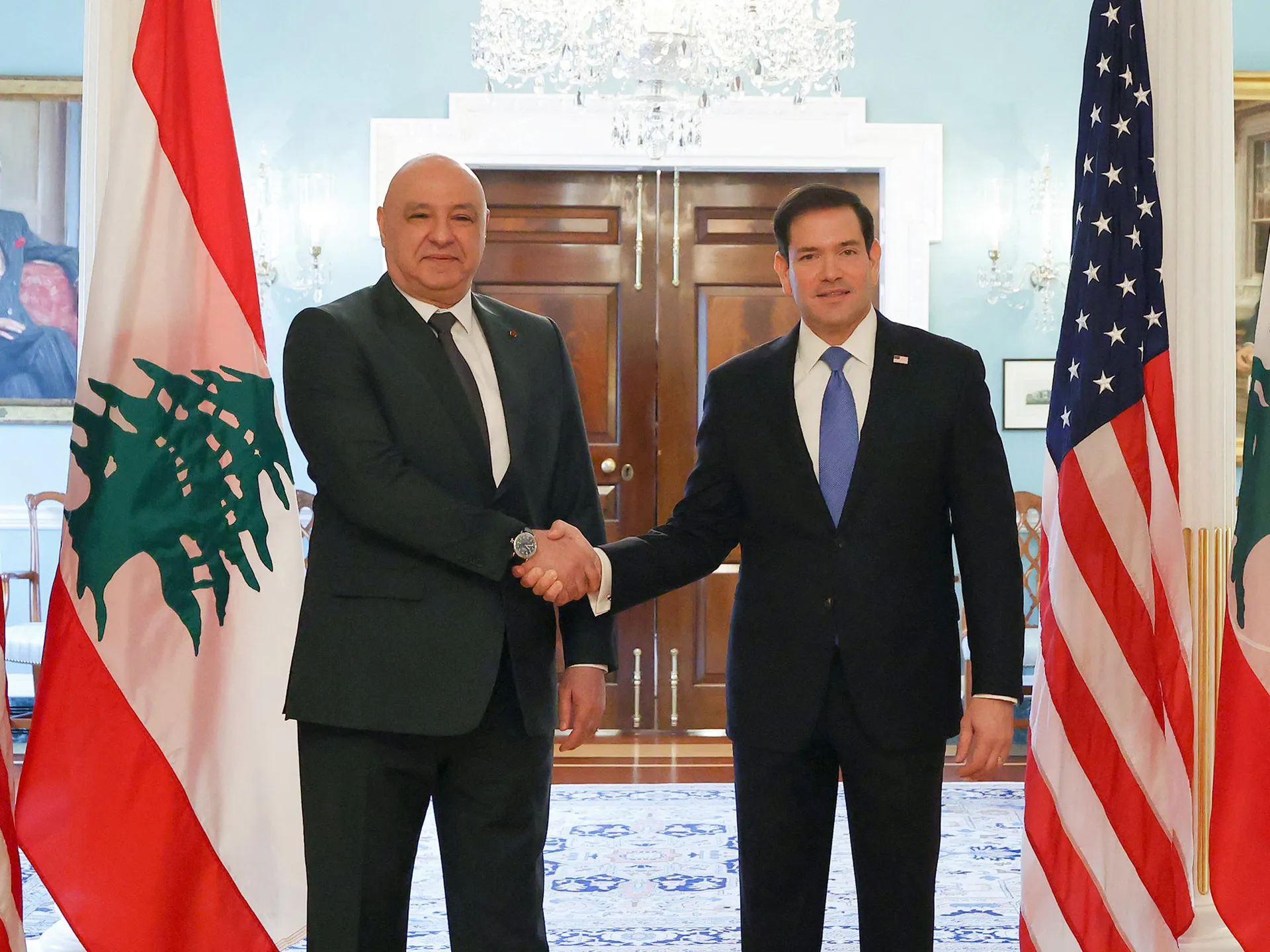
During his arrival in Washington on Saturday, Aoun held discussions with US Secretary of State Marco Rubio, emphasising the need to align Lebanese and American positions regarding the implementation of the framework. Rubio stated that supporting the Lebanese government is the most effective strategy to counter Hezbollah, which maintains close ties with Iran. The Secretary of State framed the administration’s engagement as a means to bolster the legitimate Lebanese state, asserting that Washington intends to work with the government in Beirut rather than other factions.
The core of Aoun’s diplomatic agenda rests on the trilateral agreement, which requires Lebanon to recognise Israel and condition its withdrawal on the disarmament of Hezbollah. This approach marks a significant shift from previous diplomatic efforts, including a memorandum of understanding with Iran that called for an unconditional ceasefire and respect for sovereignty. The framework also includes provisions for the creation of "pilot zones" in south Lebanon, where the Lebanese Armed Forces would deploy to ensure the absence of Hezbollah militants, allowing Israel to withdraw and residents to return.
However, the practical application of these provisions has been met with scepticism. Coinciding with Aoun’s visit, the US State Department announced the establishment of the first pilot zones in three towns that were not occupied by Israel during the recent conflict. Consequently, this designation does not trigger an immediate Israeli withdrawal, a point that critics argue undermines the framework’s utility. Israeli Defence Minister Israel Katz has previously stated that the aim is to erase border towns, similar to actions taken in Gaza, and has indicated that Israel will remain in Lebanon as long as necessary, despite the framework’s claim that Israel has no territorial ambitions.
The agreement has faced significant opposition within Lebanon, with critics arguing that it legitimises Israeli occupation and makes the right of withdrawal contingent on conditions set by the occupying power. Rights advocates have also raised alarms over a clause in the deal that requires Lebanon to refrain from pursuing accountability for Israeli abuses at international courts or the United Nations. Hezbollah has firmly rejected the framework, stating it will not abide by its terms, while some supporters of Aoun’s government have also acknowledged the deal’s shortcomings.
Amidst these developments, expert analysis suggests that Aoun’s visit may be more about strategic repositioning than immediate policy breakthroughs. Nadim Houry of the Arab Reform Initiative characterised the diplomatic engagement as "mostly symbolic," noting that the Lebanese government lacks significant leverage in negotiations. The latest round of fighting began in March 2026 after Hezbollah fired rockets in response to Israeli violations of a previous ceasefire and the killing of Iran’s Supreme Leader Ali Khamenei, further complicating the path toward a stable resolution.