Leaks reveal secret Russian aid for Iranian supersonic missiles
Documents suggest Moscow is covertly assisting Tehran in developing advanced cruise missiles, marking a major shift in military technology transfers.
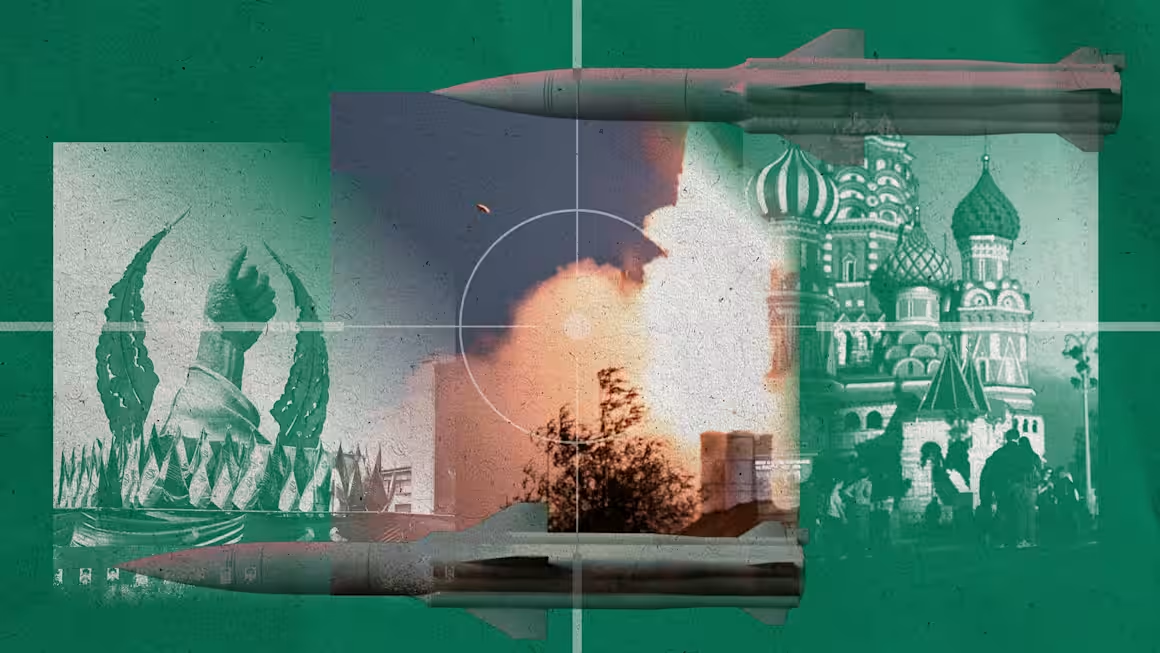
Leaks have revealed a covert programme in which Russia is assisting Iran in the development of supersonic cruise missiles. According to the Financial Times, the disclosures point to a structured effort behind what is described as one of the most significant known transfers of military technology from Moscow to Tehran.
The identification of supersonic cruise missiles as the specific technology in question highlights the strategic value of the assistance. While the precise details of the leaks, including the identity of the sources or the exact documents involved, remain unconfirmed, the reports indicate a deepening technical collaboration between the two nations.
This development occurs against a backdrop of heightened geopolitical tensions. The transfer follows the collapse of a 60-day ceasefire between the United States and Iran in June 2026, a period that saw a significant escalation in regional instability. The timing suggests that the missile programme may be a response to the deteriorating security environment.
Furthermore, the revelations come as Russia continues its military operations in Ukraine. In August 2026, Russian ballistic missile strikes killed 12 people in Kyiv and the surrounding region, underscoring the ongoing intensity of the conflict. The dual focus on Ukraine and Iran suggests that Moscow is managing multiple fronts while simultaneously bolstering its allies.
For investors and policy observers, the characterisation of this as a major technology transfer carries weight. The source describes the move as one of the most significant known instances of such a transfer, though independent verification of the covert nature of the assistance may still be pending. The qualitative assessment underscores the potential long-term implications for regional defence capabilities.
The current status of the missile development, including whether the systems are in testing or deployment, has not been specified in the available reporting. However, the existence of a dedicated programme indicates a sustained commitment to capability building rather than a one-off exchange.
As the geopolitical landscape continues to shift, the Russia-Iran partnership appears to be gaining new dimensions. The leaked information provides a glimpse into the strategic calculations driving military cooperation between the two countries, with potential ramifications for global markets and policy frameworks.