Las Vegas Retirement Math Relies on Structural Tax Advantages, Not Low Living Costs
For a couple with a $49,000 annual budget, combined income provides only a narrow buffer, making Nevada’s 3% property tax cap more valuable than its lack of state income tax.
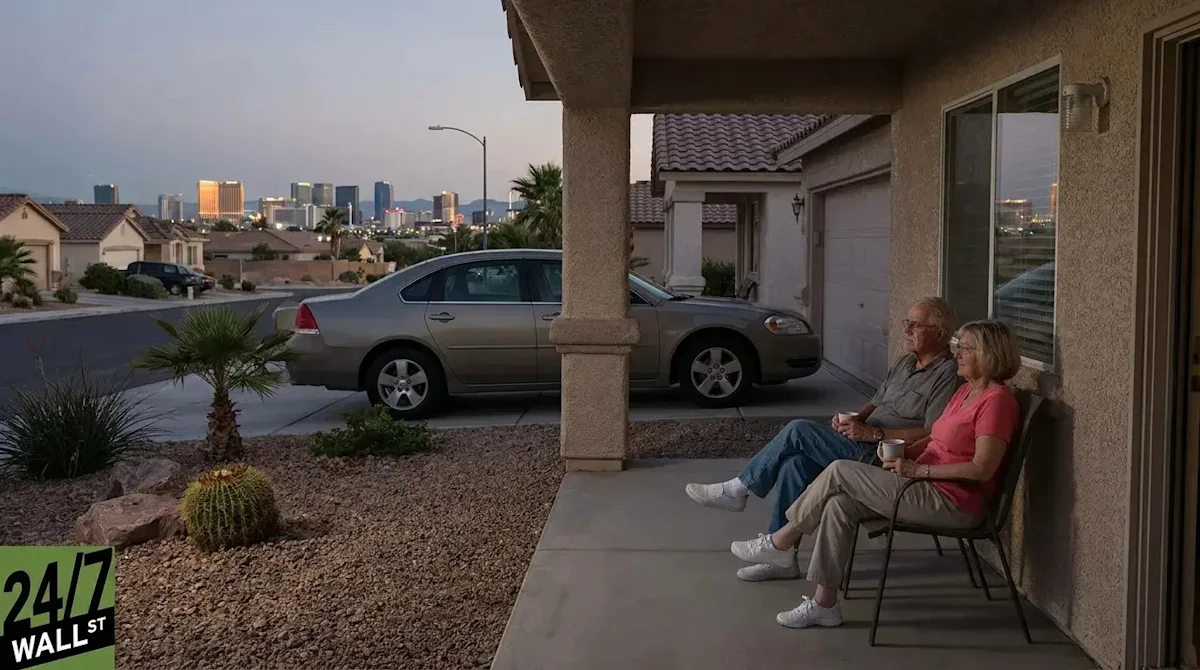
A financial analysis by SmartAsset indicates that retiring in Las Vegas on Social Security and a small pension is viable only under specific structural conditions, primarily owning a home outright and benefiting from Nevada’s 3% annual cap on primary residence property tax increases. For a healthy 67-year-old couple with a $49,000 annual budget, combined Social Security income (approximately $45,000) and a small pension ($8,400) provide roughly $53,400 in reliable income, leaving a narrow buffer of about $4,400. The analysis challenges the common perception that Nevada’s lack of state income tax is the primary benefit for this demographic, noting that Social Security is largely tax-exempt in most states and that Nevada’s high sales tax (over 8% in Clark County) offsets this advantage. Without a paid-off home, the required supplemental investment portfolio to cover inflation, healthcare shocks, and vehicle replacement rises by approximately $250,000, bringing the total target to between $350,000 and $425,000 depending on pension status.
The cost of living in Las Vegas sits at a national average index of 99.979, dispelling the notion that it remains a bargain retirement destination compared to previous decades. A detailed budget for a couple owning a modest home in Henderson or the northwest valley includes property tax, insurance, and HOA fees of roughly $5,800, home maintenance reserves of $4,500, and utilities of $3,900, with summer electric bills on tiered NV Energy rates often underestimated by newcomers. Food costs align with the USDA moderate plan for two at $10,800, while transportation expenses reach $8,200 for two older vehicles, insurance, and fuel at a national average of $4.08 per gallon. Healthcare costs for two Medicare beneficiaries, including Part B premiums, Medigap plans, and out-of-pocket expenses, total $9,600, with personal and travel reserves adding another $6,200 to reach the $49,000 annual total.
Income reliability hinges on the interaction between Social Security, pensions, and inflation. A couple claiming benefits at full retirement age receives approximately $45,000 in combined Social Security, adjusted by the 2026 cost-of-living adjustment of 2.8%. When supplemented by a small pension of $8,400, the total reliable income reaches $53,400. However, if the pension is fixed in nominal terms, its real value erodes annually as the budget grows with the Consumer Price Index, which has been running in the 80th percentile of its trailing twelve-month range. Over ten years, a fixed $8,400 pension would lose purchasing power equivalent to what $6,400 buys today, necessitating a supplemental investment portfolio of roughly $175,000 to $225,000 to bridge the gap.
Nevada’s tax structure presents a complex trade-off for retirees. While the state ranks seventh in competitiveness for individual income tax due to its zero rate, this benefit is marginal for those relying on Social Security, which is already exempt from state tax in most jurisdictions. Conversely, Nevada ranks 40th in sales tax competitiveness, with Clark County’s combined rate exceeding 8%. This high consumption tax applies to every dollar spent from savings on goods and services, effectively neutralizing the income tax advantage for this specific demographic. The critical financial shield is the property tax abatement, which caps annual assessed-value increases on primary residences at 3%, providing stability against the national home price index, which reached the 90th percentile historically in May.
The realistic retirement scenario in Las Vegas requires a paid-off house, combined Social Security of about $45,000, a pension in the $8,000 to $12,000 range, and a supplemental portfolio of roughly $175,000 to $225,000. Without a paid-off home, the portfolio target increases by $250,000, and without a pension, it climbs to approximately $350,000. The analysis concludes that the math works because of the property-tax cap and the absence of a mortgage, not because the cost of living is inherently low. Price these two structural features correctly, and the remaining financial variables fall into place for retirees seeking to maintain their standard of living in the Nevada desert.