Langley Research Center marks 50 years since Viking Mars landings
Fifty years after Viking 1 and 2 touched down on the Red Planet, NASA’s Langley Research Center reflects on the engineering and operational frameworks that reshaped how humanity explores other worlds.
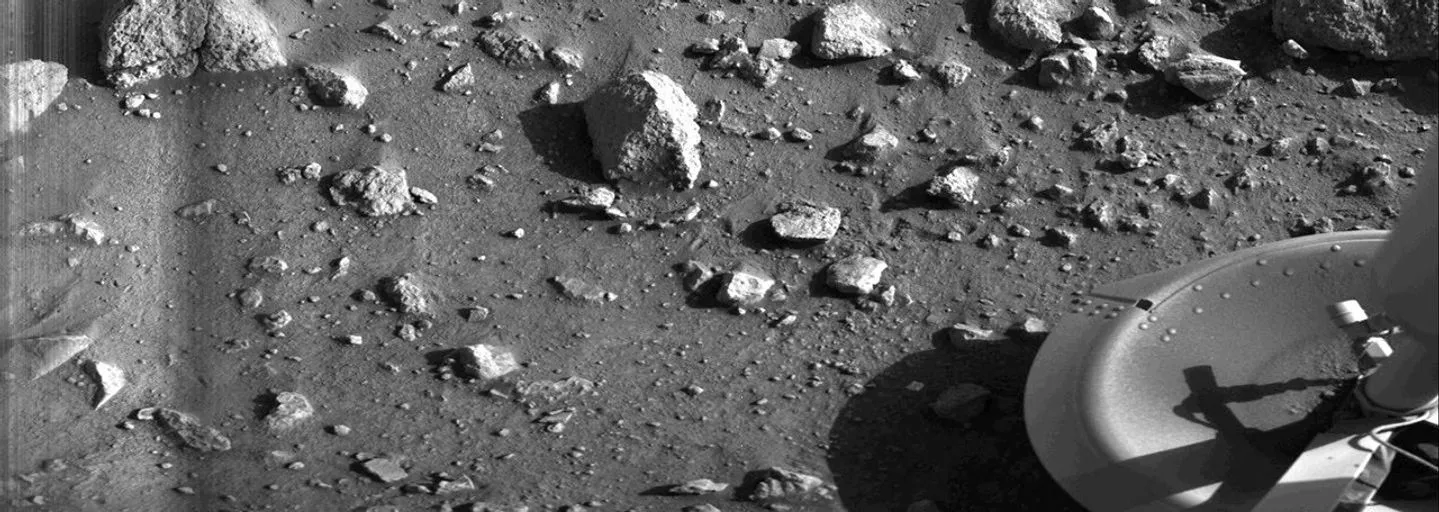
NASA’s Langley Research Center in Hampton, Virginia, is commemorating the 50th anniversary of the Viking 1 and 2 landers’ successful touchdown on Mars in 1976. As the lead centre for the project, Langley provided critical expertise in atmospheric entry, heat shielding, and parachute technology, enabling the spacecraft to survive descent at speeds exceeding 10,000 miles per hour. The mission established enduring practices for Mars exploration, including the use of the 'sol' for mission timing and a methodology for selecting safe landing sites using orbiter imagery and radar data.
NASA selected Langley in 1968 to lead the Viking project, the first U.S. mission designed to land safely on Mars and search for signs of life. Project Manager James S. Martin Jr. established a culture of clear priorities, tough engineering reviews, and rigorous testing. Langley engineers developed the protective aeroshell, heat shield, and supersonic parachute to handle atmospheric entry. These systems were validated through years of wind-tunnel tests and analysis rather than relying solely on theory.
The mission introduced the use of the 'sol' (a Martian day) to align mission operations with local Martian time, a practice still used today. Langley teams pioneered a landing site selection method combining Viking orbiter imagery with Earth-based radar data to balance scientific value and engineering safety. This approach ensured that future missions could identify regions that offered both scientific potential and engineering safety.
Viking’s design replaced a cancelled, riskier concept (Voyager Mars lander) that relied on two large landers stacked on a single Saturn V rocket. The final design paired each lander with its own orbiter and utilised Titan IIIE-Centaur rockets. This approach created a “planetary playbook” that influenced subsequent missions, including Curiosity and Perseverance.
The two landers returned thousands of images and data revealing Mars has weather, geologic history, and complexity. While no human has yet set foot on the Martian surface, Viking proved that reaching another planet and working on it was within reach. Langley continues to advance new entry, descent, and landing technologies to support future human explorers.