Kyiv withstands massive aerial assault as Russian eastern advance stalls
Over 1,400 drones and 56 missiles targeted the capital in mid-May, yet Ukrainian forces report net territorial gains and successful disruption of Russian supply lines.
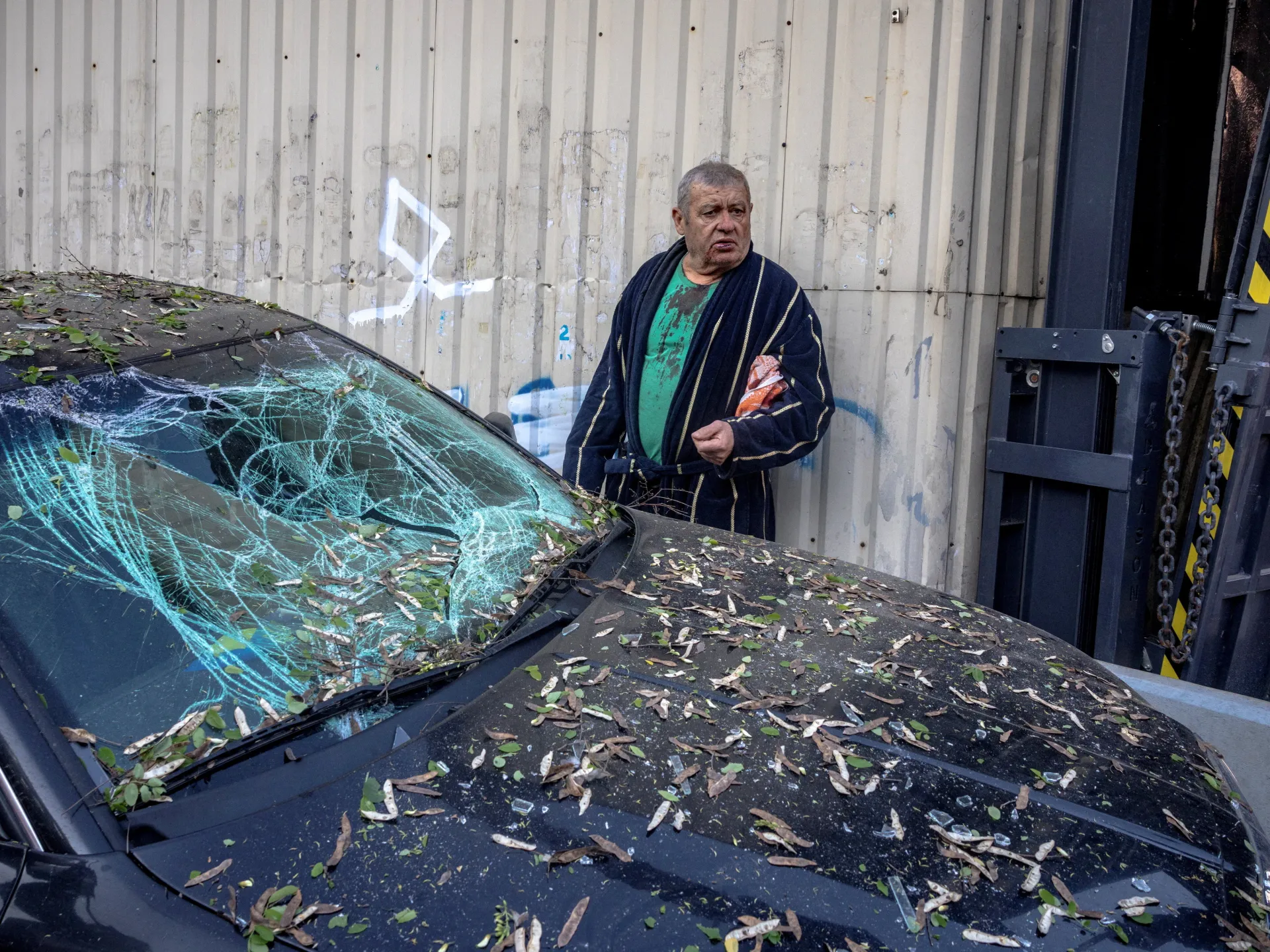
Russia launched a sustained aerial campaign against Ukraine between May 14 and 15, deploying more than 1,400 drones and 56 missiles, with significant strikes concentrated on the capital, Kyiv. The escalation occurred following a brief ceasefire period and tensions surrounding Ukraine’s Victory Day activities. Official Ukrainian reports indicate that civilian infrastructure was damaged, including a nine-storey apartment building where 12 people were killed in the collapse. Ukrainian authorities recorded strikes in at least 20 locations across the capital, targeting residential areas, schools, and veterinary clinics.
Despite the intensity of the air attacks, Russia’s territorial advance in eastern Ukraine has slowed significantly. Data from the Washington-based Institute for the Study of War shows that daily gains dropped to approximately 2.63 square kilometres in the first two weeks of May 2026. This represents a sharp decline from the average of 9.76 square kilometres per day recorded in the first third of 2025 and 14.9 square kilometres per day between October 2024 and March 2025. Ukrainian forces reported shooting down 92 percent of the drones and 41 of 57 missiles launched during this period.
Concurrently, Ukrainian forces have intensified deep-strike campaigns against Russian logistics, oil infrastructure, and military assets behind the front line. The Azov Corps of Ukraine’s National Guard announced it had returned to Mariupol and filmed drone strikes on Russian diesel tankers and army trucks 160 kilometres behind the front line along the T-0509 highway. These operations are part of a broader strategy to disrupt supply chains feeding the Russian war effort in the Donetsk region.
Ukraine’s Defence Minister Mykhailo Fedorov stated that Kyiv is carrying out approximately 5,000 successful strikes at a depth of 20 kilometres or more every month. The campaign has extended to targets within Russia, including the Yaroslavl oil refinery and the Perm oil pumping station, which was hit by the Ukraine Security Service on May 8. Fedorov thanked Germany for investing $1 billion in Ukraine’s deep-strike capabilities during a visit by German Defence Minister Boris Pistorius.
Ukrainian President Volodymyr Zelenskyy described the current positions on the front line and in long-range sanctions as the strongest in years. The Institute for the Study of War estimated that Ukraine made net territorial gains of 116 square kilometres in April, marking its first such advance since a September 2023 counteroffensive. Ukrainian Commander-in-Chief Oleksandr Syrskii noted that Russia has intensified offensive actions along almost the entire front, with the most tense area currently being the Pokrovsk direction.