Kyiv protests escalate as Zelensky replaces Fedorov with SBU chief
President Volodymyr Zelensky has appointed Yevgeniy Khmara as acting defence minister, ending the tenure of Mykhailo Fedorov amid mass demonstrations and deep institutional rifts.
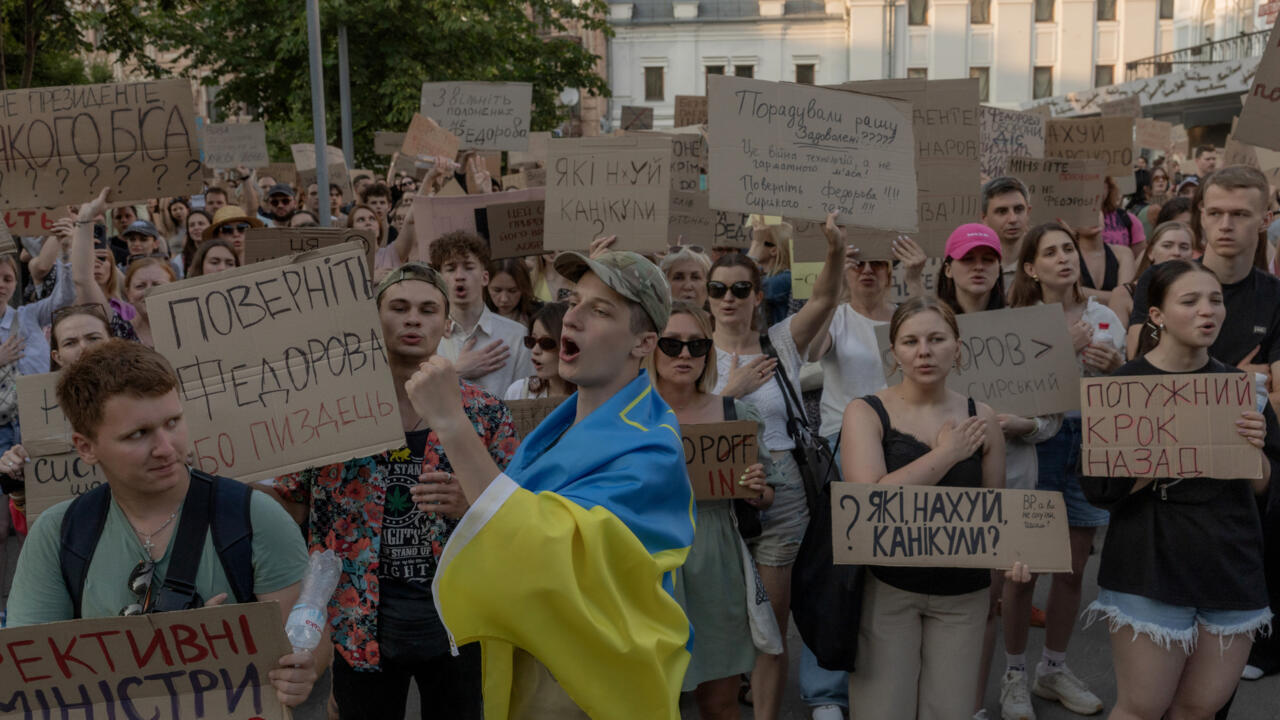
Thousands of demonstrators gathered in Kyiv for a second consecutive day on Friday to protest the dismissal of Defence Minister Mykhailo Fedorov by President Volodymyr Zelensky. The protests, observed by AFP journalists, saw crowds carrying Ukrainian flags and placards expressing support for the ousted minister, marking a significant public reaction to the government’s personnel reshuffle.
Fedorov served in the role for approximately six months before being removed following persistent clashes with the traditional military establishment, particularly Commander-in-Chief Oleksandr Syrsky. The friction centred on Fedorov’s efforts to digitise and modernise an army fatigued after four years of fighting the Russian invasion, a process that frequently clashed with the command structure’s more conventional approaches.
In a statement addressing the dismissal, President Zelensky noted that the two factions were "barely on speaking terms," lamenting that a wartime president should not be forced to choose between such divided groups. He expressed a desire for unity within the defence apparatus, citing the inability of the sides to communicate effectively as the primary driver for the change.
Following Fedorov’s removal, Zelensky announced the appointment of Yevgeniy Khmara, head of the SBU security service, as acting defence minister. The transition comes as Fedorov, a civilian innovator who pioneered Ukraine’s drone warfare capabilities despite having no prior army service, faces intense scrutiny over his management style and reforms.
Prior to his appointment, Fedorov promoted advanced technology to offset shortages in manpower, money, and ammunition. His tenure included boosting military salaries, announcing plans for partial demobilisation, and introducing game-like reward systems for combat units. However, these initiatives drew sharp criticism from the military command, with Fedorov accusing Syrsky of dividing the country and questioning Ukraine’s ability to defeat Russia under the current leadership.
Public sentiment appears to remain largely in favour of the former minister. A June 2026 poll from the Kyiv Institute of Sociology indicated that Fedorov ranked among Ukraine’s most trusted public figures. Protests against his dismissal were not confined to the capital, with demonstrations also reported in other Ukrainian cities, including around a thousand people in Kyiv on the day of his resignation.
Fedorov’s departure highlights the ongoing tension between technological innovation and traditional military hierarchy in Ukraine’s wartime governance. As Khmara assumes the acting role, the government faces the challenge of reconciling these competing institutional interests while maintaining operational effectiveness against Russian forces.