Kremlin security posture shifts as elite tensions and coup speculation mount
Internal friction among the siloviki and recent purges within the defence ministry have intensified scrutiny over the Kremlin's leadership stability, prompting a scaling back of public events and a reduction in the president's visibility.
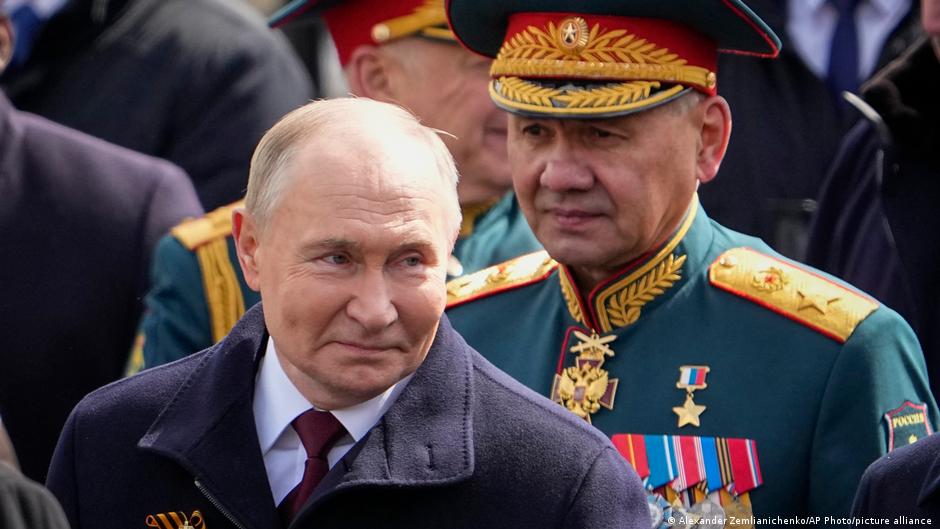
Reports citing an unnamed European intelligence agency indicate that the Kremlin has implemented drastic security measures around President Vladimir Putin, driven by fears of assassination or a coup. These claims, cited by outlets including iStories, CNN, and the Financial Times, describe a heightened state of alert that has fundamentally altered the operational environment for the Russian leadership. While some observers point to the proven capability of Ukrainian special services to conduct operations within Russian territory as evidence for such threats, others argue the narrative serves as a psychological operation designed to generate paranoia within the elite.
The core of the reported instability lies in the fracturing of the siloviki, the security clans that have long surrounded the president. Former defence minister Sergei Shoigu is identified in leaked assessments as a potentially destabilising actor, retaining significant influence over the military despite his dismissal in 2024. Analysts note that Shoigu's tenure was characterised by the consolidation of corrupt networks and a mafia-like code of loyalty, creating a power base that could theoretically operate independently of the Kremlin. This dynamic is compounded by the recent arrests of several deputy defence ministers for corruption and embezzlement, highlighting a purge that exposes growing friction within the military establishment.
In response to these perceived risks, the traditional Victory Day parade in Moscow has been significantly scaled back, with mobile electronic warfare systems deployed to counter potential drone threats. The reduction in the scale of the event and the cancellation of certain ceremonial elements reflect a prioritisation of safety over image. Political analyst Ekaterina Schulmann confirmed that the president's reduced public appearances are a direct result of genuine security concerns, noting that when safety is the primary objective, visibility is minimised. This shift marks a departure from previous years where the parade served as a major display of state power and unity.
Despite the gravity of the reported threats, some experts caution that the narrative of an imminent coup may be a deliberate deception intended to destabilise the Russian leadership system. Mark Galeotti of Mayak Intelligence consultancy suggested that the sudden spate of stories from an anonymous European source resembles a psyop rather than a serious assessment. Furthermore, Alexandra Prokopenko, a political scientist, described the ruling elite structure as a pyramid of competing patrons rather than a unified bloc. She argued that as long as these factions derive sufficient resources from the Kremlin, they lack the incentive to act collectively against it, a dynamic that has historically prevented meaningful attempts at overthrowing the president.
The underlying tension stems from economic pressures and international sanctions which have shrunk the resources available to the elite, intensifying competition for a smaller share of the national pie. This scarcity has exacerbated rivalries among the siloviki, weakening Putin's traditional role as a mediator between these groups. While the Wagner Group revolt in June 2023 remains the only significant recent exception to the lack of coup attempts, the current climate suggests a system under strain where internal conflicts are worsening. Experts observe that while open confrontation is being avoided, various clans are acting more independently, waiting to adapt to circumstances that could further destabilise the existing order.