Kinchega dingo burial reveals deep historical bonds between Barkindji people and animals
A study published in Australian Archaeology details the excavation and return to Country of an elderly dingo, offering new insight into the spiritual and kinship ties between First Nations peoples and dingoes.
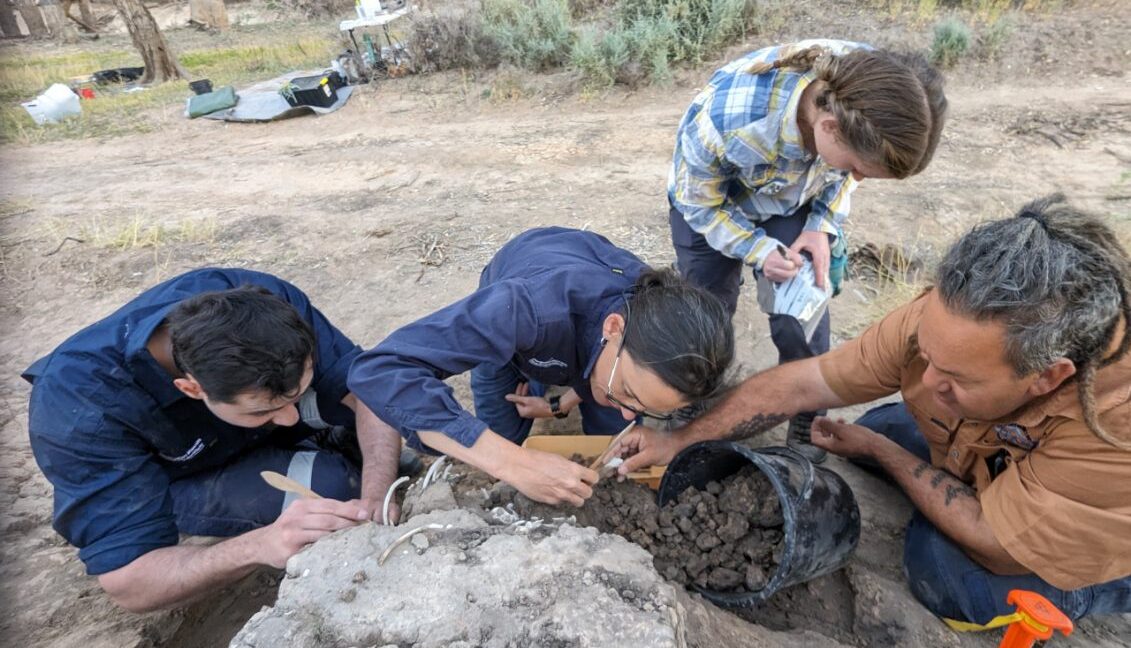
Archaeologists working alongside Barkindji elders in Kinchega National Park, New South Wales, have excavated and reburied the remains of a dingo that lived and died approximately 916 to 963 years ago. The discovery, detailed in a recent paper in Australian Archaeology, provides physical evidence of a profound and enduring relationship between ancient Aboriginal communities and dingoes, challenging previous assumptions about the scope of these cultural ties.
The skeleton, identified as an elderly male, was found in a mound of river mussel shells along the Baaka, or Darling River. Radiocarbon dating of the shells confirmed the initial burial date, while the physical condition of the bones indicated a long life marked by human care. The dingo exhibited heavily worn teeth, signs of arthritis, and healed fractures to the rib and lower leg, suggesting it survived significant injuries, possibly from a kangaroo kick, and was nursed back to health by its human companions.
Loukas Koungoulos from the University of Western Australia, the lead author of the study, noted that the animal was likely between four and seven years old at death, which is considered late middle age for a wild dingo. The findings also revealed that the grave was not a one-off event; layers of shells added over centuries indicate that generations of Barkindji people ritually tended the site, treating the animal with the same respect accorded to human ancestors.
This discovery is located farther north and west than any previously recorded dingo burial in Australia, suggesting that such traditions were more widespread than previously understood. While shell middens are often associated with refuse, in this context they served as purpose-built burial sites. The research highlights how dingoes were integrated into kinship structures and creation stories, functioning as valued members of the community rather than merely wild animals.
The excavation was initiated after erosion exposed the bones, prompting concern from the Menindee Aboriginal Elders Council. Following a smoking ceremony performed by Barkindji elder Barb Quayle, the remains were returned to Country in a process known as return to Country. Co-author Amy Way from the Australian Museum and University of Sydney stated that the care shown to the dingo confirms that these creatures were deeply valued and loved, reinforcing the long-standing knowledge held by the Barkindji people.
