Khanna questions US credibility in alliance with Israel
Following a recent visit to the occupied West Bank, Ro Khanna joins Al Jazeera’s Sreenivasan Jain to debate the future of American global influence and the strategic implications of the US-Israel relationship.
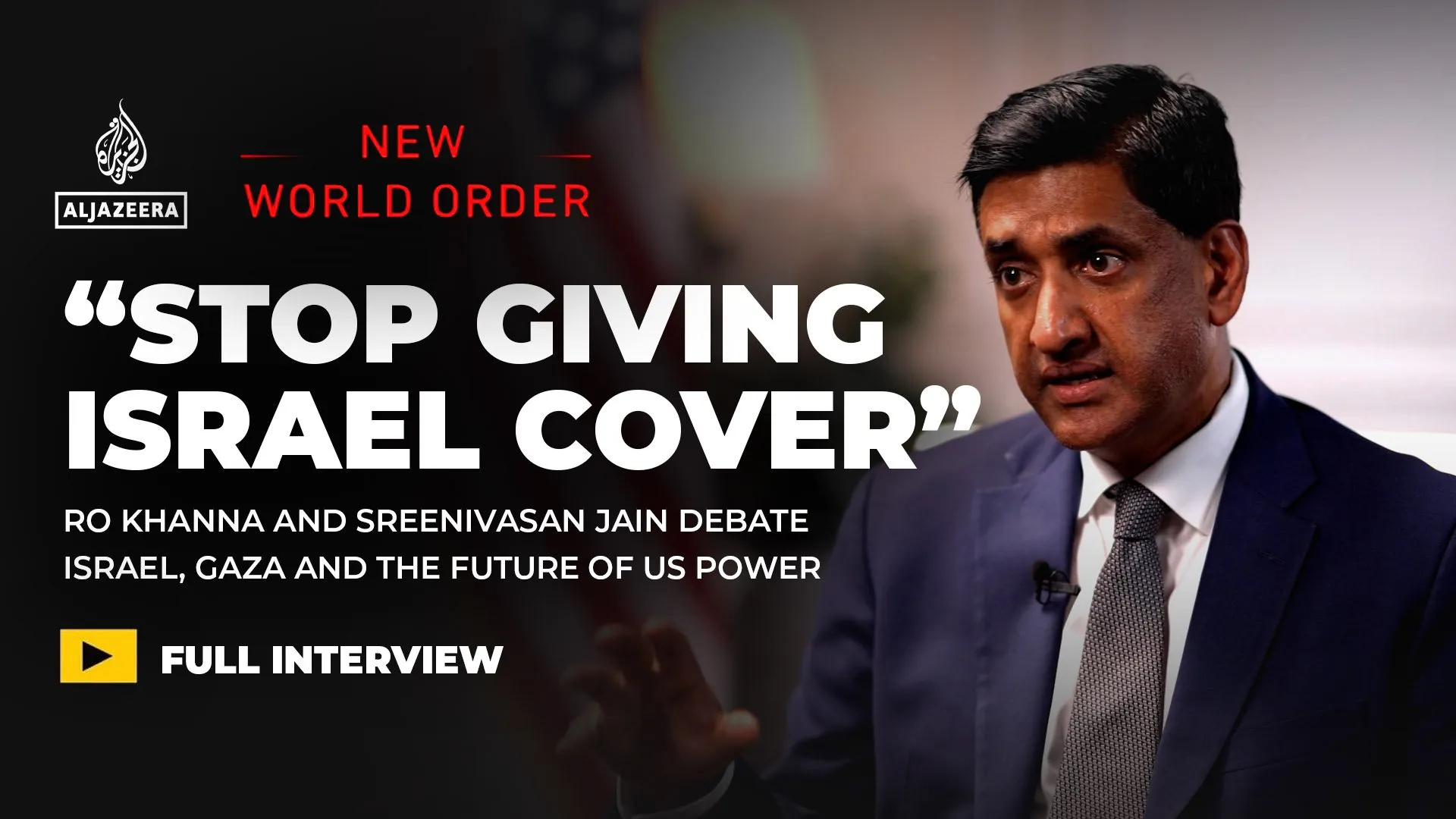
US Congressman Ro Khanna has joined Al Jazeera’s The India Report, hosted by Sreenivasan Jain, to examine the trajectory of American global power and its enduring alliance with Israel. The discussion centres on whether the United States can successfully reorient its foreign policy framework to prioritise principle over power, a shift Khanna suggests is essential for restoring the nation’s global credibility.
The conversation was prompted by Khanna’s recent visit to the occupied West Bank. During the interview, the Congressman and the host explored the implications of this trip for US diplomatic strategy, specifically regarding the region's stability and the broader geopolitical landscape. The source material does not detail the specific arguments or conclusions reached during the debate, but the framing of the discussion highlights a growing scrutiny of the US-led international system.
Khanna described the United States’s alliance with Israel as the defining test of its global credibility. This assessment positions the bilateral relationship not merely as a regional partnership, but as a critical metric for evaluating the integrity and consistency of American foreign policy on the world stage. The debate suggests that the current approach, which has long placed power above principle, may be undermining the US position in global affairs.
The discussion reflects a broader inquiry into the viability of the existing international order. By questioning whether real change is possible within a system that has historically favoured power dynamics, Khanna’s appearance underscores a critical juncture for US foreign policy. The focus remains on whether the United States can demonstrate a commitment to principles that align with its stated democratic values, thereby strengthening its standing among allies and adversaries alike.
While the interview provides a platform for these high-level policy questions, it does not offer a definitive roadmap for reform. The dialogue serves as an indicator of the internal and external pressures facing US policymakers as they navigate complex alliances and shifting global norms. The outcome of such debates will likely influence how the US engages with key partners in the Middle East and beyond in the coming years.