Kenya High Court suspends US Ebola quarantine facility as protests escalate
The suspension of the Laikipia Air Base project follows mass demonstrations in Nanyuki and legal arguments that Kenya’s health infrastructure is ill-equipped to manage foreign Ebola patients.
Kenya’s High Court has suspended the establishment of an Ebola quarantine facility at Laikipia Air Base, halting plans to treat United States citizens exposed to the virus. The order, issued two days prior to mass demonstrations in Nanyuki, remains pending legal challenges filed by the Law Society of Kenya and a constitutional watchdog. Both organisations contend that the nation’s fragile health system renders it unsuitable for quarantining foreign patients, a stance that has galvanised local opposition to the US-backed initiative.
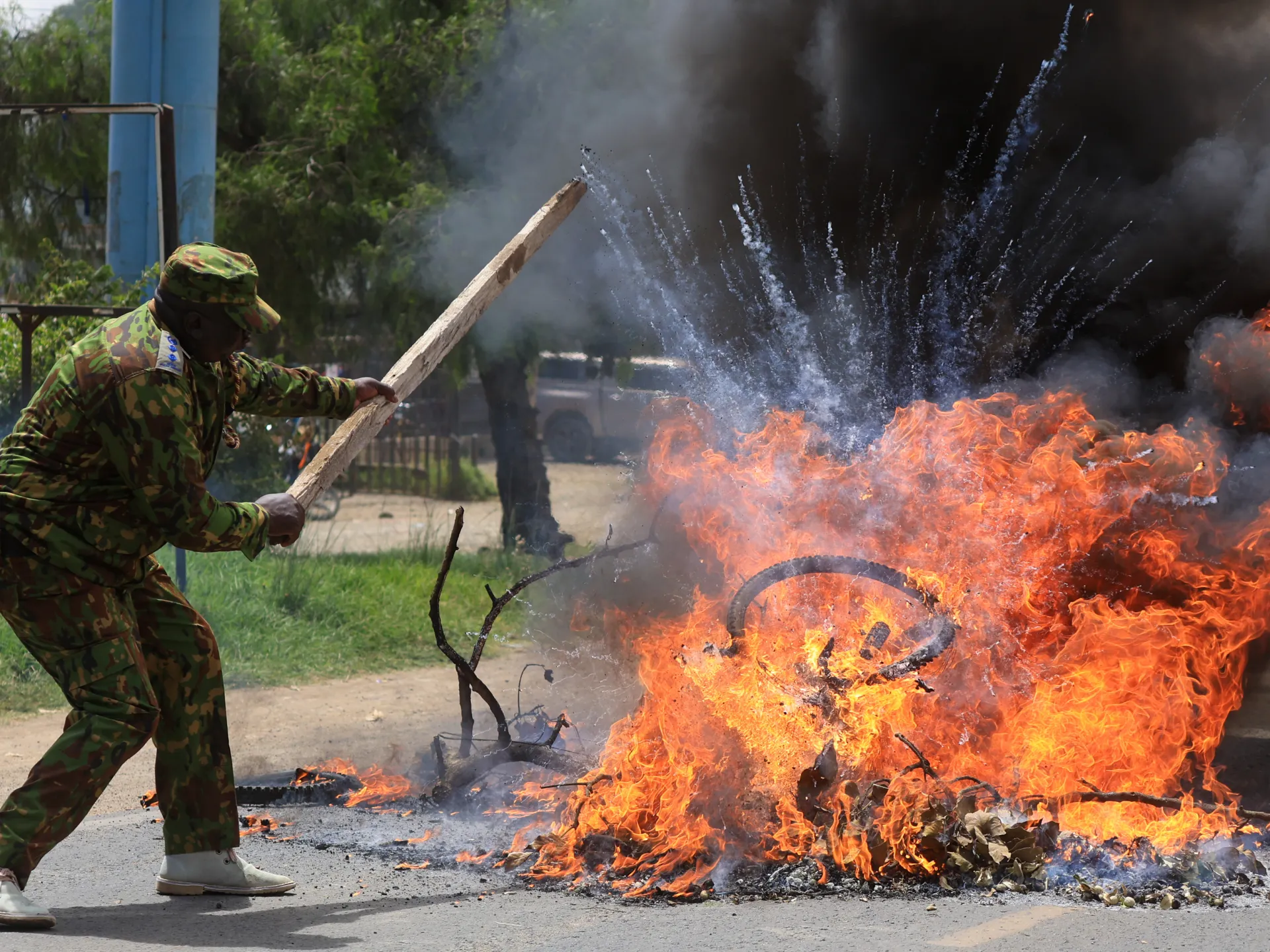
The legal intervention coincides with significant public unrest, as hundreds of demonstrators gathered in Nanyuki, central Kenya, to voice their opposition. Local governance structures have also formally resisted the plan. Laikipia Governor Joshua Irungu has explicitly stated that the facility would endanger the local population, noting that many residents work within the air base and could be exposed to the virus. Health Minister Aden Duale has attempted to clarify the scope of the project, asserting that the centre would be open to all patients rather than being exclusive to US nationals.
The diplomatic friction stems from a decision by US officials to establish the treatment site in Kenya rather than repatriating exposed Americans. Secretary of State Marco Rubio announced a commitment of $13.5 million to support Kenya’s Ebola preparedness efforts. While US officials, speaking on condition of anonymity, indicated that the facility at Laikipia Air Base would be operational with 50 quarantine beds by Friday, the domestic political and legal backlash has stalled these preparations.
The context of the dispute is heightened by the regional spread of the Bundibugyo virus strain, a rare variant of Ebola for which there is currently no approved vaccine or treatment. Neighbouring Uganda has reported nine cases linked to the outbreak in the Democratic Republic of the Congo and has subsequently closed its border with the DRC. In contrast, Kenya has recorded no domestic cases of the virus, a fact cited by critics who argue that introducing the pathogen via a quarantine centre poses an unnecessary risk to a disease-free population.
At least 263 confirmed cases of the Bundibugyo strain have been documented in the Democratic Republic of the Congo. The combination of the regional health emergency, the lack of domestic treatment protocols for this specific strain, and the perceived imposition of foreign medical infrastructure has created a complex governance challenge for the Kenyan government, balancing international security cooperation with domestic public health mandates.