Kanazawa University-led team identifies most primitive galaxy to date
The discovery, announced by NHK News Japan, marks a significant milestone in astronomical observation, though specific technical details regarding the instrumentation remain undisclosed.
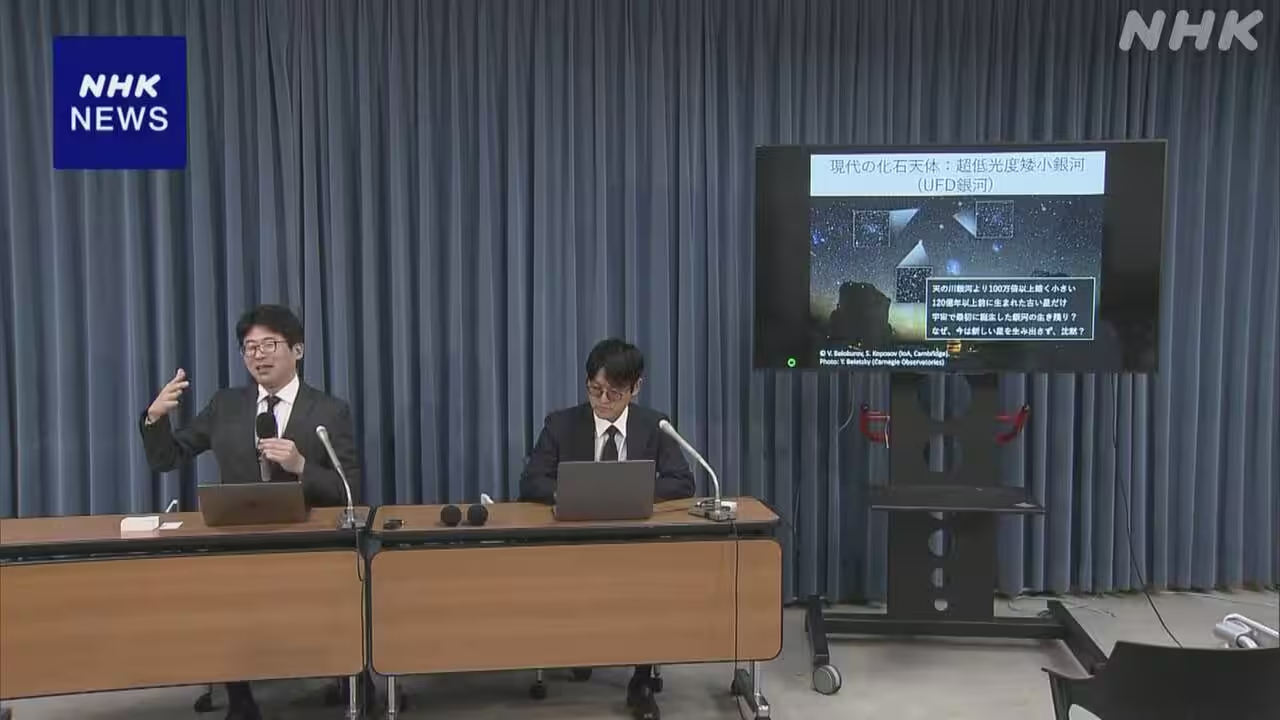
An international research team, spearheaded by Kanazawa University, has successfully observed a faint and diminutive galaxy dating back 13 billion years. The findings, which characterise the object as the most primitive state of a galaxy recorded to date, were detailed in a report issued by NHK News Japan on 14 May 2026.
The observation was conducted using a high-performance space telescope, although the specific identity of the instrument was not disclosed in the source material. The team described the target as extremely faint and small, necessitating advanced observational capabilities to detect such distant and dim objects from the early universe.
This discovery represents a notable advancement in the study of cosmic origins. By identifying a galaxy in such an early developmental stage, the research provides new data points for understanding the formation and evolution of celestial structures shortly after the Big Bang.
The announcement was made via NHK News Japan, which cited the international research team’s confirmation of the observation. The report highlights the collaborative nature of the project, with Kanazawa University playing a leading role in the analysis and dissemination of these astronomical findings.
While the claim of observing the most primitive galaxy state is significant, it remains a relative assessment subject to future discoveries. As astronomical technology continues to evolve, the definition of "primitive" and the limits of observational capability may shift, potentially refining or challenging current conclusions.
The research underscores the critical role of high-performance space-based instrumentation in probing the far reaches of the cosmos. The ability to detect such ancient and faint objects is essential for constructing a more accurate timeline of galaxy formation in the early universe.
NHK News Japan’s coverage of the event positions this discovery within the broader context of ongoing space science developments. The report serves as an official record of the team’s achievement, providing a verified account of the observation for public and academic review.