Kagoshima Earthquake Prompts JMA Tsunami Assessment Amidst Regional Seismic Activity
Shaking intensity reached level 3 in Akune City, while authorities distinguish the event from separate weather warnings and tsunami advisories affecting other coastal zones.
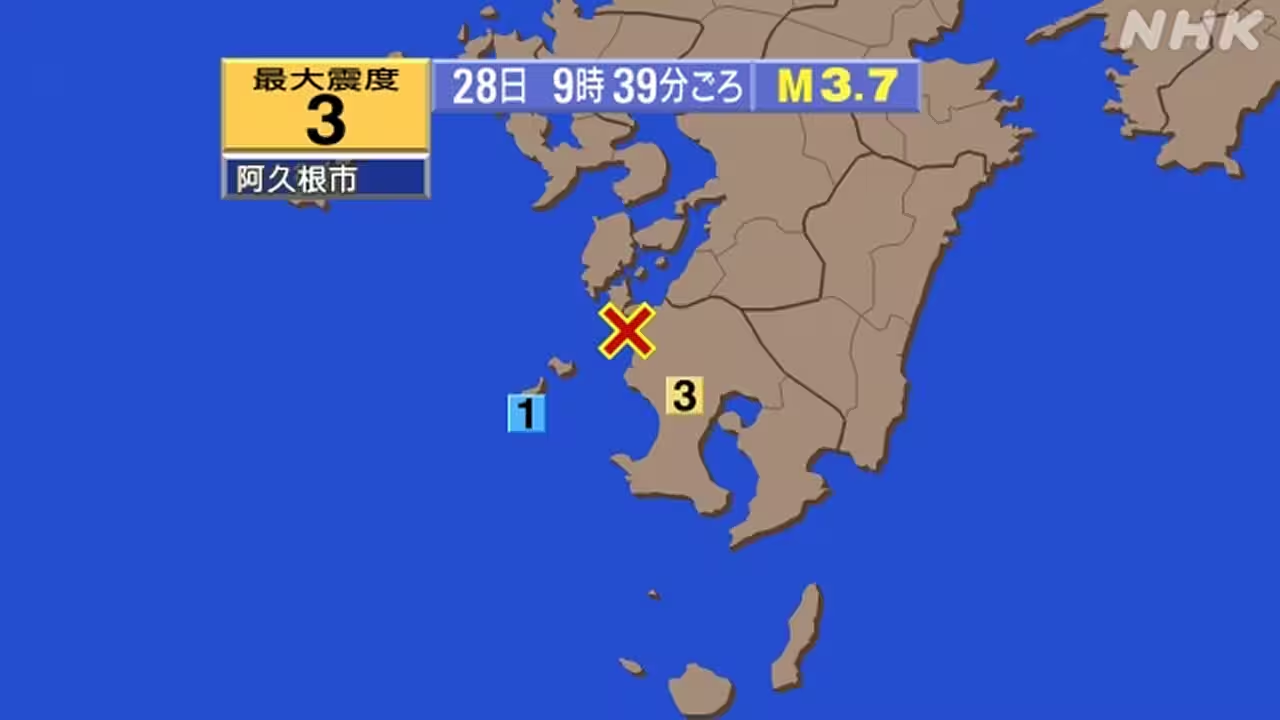
The Japan Meteorological Agency (JMA) confirmed that an earthquake occurred in the Satsuma region of Kagoshima Prefecture on the morning of 28 July 2026. The seismic event was recorded at approximately 09:39 local time, prompting immediate monitoring of ground movement and potential secondary hazards by national authorities.
According to data reported by NHK News Japan, the Japan Meteorological Agency recorded a seismic intensity of 3 in Akune City. Lower levels of shaking, classified as intensity 2, were observed in Satsuma-Sendai City and Satsuma Town. The JMA’s seismic intensity scale indicates that level 3 corresponds to shaking felt by most people, typically causing minor disturbances without significant structural damage.
Following the initial detection of the tremor, the Japan Meteorological Agency issued a statement confirming that there is no risk of a tsunami resulting from this specific event. The agency’s assessment was communicated through its standard earthquake quick report channels, providing immediate clarity to local governance bodies and residents regarding coastal safety protocols.
It is necessary to distinguish this incident from other concurrent meteorological and seismic alerts across Japan. On the same morning, the JMA issued a "Recorded Short-Duration Heavy Rain" warning for Itoigawa City in Niigata Prefecture and Nanto Town in Toyama Prefecture due to intense rainfall. These weather-related warnings are distinct from the geological activity in Kagoshima.
Furthermore, the Kagoshima earthquake is separate from a broader tsunami advisory issued for the Pacific coast of Japan, which follows a magnitude 8.2 earthquake elsewhere. The advisory covers coastal areas from Ibaraki Prefecture to Okinawa Prefecture, including the Miyako-Yaeyama region and the Amami Islands. Authorities have maintained clear delineation between the local Satsuma event and these wider regional advisories to prevent confusion in emergency response coordination.