Jobar residents blocked from rebuilding as Damascus unveils $21bn reconstruction plan
Locals in the Jobar district report being denied permission to rebuild their own homes, even as President Ahmed al-Sharaa’s administration pursues a controversial foreign-backed development scheme offering limited restitution.
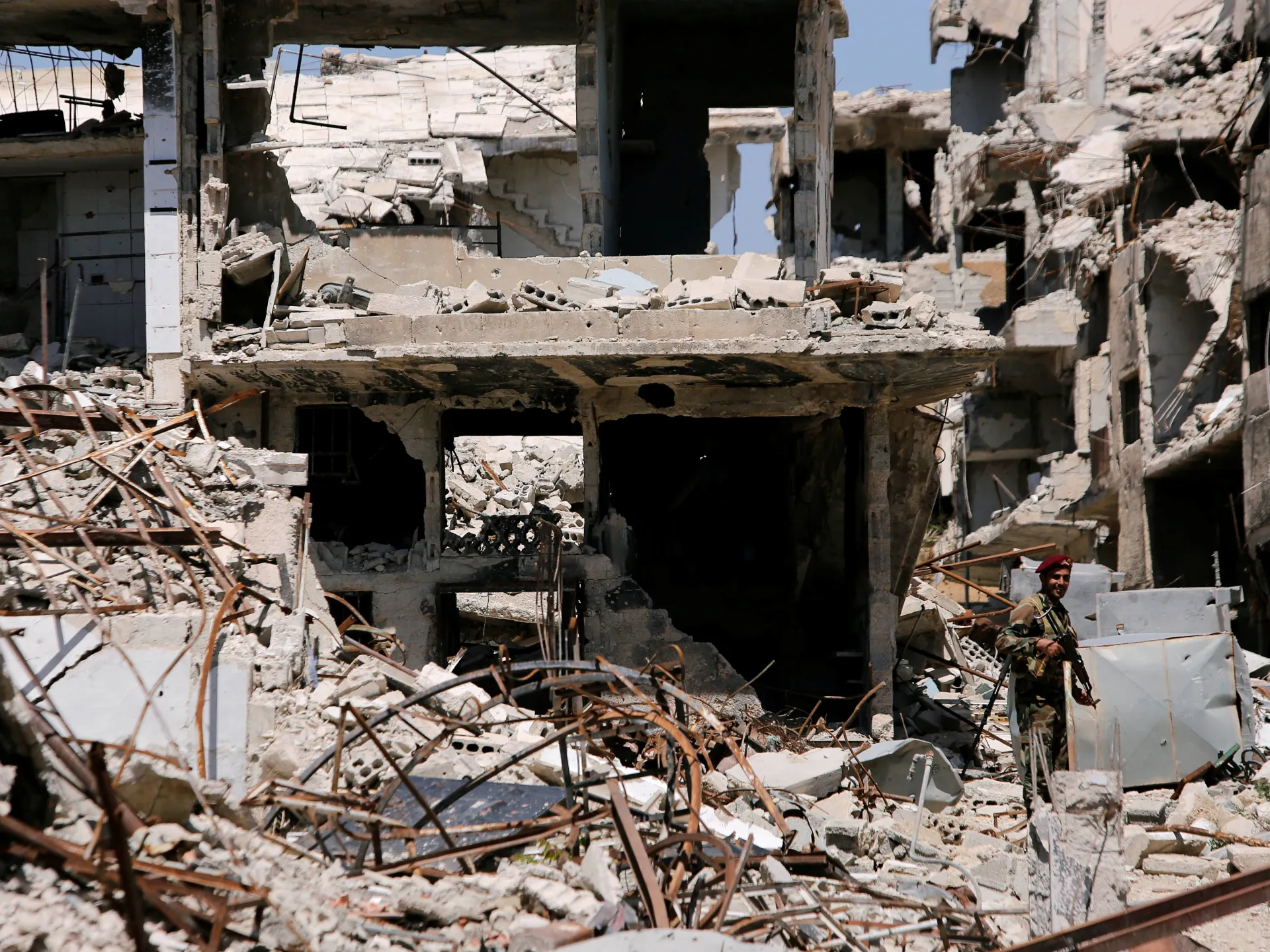
Residents of Jobar, a Damascus suburb devastated during Syria’s civil war, are facing significant obstacles in rebuilding their homes following the fall of the Assad regime in December 2024. The area, which saw 95 percent of its buildings destroyed by government forces between 2012 and 2018, remains largely uninhabited due to infrastructure collapse, unexploded ordnance, and a complex network of tunnels. While the new government led by President Ahmed al-Sharaa has removed international sanctions and sought foreign investment for reconstruction, locals report being blocked from rebuilding on their own initiative.
Ahmad, a former fighter and resident, reported that officials told locals they could not rebuild their homes, even on their own initiative, without providing further details on the area's plan. Salem Sawan, also known as Abu Yehya, a former medic, stated that residents have been blocked from rebuilding despite wanting to return to their homes. The lack of transparency has fueled frustration in an area where the ground is reportedly hollowed out by a labyrinth of tunnels built by opposition groups, leading to the nickname 'the Bermuda Triangle'.
A proposed $21 billion foreign-backed development plan has sparked anger among residents, as it reportedly offers only 50 percent restitution of former homes and 30 percent restitution for areas classified as "agricultural". Media reports indicate that local officials have proposed a foreign-backed project for Jobar that could create up to 200,000 jobs, but this proposal was met with anger by local councils and activists due to the low restitution rates. The plan highlights the tension between the state’s desire for large-scale capital injection and the community’s need for housing and basic services.
The economic backdrop to this dispute is stark. The World Bank estimates reconstruction costs at $216 billion and 90 percent of the population living in poverty. Cao Yue, an author of a recent report on Syria’s reconstruction for ODI Global, noted that the government has a limited public budget and has therefore targeted international private capital. This reliance on foreign investment has led to agreements with international investors, particularly from neighbouring countries, to channel money into reconstruction efforts where infrastructure is non-existent.
Complicating the political landscape is the alleged involvement of former regime associates. Mohammad Hamsho, former business partner of Maher al-Assad, allegedly reached a financial settlement with the new government in January 2026; his companies have been accused of extracting iron from destroyed areas for steel production. Ahmad noted that iron rods from building floors were stolen, contributing to structural instability. Despite these challenges, some residents remain determined. Mahmoud al-Ajouz, a gravedigger who remained in Jobar during the regime's evacuation orders, expressed determination to rebuild "with our own hands" alongside the state.