US imposes 25% additional tariffs on Brazil citing unfair trade practices
The Trump administration has announced new levies on Brazilian imports, excluding specific items, while Brazil maintains there is no basis for the unilateral action.
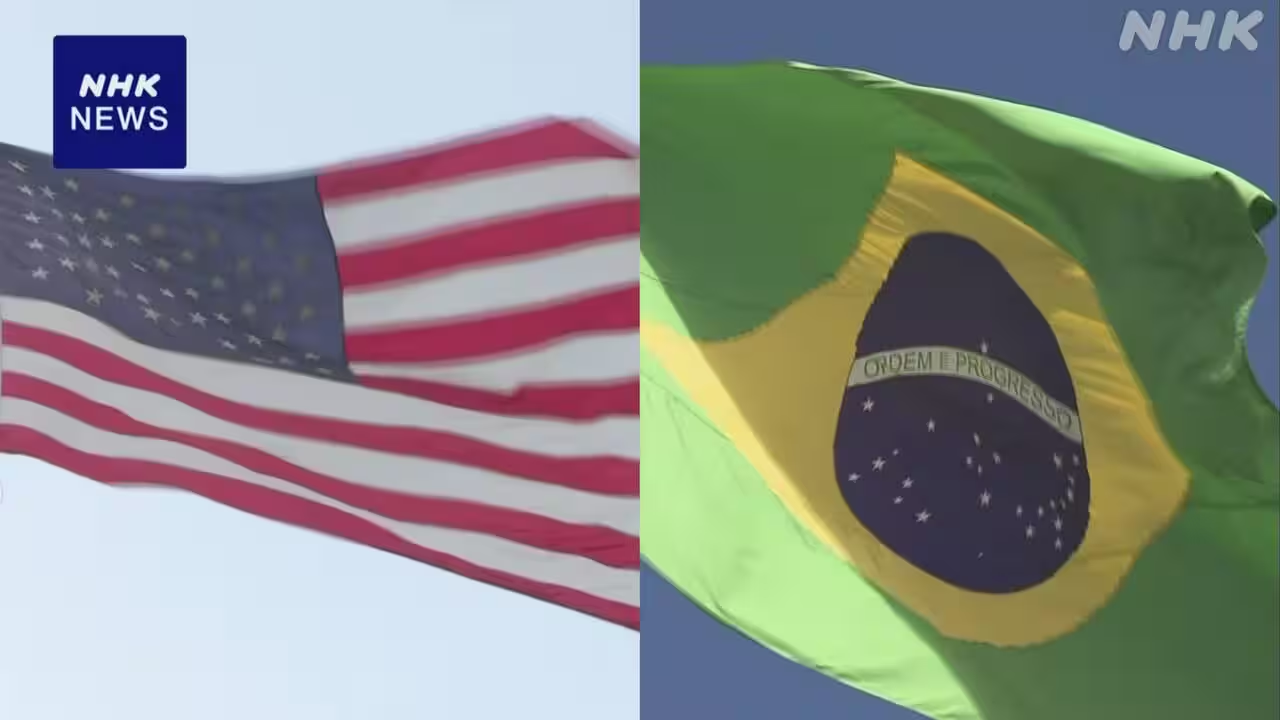
The Trump administration in the United States has decided to impose new additional tariffs of 25 per cent on imports from Brazil, excluding specific items. The decision, reported by NHK News Japan on 17 July 2026, cites Brazil’s unfair trade practices under Section 301 of the Trade Act as the primary rationale for the measure.
Washington’s move relies on provisions within Section 301 of the Trade Act, which allows the United States to take action against countries deemed to be engaging in unfair trade practices. The administration has not detailed the specific nature of these practices, nor has it provided an exhaustive list of the Brazilian goods excluded from the new tariffs.
Brazil has responded to the announcement by stating that there is no basis for justification for the move. The Brazilian government’s reaction characterises the US decision as unilateral and lacking a valid foundation, signalling immediate diplomatic friction over the trade policy shift.
The imposition of these tariffs occurs against a backdrop of broader economic tensions. The US Federal Reserve has recently reported that inflation is rising gradually overall, influenced in part by the situation in Iran. Meanwhile, Mercosur, the South American customs union to which Brazil belongs, has announced the start of Economic Partnership Agreement negotiations with Japan.
This development adds to the complexity of global trade dynamics, as other nations adjust their monetary policies in response to similar inflationary pressures. South Korea, for instance, has raised interest rates for the first time in three and a half years to curb inflation driven by the Iran situation, highlighting the interconnected nature of current economic challenges.