Jason Peterson’s precision tracking secured Artemis II splashdown coverage
From launch pad to Pacific Ocean, Peterson’s multi-sensor systems captured the Orion capsule’s return, supporting the agency’s deep space exploration goals.
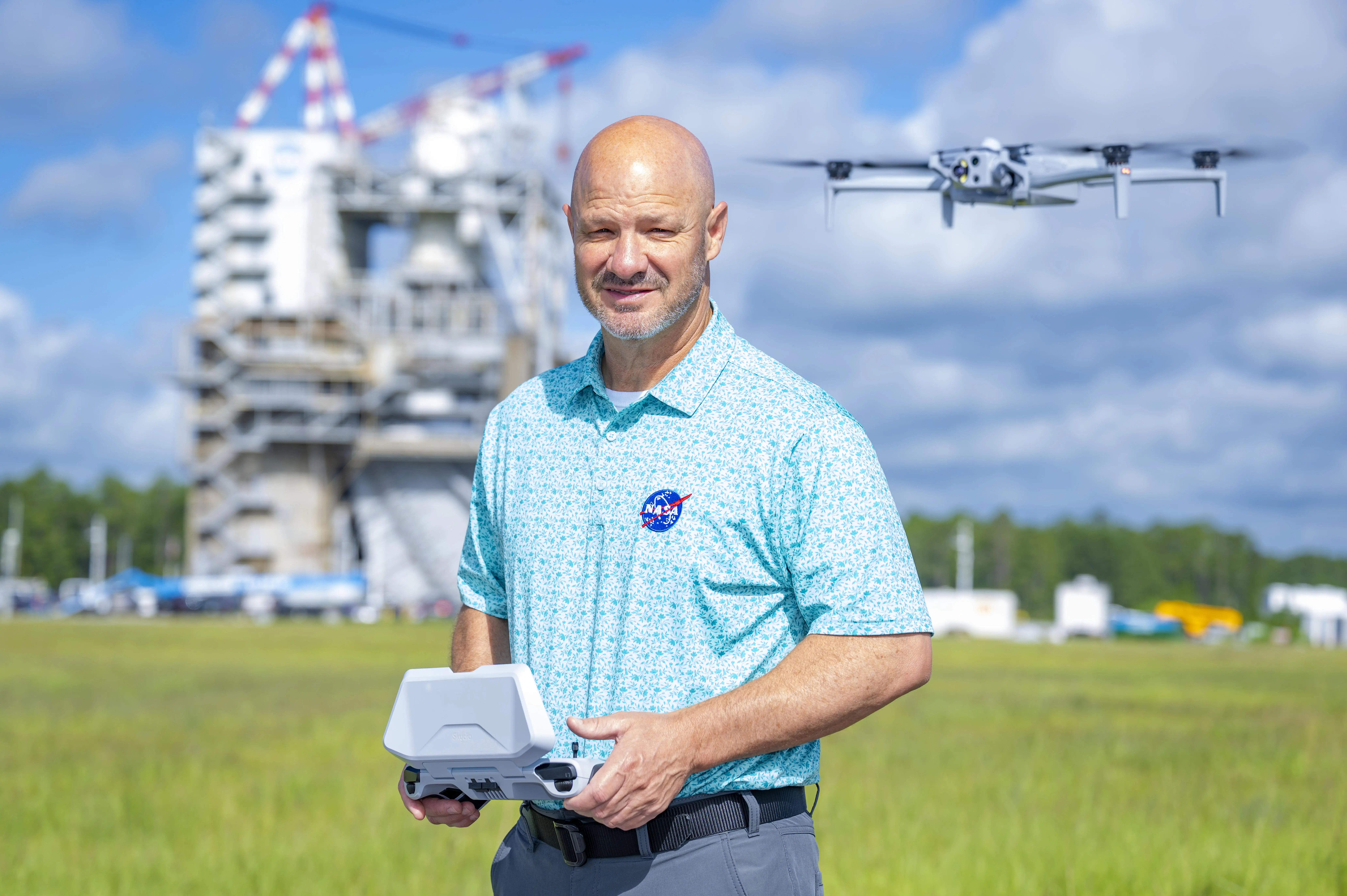
Jason Peterson, range operations manager at NASA’s Stennis Space Center, played a critical role in the successful completion of the Artemis II mission, which returned to Earth in April 2026. His responsibilities extended well beyond his usual duties at the Mississippi facility, requiring him to manage video and communication feeds for both the launch and the splashdown of the Orion spacecraft.
The mission carried NASA astronauts Reid Wiseman, Victor Glover, and Christina Koch, alongside Canadian Space Agency astronaut Jeremy Hansen. During the nearly 10-day journey, the crew completed a record-setting lunar flyby, reaching a distance of 252,756 miles from Earth before beginning their return.
Peterson’s preparation for the intense operational demands was rooted in his 24-year career in the U.S. Air Force and Air National Guard. He credited his military background with equipping him for the 12-to-16-hour workdays required during the mission. Prior to joining NASA, Peterson worked as a welder, attended college, and served as an aircraft dispatcher at the Airbus Final Assembly Line.
His connection to the space agency is deeply personal. Growing up in DeLisle, Mississippi, near NASA facilities, Peterson recalled hearing testing that shook the windows of his home. He described his career path as a surreal full-circle moment, noting that he never dreamed he would one day work with the agency that had shaped his childhood environment.
In the days leading up to the April 1 launch, Peterson worked at Kennedy Space Center in Florida. He helped configure systems for live video feeds from the launch pad, crowds, and aerial platforms, including drones. On launch day, the team deployed high-resolution sensors and drone equipment to capture aerial views before the Space Launch System rocket lifted off.
As the mission progressed, Peterson arrived in San Diego on April 4, when the crew was more than halfway to the Moon. He prepared for splashdown operations, which occurred on April 10. The Orion spacecraft entered Earth’s atmosphere at approximately 400,000 feet, travelling at nearly 35 times the speed of sound, and splashed down about 1,956 statute miles from the coast of California.
Aboard the USS John P. Murtha, Peterson was the first person to spot the returning capsule. He operated one of six cameras providing live coverage, using a high-resolution, multi-sensor system with thermal capabilities. By utilising the ship’s heading and Orion’s predicted trajectory, he located the capsule within minutes.
Peterson tracked the capsule from the release of the small parachutes, through the deployment of the main parachutes, and all the way to splashdown. He described the process as requiring full concentration to keep the capsule centered, in focus, and steady on the monitors.
The Artemis II mission serves as a precursor to Artemis III, which will launch four astronauts from Kennedy Space Center aboard the Orion spacecraft on the Space Launch System rocket. Results from Artemis II’s science investigations will support future safe human exploration of deep space, with experts like Peterson continuing to support operations every step of the way.