Japan’s Middle East supplementary budget faces upper house scrutiny
Legislation approved by the lower house on 4 June moves to the House of Councillors for debate and potential vote on 5 June 2026.
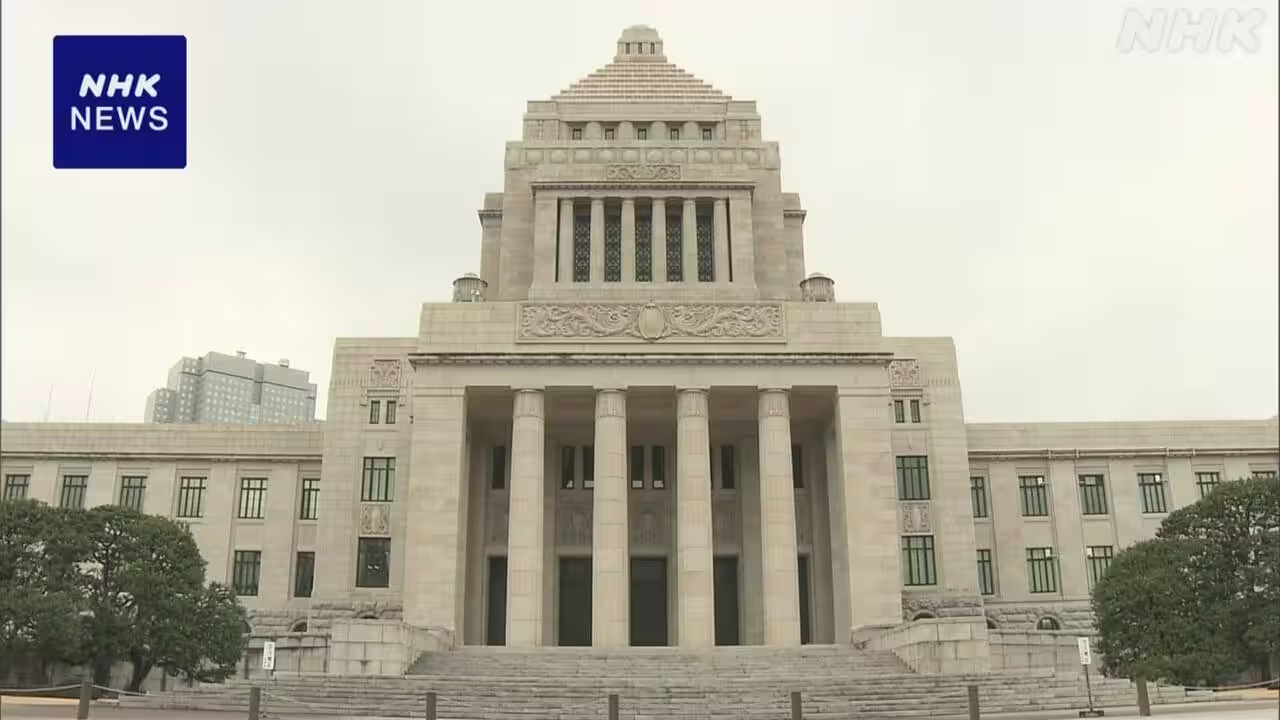
Japan’s supplementary budget bill, designed to address the escalating geopolitical situation in the Middle East, is set to undergo debate in the House of Councillors on 5 June 2026. The legislation, which passed the House of Representatives on 4 June, now faces the upper house chamber where the ruling party intends to secure its passage through a coordinated voting strategy.
The bill, valued at 3.1135 trillion yen, was approved by the Cabinet on 3 June as a direct fiscal response to regional tensions. Following its approval in the lower house, the government has moved quickly to advance the measure, with the ruling party aiming to hold votes in both the budget committee and the plenary session by the end of the 5 June debate.
Government sources indicate that passage is expected to be secured through a majority vote comprising the ruling party and support from some opposition parties. While the specific composition of this coalition remains vague, the administration’s timeline suggests a high probability of the bill becoming law without significant delay, provided the scheduled votes proceed as planned.
The supplementary budget arrives amidst a broader political landscape in Japan, where other legislative matters are also under discussion. Concurrently, the House of Councillors is engaged in debates regarding constitutional review, and there are ongoing discussions about potential reductions in the number of proportional representation seats in the lower house.
Despite the urgency surrounding the Middle East response, the final outcome remains subject to the proceedings on 5 June. The ruling party’s ability to maintain its majority and secure the necessary opposition support will determine whether the budget is enacted as expected or faces further procedural hurdles in the upper house.