Japan's effective job vacancy rate dips to 1.18x national average as input costs curb hiring
While persistent shortages remain, the slight decline in the vacancy rate signals a strategic pause in recruitment linked to soaring raw material expenses
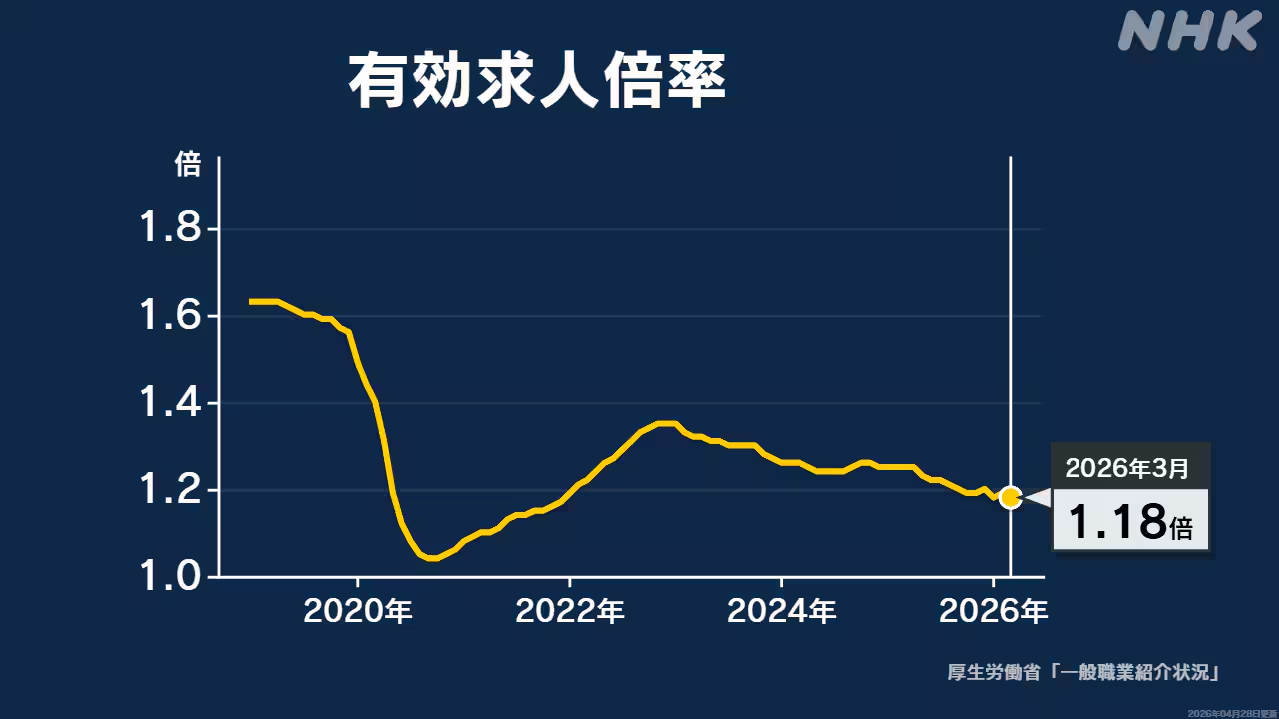
The effective job vacancy rate for March 2026 registered at 1.18 times the national average, marking a marginal decrease of 0.01 points from the previous month. According to the Ministry of Health, Labour and Welfare, this figure indicates a subtle shift in the labour market dynamics despite the continued existence of structural workforce shortages across the economy.
The official unemployment rate for the same period also deteriorated slightly, rising to 2.7 per cent, an increase of 0.1 points from February. This concurrent movement suggests that the reduction in the vacancy metric is not necessarily a sign of improved employment outcomes for job seekers, but rather reflects changes in how vacancies are posted or filled by employers.
The Ministry attributes the decline in the vacancy rate to a counteracting trend where certain enterprises are holding back on new recruitment. This strategic restraint is primarily driven by the impact of escalating raw material costs, which are forcing companies to recalibrate their hiring strategies in the face of tighter input margins.
The effective job vacancy rate serves as a critical economic indicator, calculated by dividing the total number of job vacancies by the number of job seekers. A ratio exceeding 1.0 typically signals a labour shortage, yet the recent downward movement implies a tightening of the market or a deliberate reduction in the number of active vacancies posted by firms.
Although the Ministry of Health, Labour and Welfare confirms that labour shortages persist as a fundamental issue, the data highlights the growing influence of cost pressures on corporate behaviour. The specific magnitude of companies restraining their hiring versus those actively recruiting remains unquantified in the current report, leaving the precise scale of this trend somewhat ambiguous.
Regional variations in the vacancy rate are not detailed in the national average provided by the Ministry, meaning the 1.18x figure represents a broad aggregate that may mask significant disparities between urban centres and rural areas. The qualitative nature of the decision to hold back on hiring further complicates the assessment of future labour supply and demand balances.