Japan’s 10-year bond yield hits 29-year high as long-term rates climb to 2.605%
NHK News Japan reports that the yield on Japan’s 10-year government bond rose to 2.605% on 14 May 2026, marking the highest level in nearly three decades.
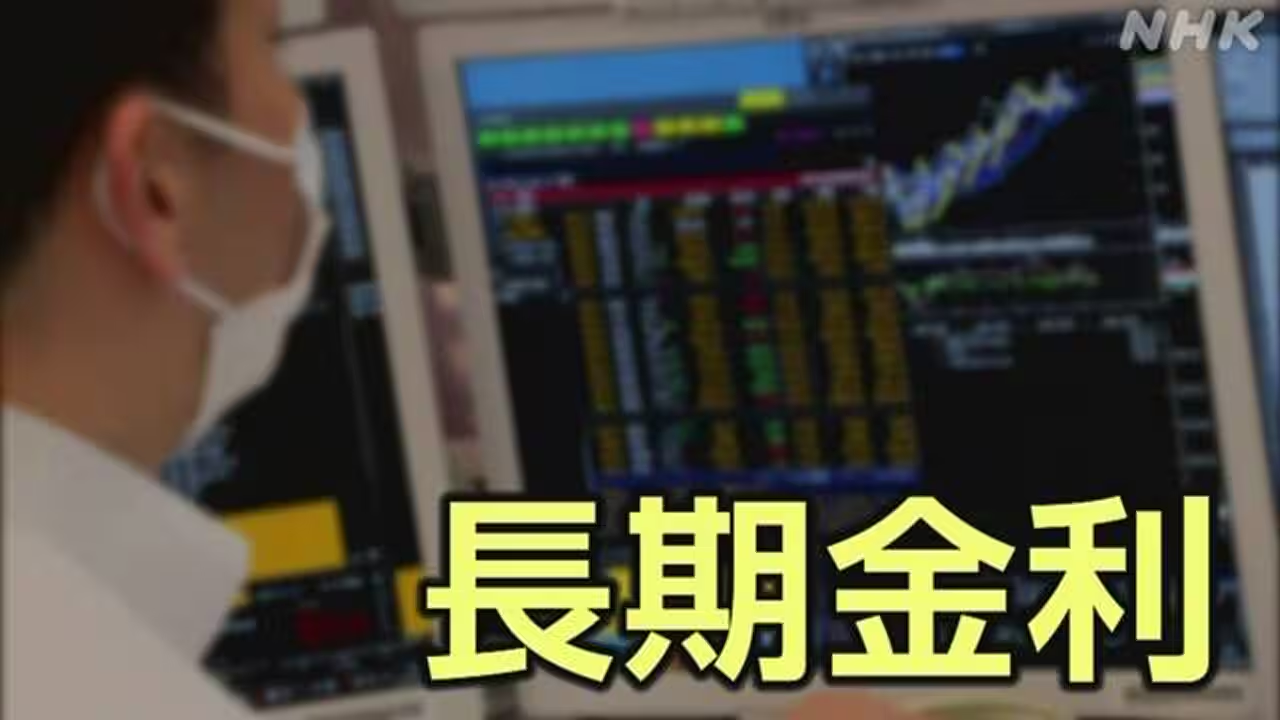
The yield on Japan’s 10-year government bond rose to 2.605% during bond market trading on 14 May 2026, according to data cited by NHK News Japan. This figure represents the highest level for the benchmark long-term interest rate since June 1997, a period spanning approximately 29 years.
The rise in long-term interest rates was reported by the broadcaster, which referenced data from Nippon Mutual Securities. The data highlights a substantial increase in borrowing costs, a key indicator of economic conditions in Japan. The current rate places the market in the context of post-bubble economic adjustments, contrasting sharply with the financial environment of the late 1990s.
While NHK cited Nippon Mutual Securities for the immediate market data, the historical comparison to the 1997 peak was attributed to the Dai-ichi Life Research Institute in the event digest. This distinction in sourcing underscores the varying analytical perspectives on the significance of the rate hike, though both institutions confirm the unprecedented nature of the current yield levels.
Long-term interest rates serve as a critical barometer for Japan’s economic health, influencing everything from government debt servicing to private sector investment. The climb to 2.605% suggests a structural shift in how the market prices Japanese sovereign debt, potentially reflecting changing expectations regarding inflation, monetary policy, and global capital flows.
The source material notes an incomplete reference to crude oil futures prices at the end of the original report. However, there is no established causal link provided in the available text between oil prices and the bond yield movement. Consequently, the focus remains strictly on the bond market data and its historical context as reported by the financial institutions involved.