ENEOS Tanker Navigates Strait of Hormuz Amidst Regional Tensions
Reuters reports on the passage of an ENEOS Holdings-managed crude oil tanker, highlighting broader market volatility and government policy responses to Middle East instability.
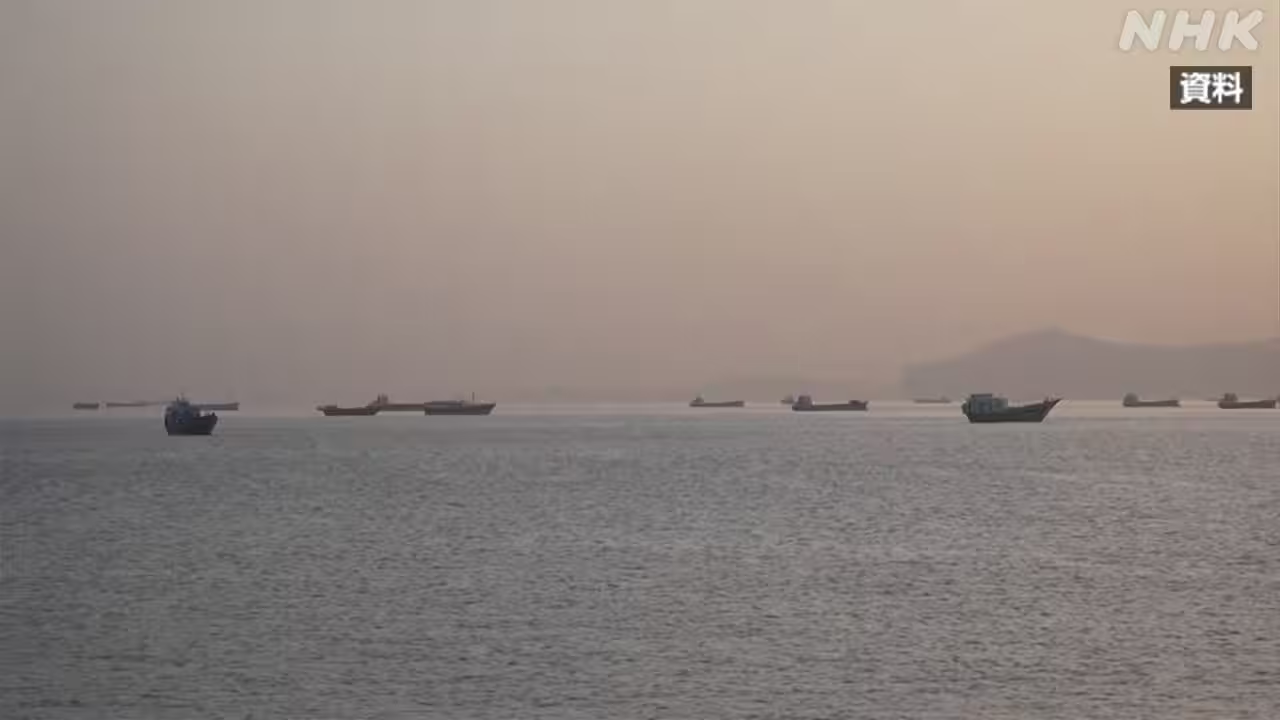
A Panama-flagged crude oil tanker managed by major oil wholesaler ENEOS Holdings has passed through the Strait of Hormuz, according to a report by Reuters on 14 May 2026. The news agency cited data from a vessel tracking company to confirm the transit, marking a significant movement through one of the world’s most critical energy chokepoints.
The passage occurs against a backdrop of heightened geopolitical instability in the Middle East, particularly concerning the situation in Iran. While the specific identity of the tanker and the volume of its cargo were not disclosed in the initial reports, the event underscores the ongoing operational risks associated with global oil supply routes.
In response to the broader regional developments, the Japanese government is considering subsidies for summer electricity and gas bills. This potential policy intervention reflects the domestic impact of Middle East tensions on energy costs and household expenditures, as authorities seek to mitigate economic pressure on consumers.
Global financial markets have exhibited significant volatility alongside these geopolitical shifts. The Nikkei index reached a temporary high of over 63,400 yen during trading hours, while US indices, including the Nasdaq and S&P 500, hit record highs. Concurrently, Japan’s long-term interest rates have risen to 2.605 per cent, the highest level recorded since June 1997.
The report relies on third-party vessel tracking data, and independent verification of the tanker’s exact status or intent remains unavailable in the source material. The connection between this specific transit and the broader market movements is contextual, reflecting the complex interplay between energy logistics, geopolitical risk, and financial performance.