Japan’s 10-year bond yield hits 29-year high amid market shift
Daiwa Securities confirms the rise in long-term interest rates, marking a significant milestone in Japan’s financial landscape nearly three decades after the previous peak.
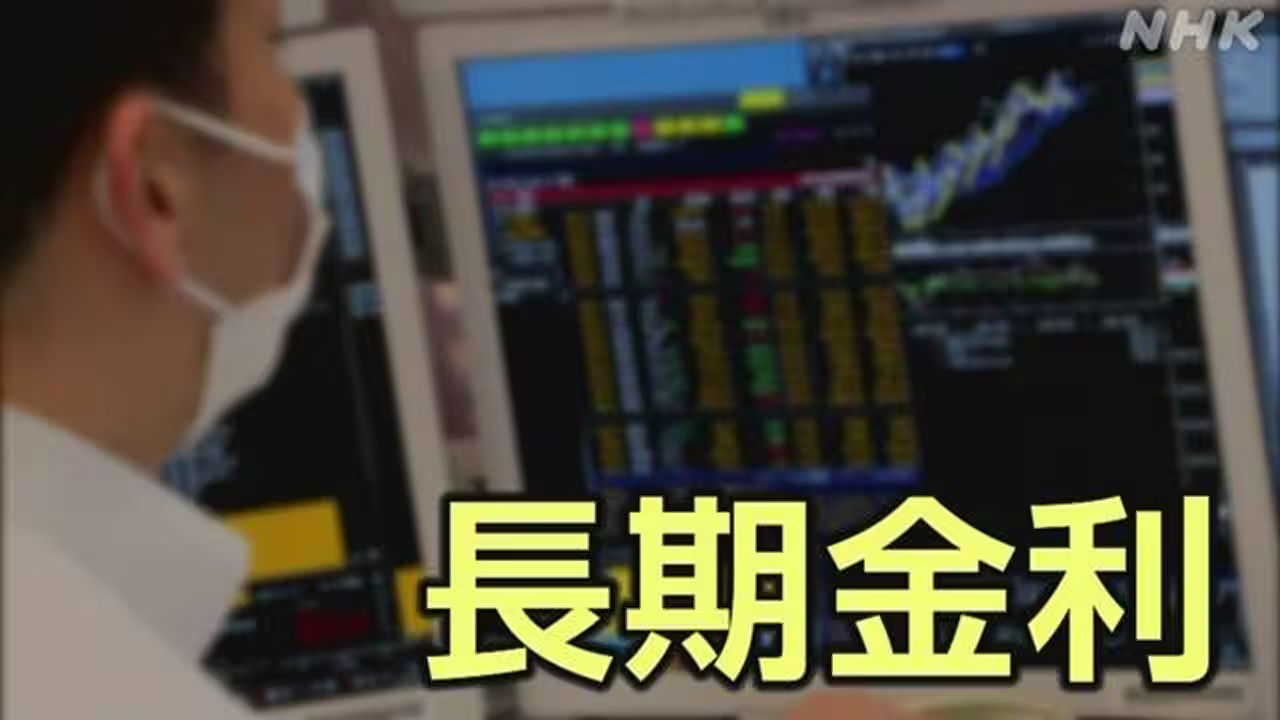
Japan’s long-term interest rates climbed on 15 May 2026, with the yield on 10-year government bonds rising to 2.665 per cent. This figure represents the highest level recorded for the benchmark security in 29 years, according to data from Daiwa Securities. The move marks a distinct departure from the extended period of low yields that has characterised the Japanese bond market for much of the past quarter-century.
The current yield level surpasses the previous historical peak, which was recorded in May 1997. The gap between the two data points spans nearly three decades, highlighting the magnitude of the shift in market pricing for Japanese sovereign debt. For investors and policymakers, the 10-year government bond yield serves as a critical indicator of economic conditions and expectations regarding monetary policy direction.
Market participants have noted the significance of the rise, although the specific catalysts driving the increase remain partially obscured in initial reports. The source material from NHK News Japan indicates that market relations were observing the trend, but the full commentary from participants was cut off at the time of publication. Consequently, the precise drivers—whether domestic policy adjustments, global market trends, or inflation expectations—have not been fully detailed in the available briefings.
The rise in yields suggests a recalibration of risk and return expectations within the Japanese financial system. Long-term interest rates are closely watched as they influence borrowing costs for the government, businesses, and households. A shift towards higher yields can signal changing attitudes towards inflation and economic growth, potentially impacting the broader macroeconomic environment.
As the market digests the new yield levels, attention will remain on how this development aligns with the Bank of Japan’s monetary policy stance. The 2.665 per cent yield stands as a clear marker of the current economic reality, bridging the historical context of the late 1990s with the present-day financial landscape.