Japanese snack giant Calbee shifts to monochrome packaging amid Middle East supply instability
Calbee states the change is necessary due to unstable supply chains for inks and packaging materials linked to the situation in the Middle East.
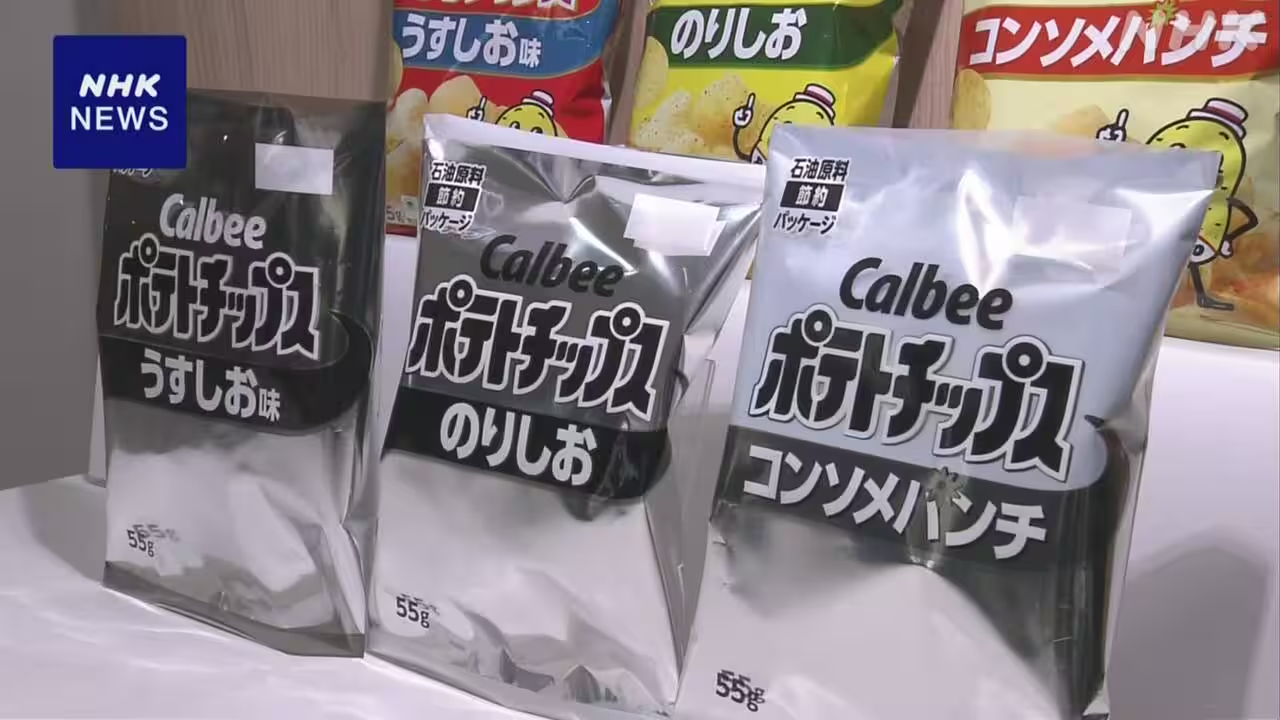
Major Japanese snack manufacturer Calbee has announced a significant alteration to its product presentation, confirming that select packaging for its flagship items will transition to a black and white design. The decision, effective from late May, marks a departure from the colour printing typically associated with the company's main products, including potato chips.
The shift to monochrome is a direct operational response to instability in the supply chains for inks and other packaging materials. Calbee attributes this disruption to the ongoing situation in the Middle East, which has complicated the procurement of essential printing resources required for their standard packaging processes.
The company describes the change as a temporary measure intended to last for the time being. However, no specific timeline has been provided for when colour printing might resume, leaving the duration of the monochrome period currently undefined. This lack of a concrete end date highlights the volatility of global supply chains in the face of regional geopolitical conflicts.
While Calbee explicitly identified potato chips as one of the affected categories, the full scope of the transition remains partially obscured. The announcement refers to "some of its main products," suggesting that the impact extends beyond a single item but without detailing the complete list of brands or varieties subject to the redesign.
This move underscores the increasing vulnerability of global manufacturing to external political shocks. As a leading producer in Japan, Calbee's reliance on colour printing makes the visual identity of its brands particularly sensitive to fluctuations in international trade and resource availability driven by events far removed from its domestic market.
The announcement, reported by NHK News Japan, serves as a stark reminder of how regional instability can ripple through global logistics networks, forcing even major corporations to adapt their consumer-facing strategies rapidly to maintain operations.