Japanese Prime Minister Takaishi departs for regional tour focused on energy security and supply chains
Prime Minister Takaishi leaves Haneda Airport to confirm bilateral cooperation on essential materials and energy supply; visit aligns with broader Indo-Pacific economic security strategy
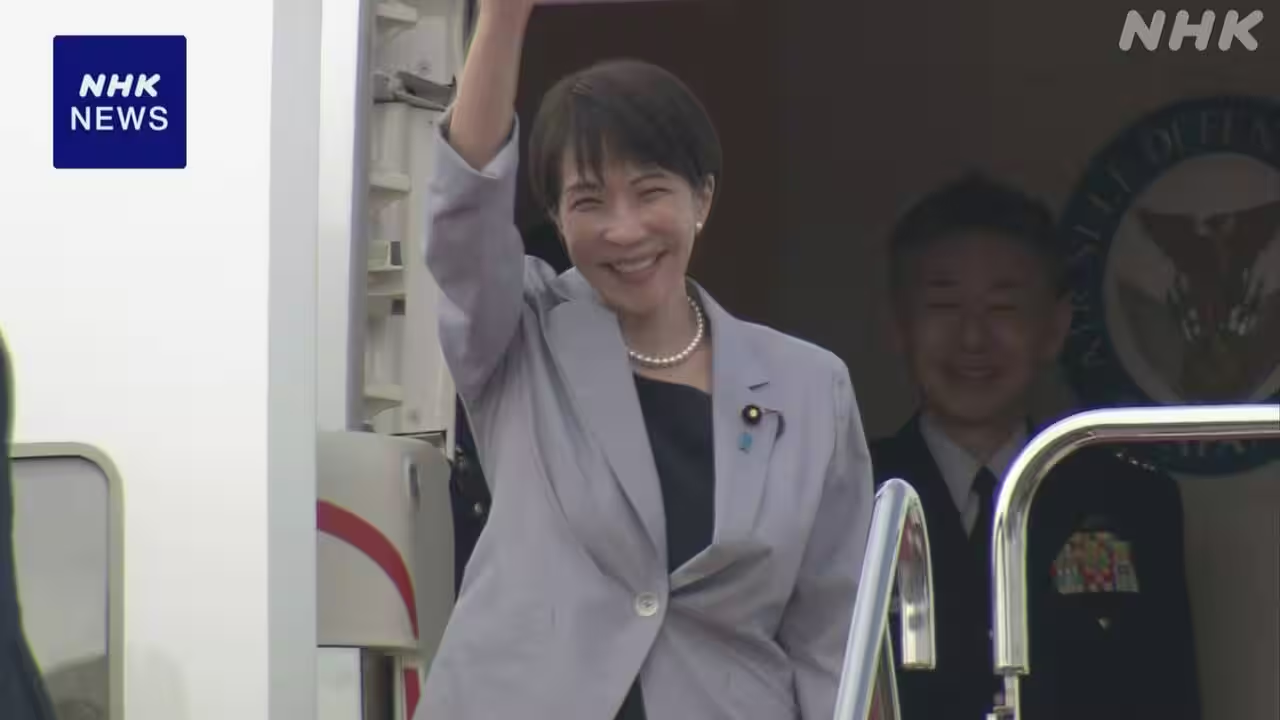
Japanese Prime Minister Takaishi departed from Haneda Airport in the afternoon of 1 May 2026 to commence a diplomatic tour of Vietnam and Australia. The departure marks the start of a high-level engagement aimed at reinforcing strategic ties with key regional partners through the lens of economic security.
Prior to leaving the capital, the Prime Minister addressed a press corps gathered at the airport, outlining the core objectives of the upcoming itinerary. She stated that the visit aims to confirm cooperation between Japan, Vietnam, and Australia regarding the stability of energy supplies. The focus extends beyond simple trade to include the strengthening of supply chains for essential materials, a critical component of the nations' broader resource management strategies.
This diplomatic initiative is situated within a wider context of regional economic security and resource management. The move reflects a continuing emphasis on securing vital supply lines in the Indo-Pacific, an area where resource stability is increasingly viewed as a cornerstone of national policy. The stated goals align with previous high-level engagements, such as former Prime Minister Kishida's recent visit to the Philippines, which centred on LNG infrastructure and long-term resource contracts.
The Prime Minister's comments to the media did not elaborate on the specific mechanisms of cooperation or the precise scope of the "essential materials" in question. While the commitment to stability is clear, the detailed policy frameworks or the specific industries targeted remain unelaborated in the initial departure announcement. This suggests that the substantive negotiations and detailed planning will likely unfold during the meetings in Vietnam and Australia.
The departure from Haneda Airport serves as a tangible signal of Japan's intent to deepen its institutional links with Southeast Asian and Oceania nations. By prioritising energy and supply chain resilience, the administration is framing the visit as a necessary step to navigate the complex geopolitical and economic landscape of the region. The focus remains firmly on governance and policy continuity rather than purely transactional outcomes.
As the Prime Minister heads south, the visit is expected to test the depth of existing bilateral frameworks and potentially pave the way for new agreements on resource sharing. The emphasis on confirming cooperation indicates a desire to solidify existing commitments rather than merely announcing new ones, highlighting a pragmatic approach to regional stability.