Japanese Defence Minister Exposes Chinese and Russian Live-Fire Drills in EEZ
Tokyo asserts that Beijing and Moscow conducted exercises within Japan’s Exclusive Economic Zone over the weekend, raising immediate governance concerns over regional maritime security.
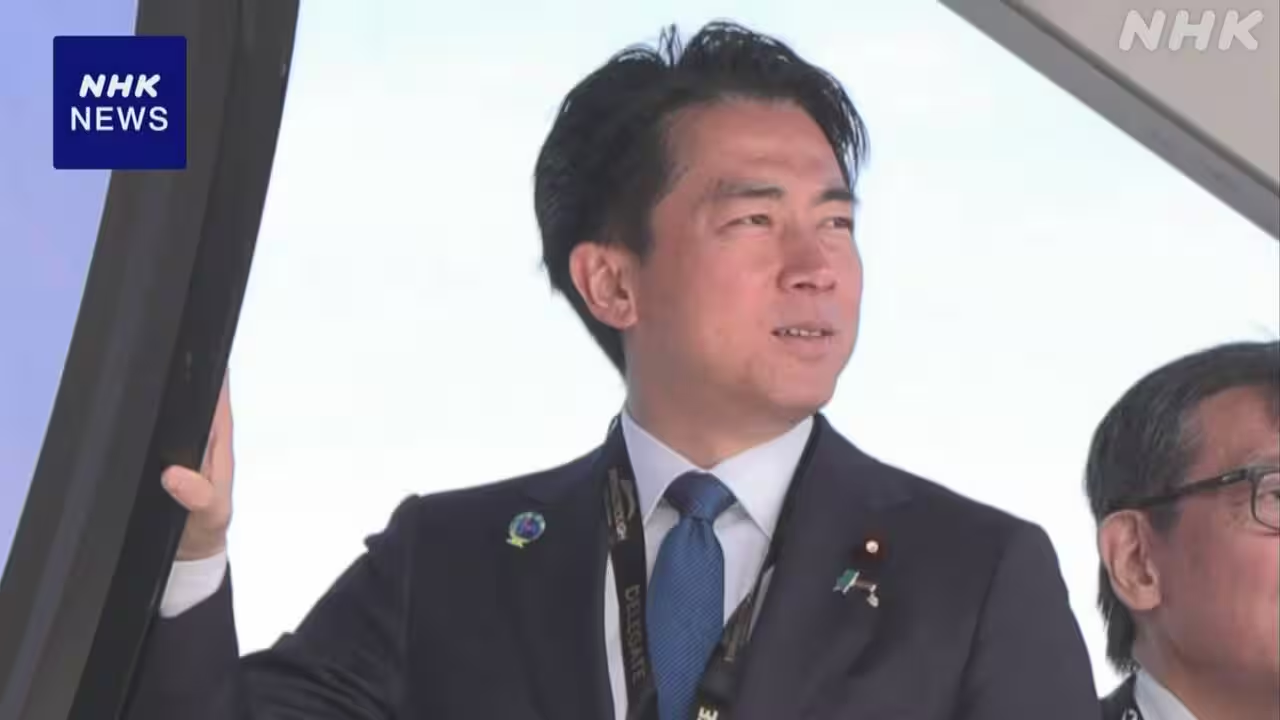
Japanese Defence Minister Koizumi has formally disclosed that Chinese and Russian naval vessels are conducting joint navigation operations in waters surrounding Japan. The revelation was made on the evening of 20 July 2026 during a lecture delivered in the United Kingdom, marking a significant escalation in the public articulation of regional security threats by the Japanese government.
Koizumi confirmed that both nations were carrying out live-fire exercises within Japan’s Exclusive Economic Zone (EEZ) over the preceding weekend. The EEZ, which extends 200 nautical miles from Japan’s baseline, grants the country special rights regarding the exploration and use of marine resources. The minister’s statement indicates that these military activities occurred directly within this jurisdictional zone, challenging Japan’s sovereign interests in maritime resource management.
The disclosure highlights a coordinated approach between Beijing and Moscow, described by Koizumi as "joint navigation operations." By conducting these drills simultaneously with live-fire components, the two navies are demonstrating interoperability and a shared capacity to operate in close proximity to Japanese territory. This development underscores the deepening strategic alignment between the two Asian powers in the context of broader geopolitical tensions.
The announcement comes as Koizumi is currently visiting the United Kingdom, suggesting an effort to inform international allies of the immediate security landscape. While the specific locations within the EEZ were not detailed in the report, the confirmation of live-fire exercises implies a high level of operational readiness and a departure from routine patrol activities. The Japanese government is treating this as a serious breach of maritime norms, given the aggressive nature of the drills.
This incident adds to the complex security environment Japan faces, occurring alongside other significant global events such as the World Cup final and political changes in the UK. However, the primary focus for Tokyo remains the direct assertion of military presence within its designated economic waters. The Japanese Ministry of Defence is expected to monitor these developments closely as part of its ongoing efforts to safeguard national security and maintain stability in the region.