Japan reports surge in heatstroke transports as summer heat intensifies
Official figures show a more than threefold increase in emergency transports for heatstroke, driven by the conclusion of the rainy season and sustained high temperatures across the country.
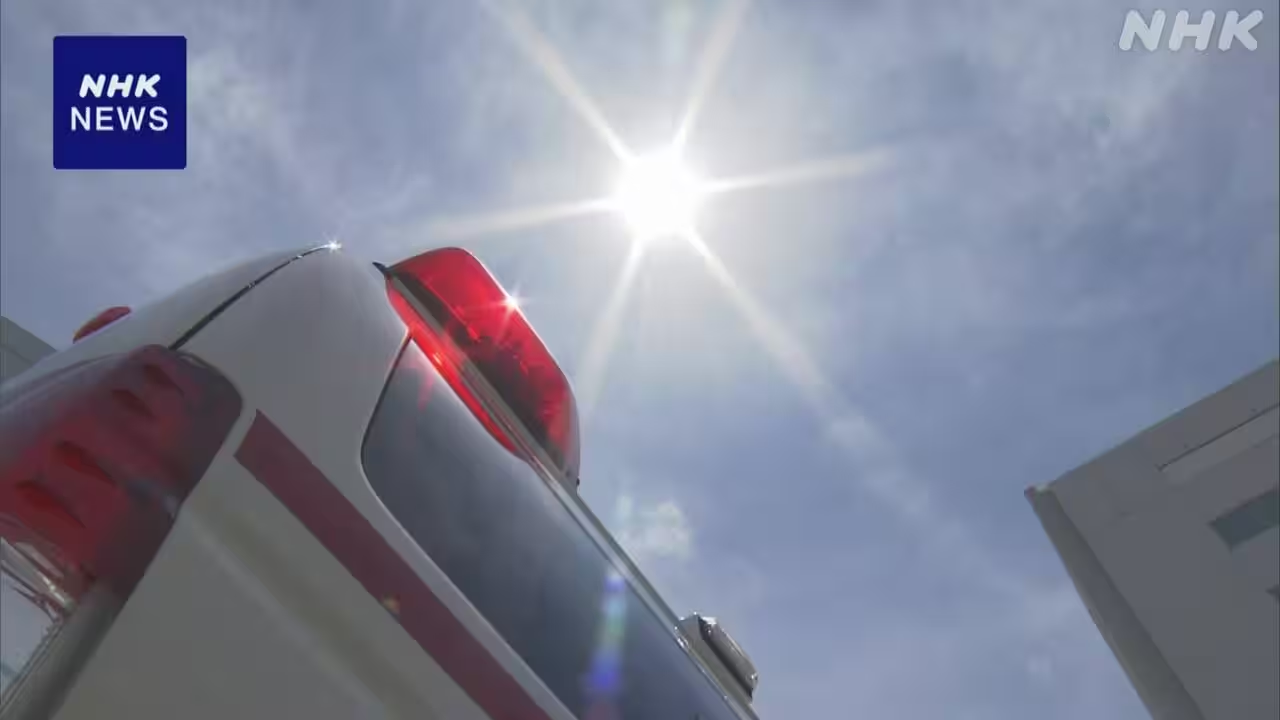
The Fire and Disaster Management Agency has reported a sharp rise in heatstroke-related emergency transports across Japan, with more than 4,500 individuals moved to medical facilities during the week ending 12 July 2026. This figure represents a more than threefold increase compared to the preceding week, highlighting a rapid deterioration in public health conditions as the country transitions into peak summer weather.
According to data compiled by the agency, the surge in cases coincides with the end of the rainy season, or tsuyu, in various regions. Officials cited the conclusion of this period and the subsequent continuation of high temperatures as primary contributing factors to the spike in heatstroke incidents. The sudden shift in weather patterns has placed significant strain on emergency response systems nationwide.
The statistics underscore the immediate impact of seasonal weather transitions on public safety. While the agency did not provide a precise breakdown of cases by region or demographic, the aggregate data indicates a widespread issue affecting multiple areas simultaneously. The rapid escalation from the previous week’s figures suggests that current preventive measures may be insufficient to cope with the intensity of the heat.
This week’s data stands in temporal distinction from earlier weather events reported in May 2026, which included forecasts for severe heat exceeding 30 degrees Celsius and the approach of Typhoon No. 6. Those earlier conditions, which affected regions from Kyushu to the Kanto and Chubu areas, are not directly linked to the current heatstroke surge, which is instead driven by the specific meteorological conditions following the rainy season’s end.
As temperatures remain high, the Fire and Disaster Management Agency’s findings serve as a critical indicator of the ongoing health risks associated with Japan’s summer climate. The data reflects the broader challenge of managing public health during periods of extreme weather, requiring sustained attention from both government bodies and local communities to mitigate the impact of rising temperatures.