Japan proposes direct payments for refundable tax credit scheme
A conceptual draft presented by Japan’s National Council aims to streamline social welfare delivery, though final legislative details remain undefined.
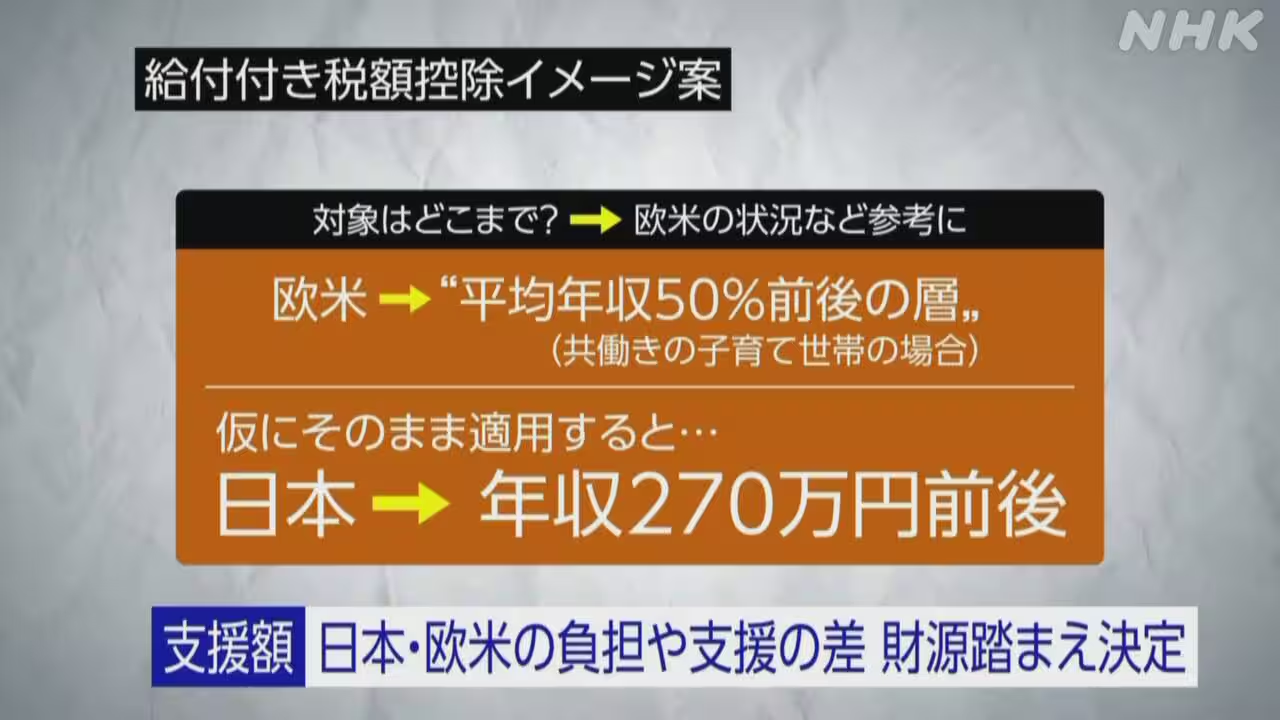
A working group within Japan’s cross-party National Council has presented a conceptual draft for the design of a refundable tax credit system, signalling a shift in how the government intends to deliver financial support to households. The proposal, unveiled on 27 May 2026, centres on consolidating the benefit into a direct payment mechanism rather than maintaining a complex tax credit structure.
The draft, described as an "image plan," was developed during a practical working group meeting of the National Council. According to the proposal, unifying the benefit into direct payments is intended to facilitate early and smooth implementation of the scheme. This approach aims to simplify the delivery of support, moving away from traditional tax credit models that may involve more intricate administrative processes.
Attendees at the meeting expressed understanding of the consolidation strategy. The National Council, a cross-party body tasked with policy discussions, has been actively debating social welfare reforms. This latest development follows the release of a summary of key debate points on 8 May 2026, indicating a continued and structured progression of the policy discussions.
While the conceptual draft outlines the mechanism for delivery, significant details regarding the final legislation remain undefined. The specific income thresholds, payment amounts for individuals, and budget allocations have not been disclosed in the current report. It remains unclear whether the direct payment model will be adopted in its entirety or if it will be modified during subsequent parliamentary deliberations.
The proposal emerges against a backdrop of broader economic pressures. On the same day as the working group meeting, Bank of Japan Governor Ueda noted concerns regarding rising oil prices and fluctuations in wages and exchange rates. These economic factors may influence the final design or implementation timeline of the refundable tax credit scheme as it moves through the legislative process.