Japan passes Middle East-linked supplementary budget as ruling party targets parliamentary reform
The Japanese parliament approved the 2026 supplementary budget on 5 June to address tensions in the Middle East. With the session ending in just over a month, the ruling party must now secure opposition support in the House of Councillors to implement its coalition pledge to reduce the number of seats in the lower house.
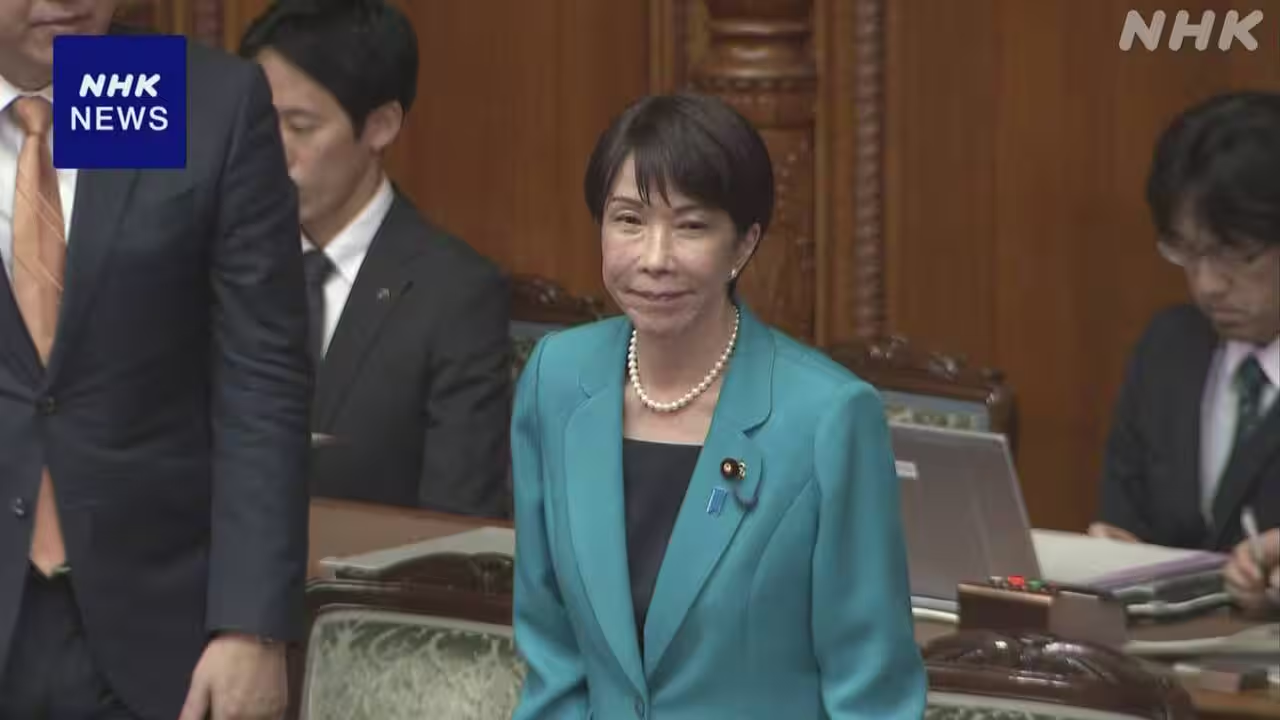
Japan’s parliament passed the supplementary budget for the current fiscal year on 5 June, a legislative move directly linked to the ongoing situation in the Middle East. The approval came via a majority vote, allowing the government to allocate resources in response to regional instability. However, the passage of the budget marks only the beginning of a critical political phase as the current Diet session enters its final month.
With just over a month remaining in the session, the ruling party is prioritising the fulfilment of its coalition agreement. A central component of this agreement is the reduction of the number of seats in the House of Representatives. The government aims to advance this structural reform before the session concludes, viewing it as a key policy achievement for the current administration.
The path to achieving this legislative goal is complicated by the composition of the upper house. While the ruling party holds a majority in the lower house, it faces a minority status in the House of Councillors. Consequently, the immediate focus for policymakers is determining how to secure the necessary cooperation from opposition parties to pass the seat reduction plan through the upper chamber.
NHK News Japan reported that the ruling party’s ability to deliver on its coalition promises now hinges on its diplomatic efforts within the House of Councillors. The challenge lies in negotiating with opposition groups who do not share the ruling coalition’s immediate priority on lower house seat reduction. Success will depend on whether the ruling party can build a sufficient cross-party consensus to amend the electoral framework before the session ends.
The supplementary budget’s passage underscores the government’s need to address external security pressures while simultaneously managing internal political restructuring. As the Diet session nears its close, the ability of the ruling party to navigate the minority position in the upper house will define the legislative legacy of the current fiscal year.