Japan parliament approves imperial law revision maintaining male-only succession
The first major update to the Imperial Household Law since 1947 prioritises dynastic stability over gender equality, leaving Princess Aiko excluded from the line of succession.
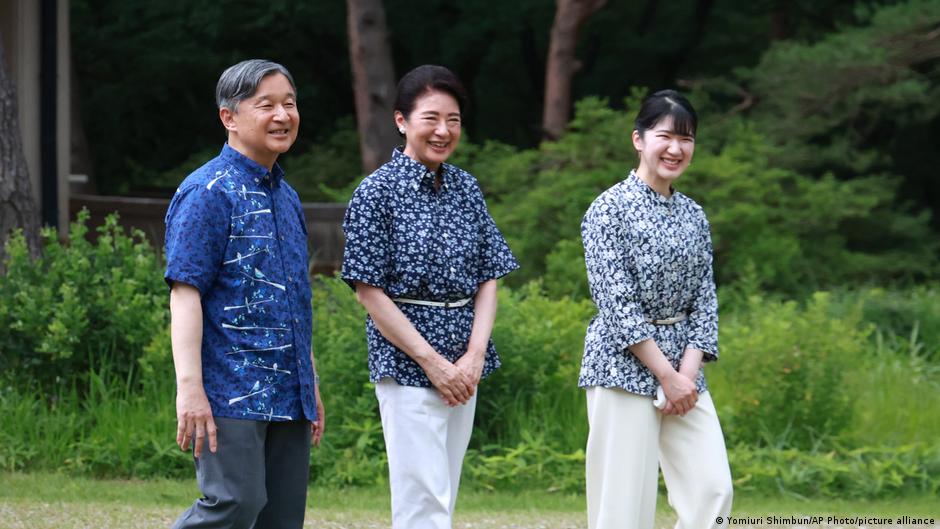
Japan’s parliament has approved the first major revision of the Imperial Household Law since 1947, a legislative move designed to address the shrinking ranks of the imperial family by allowing male members of former collateral branches to be readmitted via adoption. Despite broad public support for allowing female emperors, the new legislation preserves the traditional male-only succession line, meaning Princess Aiko, the daughter of Emperor Naruhito, cannot inherit the throne. The measure, supported by Prime Minister Sanae Takaichi, aims to ensure stability but has drawn criticism from opponents who argue it disregards gender equality and historical precedents of female rule.
Under the new law, men from former collateral branches may enter the imperial family through adoption if they are at least 15 years old. These branches lost their imperial status after Japan’s surrender at the end of World War II, and their members have lived as private citizens since then. Adoptees themselves do not receive succession rights; however, their future male-line sons will be eligible for the throne. Women are still not legally allowed to ascend to the throne, a decision that has sparked debate regarding the alignment of imperial tradition with modern democratic values.
The current succession crisis centres on the limited number of eligible male heirs. Emperor Naruhito, who acceded to the throne in 2019, has only one child, 24-year-old Princess Aiko. Instead, Naruhito’s younger brother, Prince Akishino, is considered the crown prince, with his son, Prince Hisahito, second in line. At present, there are only three candidates who could theoretically succeed the 66-year-old Naruhito: his brother, Crown Prince Akishino (60), Prince Hisahito (19), and Naruhito’s uncle, Prince Hitachi (90).
Opinion polls indicate that the compromise reached by parliament is unpopular with much of the wider public. A nationwide Mainichi Shimbun poll conducted in June found that 73% of respondents supported a female emperor, compared with 6% who opposed the idea. Specifically, 40% of respondents supported both a female emperor and female-line succession, while 33% supported a female emperor but opposed female-line succession. This sentiment contrasts sharply with the legislative outcome, which maintains the exclusion of women from the succession line.
Sven Saaler of Sophia University in Tokyo told Germany’s dpa news agency that the amendment demonstrates that gender equality is not among the priorities of the current government. An editorial in Japan’s liberal Asahi Shimbun newspaper challenged statements made during parliamentary debate that male-line succession represented an unbroken 2,600-year tradition, arguing that parts of the early imperial lineage are rooted in mythology rather than verifiable history. The newspaper noted that European monarchies increasingly adopted gender-neutral succession as women gained political rights after the two world wars.
Supporters of the amendment reject the claim that male-line succession discriminates against women. The conservative Sankei Shimbun supported the amendment, arguing that imperial succession had always followed the male line and was therefore not a matter of gender discrimination. It warned against abandoning that tradition, citing uncertainty because Prince Hisahito is the only eligible male heir of his generation. Kenichi Kawamura, a political adviser, suggested that allowing married female royals to remain in the family could be a practical way of ensuring stable imperial succession, though he supported adoption from former imperial branches in principle.