Japan Mobilises Emergency Resources After Strong Earthquake Strikes Aomori
Prime Minister Takaichi orders full disaster response as authorities confirm no tsunami risk following the 07:30 local time event on 25 June 2026.
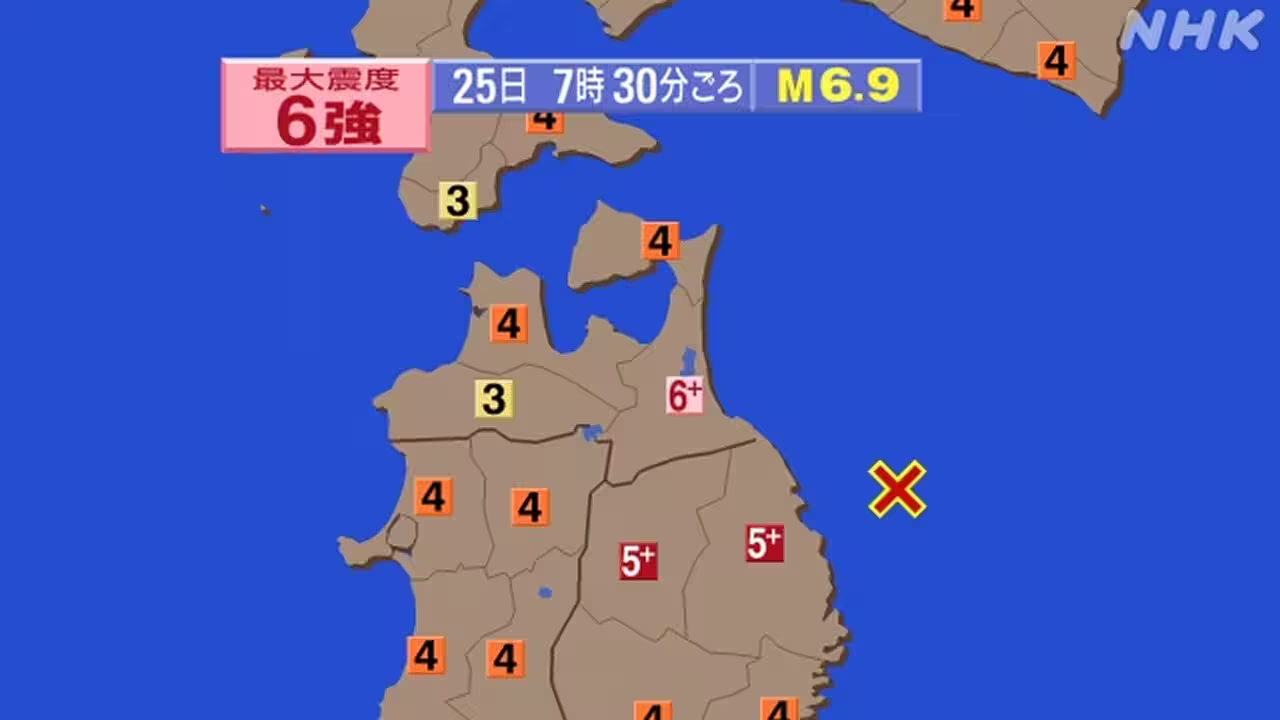
A strong earthquake registering a seismic intensity of 6-strong struck Aomori Prefecture in Japan at approximately 07:30 local time on 25 June 2026. The Japan Meteorological Agency is scheduled to hold a press conference at 09:30 to provide further details on the seismic activity, which has prompted an immediate government response.
Prime Minister Takaichi announced that the administration is mobilising all available resources for emergency disaster response. The government’s priority remains the coordination of relief efforts and the assessment of infrastructure integrity across the affected region, with officials emphasising a comprehensive approach to managing the aftermath of the tremor.
Transport networks experienced immediate disruption as a result of the shaking. Services on the Tohoku and Akita Shinkansen lines were suspended, and highway traffic was affected across the region. Authorities have not yet itemised specific delays or closures on the highways, but the suspension of rail services indicates significant operational impacts for commuters and freight in the Tohoku area.
Concerns regarding secondary hazards were quickly addressed by officials. While minor sea level fluctuations may occur along the coast, authorities confirmed there is no risk of tsunami damage. This assessment aligns with standard protocols following significant seismic events in the region, aiming to prevent unnecessary panic while maintaining vigilance for coastal changes.
Critical infrastructure, including nuclear facilities, reported no abnormalities. The Tomari Nuclear Power Plant and other related sites were checked and found to be operating normally. Additionally, mobile phone networks remained operational, with major carriers confirming no impact on communications and offering disaster message board services to assist residents.
The event occurs 15 years after the Great East Japan Earthquake and the subsequent nuclear accident, a timeline that has heightened sensitivity to seismic risks in the region. Despite this historical context, current data from NHK News Japan and government sources indicates that the immediate threat to public safety and critical infrastructure has been contained, with emergency protocols functioning as designed.