Japan Meteorological Agency suspends aftershock warnings after M6.9 quake
The Japan Meteorological Agency confirmed on June 25 that no aftershock warning information would be issued following a magnitude 6.9 earthquake off the coast of Iwate Prefecture, despite strong shaking recorded in Aomori.
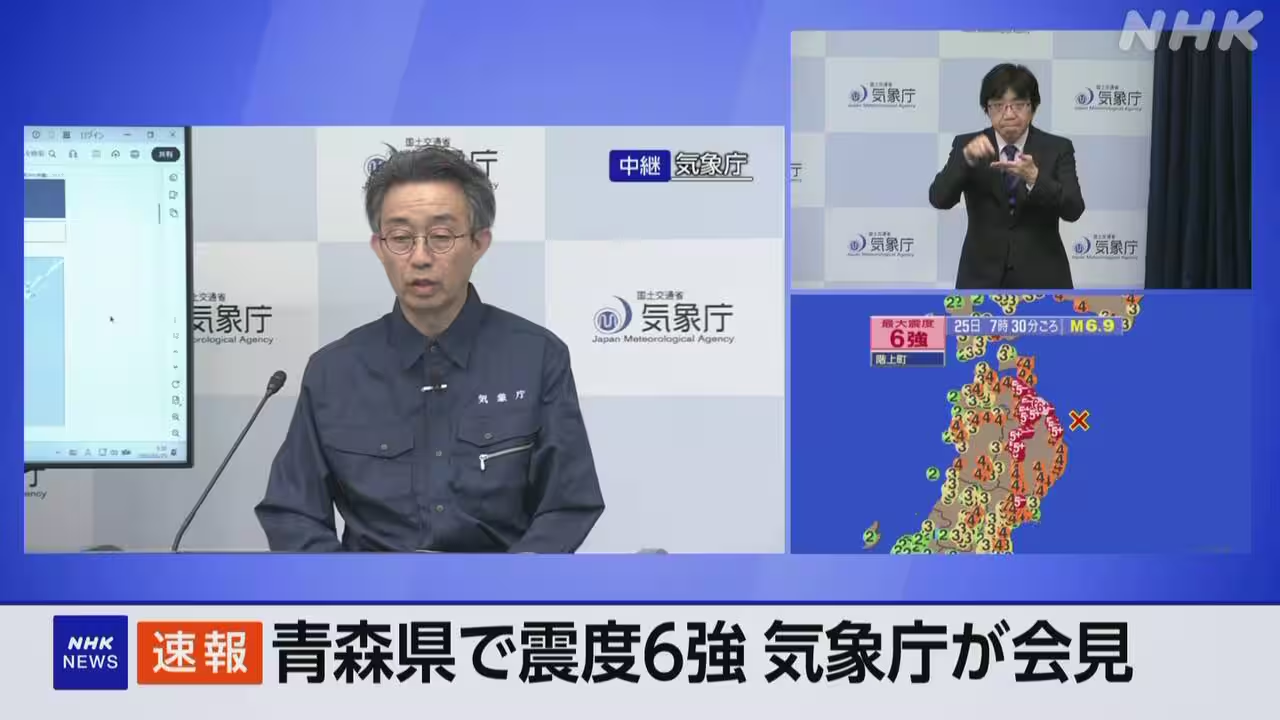
The Japan Meteorological Agency held a press conference at 09:30 JST on June 25 to address the seismic activity that occurred approximately two hours prior off the coast of Iwate Prefecture. Ayuki Ebata, Chief of the Earthquake and Tsunami Monitoring Division, confirmed that the agency would not issue aftershock warning information for areas that experienced strong shaking. This decision represents a notable departure from standard protocol, which typically involves issuing such warnings for earthquakes exceeding magnitude 6.5 in regions with significant intensity.
The earthquake registered a seismic intensity of 6-strong in Aomori Prefecture, indicating severe shaking capable of causing substantial structural damage. Long-period ground motion at Level 2 was detected across a broader region, including Aomori, Hokkaido, Iwate, Miyagi, and Akita prefectures. Despite the intensity of the tremors, authorities confirmed there is no risk of tsunami damage, and no tsunami advisories were issued for the affected coastal areas.
Infrastructure and public safety assessments indicated no immediate critical failures. Nuclear facilities, including the Tomari and Hamaoka plants, reported no abnormalities following the event. Mobile communications networks remained unaffected, with major carriers continuing to provide disaster message board services to assist residents. However, transport services were disrupted, with the Tohoku and Akita Shinkansen services suspended and highway traffic impacted by the seismic event.
In response to the incident, Prime Minister Takaichi announced that the government is mobilising resources for a full-scale emergency response. The administration has prioritised the coordination of disaster relief efforts and the monitoring of potential secondary risks, although the specific logistical details of the response were not elaborated upon during the initial briefing.
Market indicators showed a swift recovery following the initial shock. By 09:31 JST, the Nikkei Stock Average had risen by over 2,000 yen, returning to the 71,000 yen range. This financial stability contrasts with the operational disruptions in transport and the administrative shift in seismic warning protocols implemented by the meteorological agency.