Japan Meteorological Agency issues highest-level flood warning as Typhoon 6 intensifies disaster risk
The Japan Meteorological Agency held a press conference on June 3, 2026, to detail the severity of flooding in Wakayama Prefecture, where a major disaster is now considered imminent.
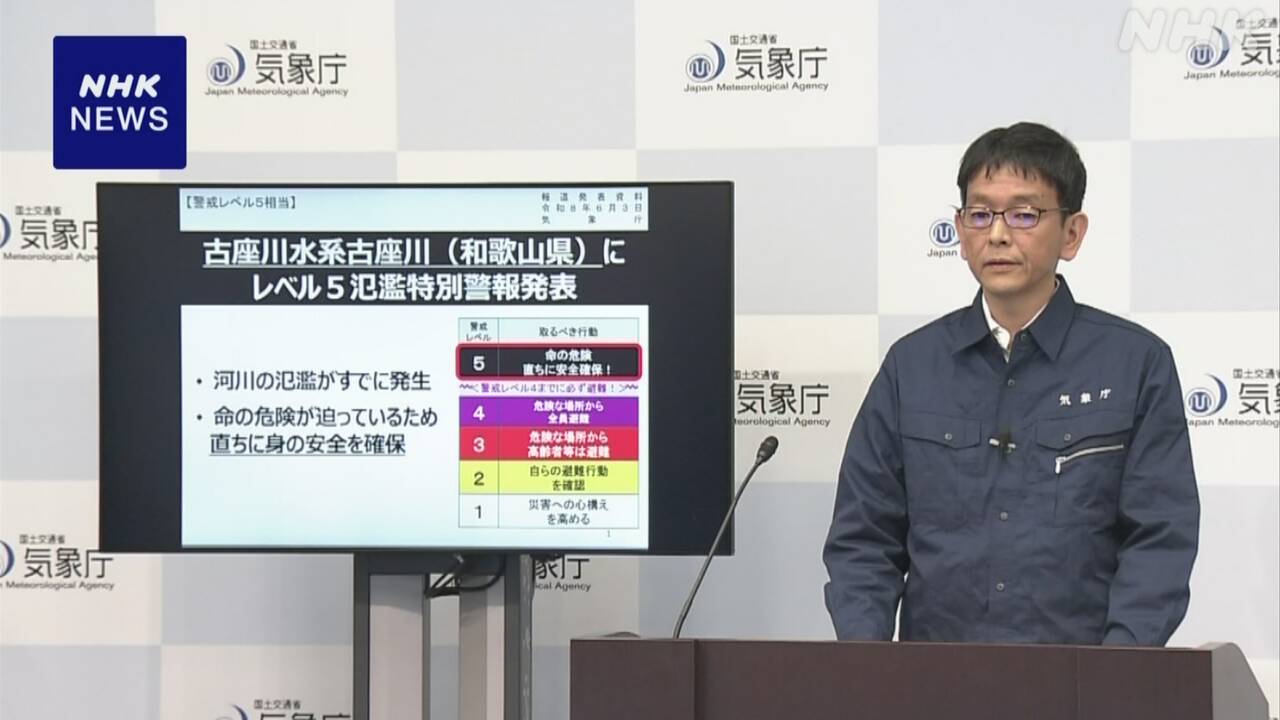
The Japan Meteorological Agency (JMA) issued a Level 5 Flood Special Warning on June 3, 2026, for the Kozagawa River flowing through Kozagawa Town and Kishimoto Town in Wakayama Prefecture. The warning, triggered by the impact of Typhoon No. 6, signifies that a major disaster is already occurring or is imminent. In response to the escalating threat, local authorities in Kozagawa Town issued an "Emergency Safety Assurance" order covering 16 districts early on the morning of June 3.
To address the public and media regarding the severity of the situation, the JMA held a press conference starting at 6:30 am on June 3. During the briefing, officials focused on explaining the specific warning thresholds, known as警戒 points, and the technical details underpinning the decision to issue the highest level of flood alert. The agency emphasized the critical nature of the current hydrological conditions in the region.
The extreme weather event is driven by a line-shaped precipitation band associated with Typhoon No. 6, which has been developing across the Shikoku region. The JMA had previously issued a prediction for the imminent arrival of this band on June 2, covering parts of Kochi, northern Tokushima, Wakayama, and Mie Prefectures. By the early hours of June 3, the agency confirmed the band's development with a meteorological disaster warning for southern Tokushima Prefecture.
The intensity of Typhoon No. 6 has already resulted in significant infrastructure disruptions. Approximately 17,000 households across Shikoku experienced power outages in the early morning of June 3. Beyond the immediate flood risk in Wakayama, the typhoon is causing broader logistical challenges, with potential impacts reported on the Tokaido Shinkansen and flight cancellations at Haneda Airport.
As the situation evolves, the focus remains on the immediate safety of residents in the affected municipalities. The Level 5 warning represents the maximum level of alert, indicating that life-threatening flooding is underway or about to occur. Authorities continue to monitor the precipitation band's movement and the river's water levels as the typhoon continues to affect the region.