Japan Meteorological Agency issues flood warnings for Kanto region amid unstable atmospheric conditions
Authorities urge caution regarding potential flooding, river surges, and severe thunderstorms across the region.
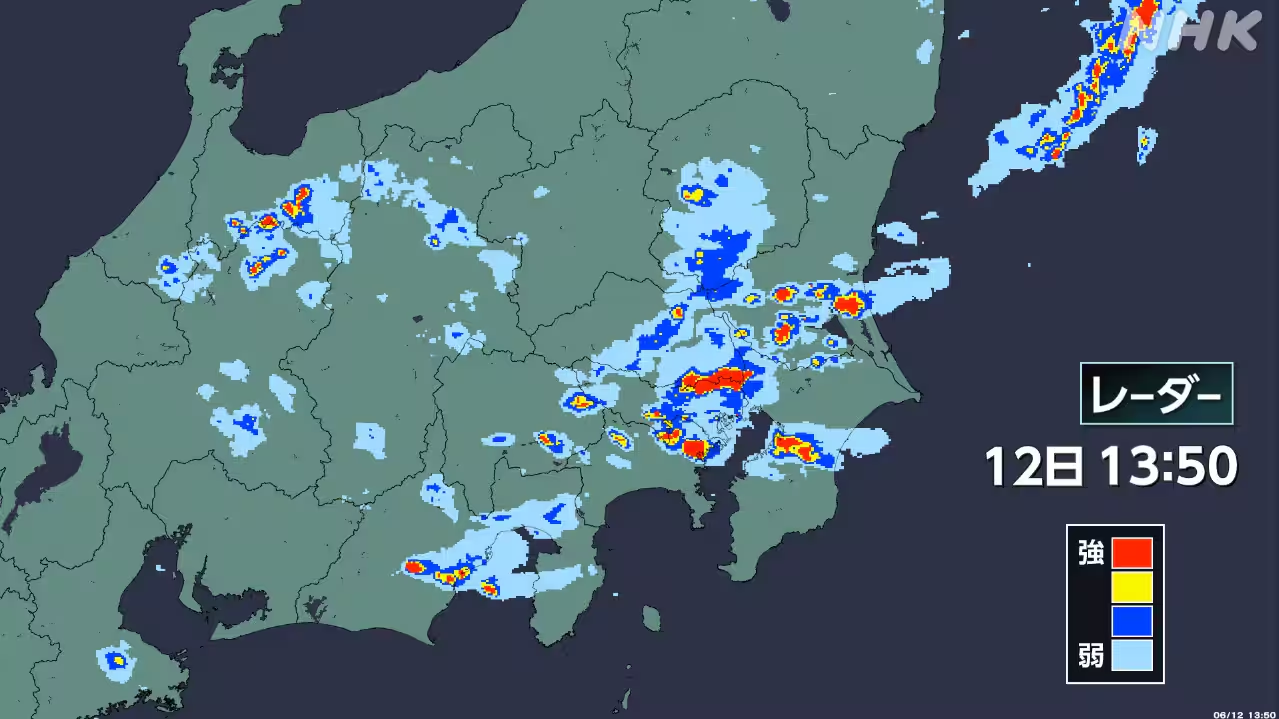
The Japan Meteorological Agency has issued heavy rain and flood warnings for the Kanto region on 12 June 2026, citing unstable atmospheric conditions driven by cold air in the upper atmosphere. The meteorological body reported that these conditions have facilitated the rapid development of rain clouds, resulting in intense rainfall across the area.
Officials have cautioned residents to remain vigilant against potential flooding in low-lying areas and sudden rises in river levels. In addition to the risk of inundation, the agency has warned of severe thunderstorms and tornadoes, urging local authorities and the public to monitor conditions closely as the weather system evolves.
This event follows a period of significant meteorological disruption earlier in the month. On 2 June 2026, the Japan Meteorological Agency issued a "line-shaped precipitation band imminent prediction" for parts of Kochi, northern Tokushima, Wakayama, and Mie, signalling the potential for concentrated rainfall bands.
The situation escalated on 3 June 2026, when approximately 17,000 households across the Shikoku region experienced power outages due to severe weather. Later that morning, the agency confirmed the development of a line-shaped precipitation band in southern Tokushima Prefecture, issuing a meteorological disaster warning for the area.
In response to the escalating risks in Tokushima, an emergency safety assurance order was issued for 31 households, affecting 63 people in the Chosei district of Anan. The current warnings for the Kanto region highlight the ongoing volatility in Japan’s weather patterns, with the Japan Meteorological Agency continuing to track the instability in the upper atmosphere.