Japan Meteorological Agency Issues Dual Warnings as Kyushu Breaks Temperature Records
The Japan Meteorological Agency has issued severe warnings for landslides and flooding as temperatures in Kyushu exceed 40 degrees Celsius for the first time in recorded history.
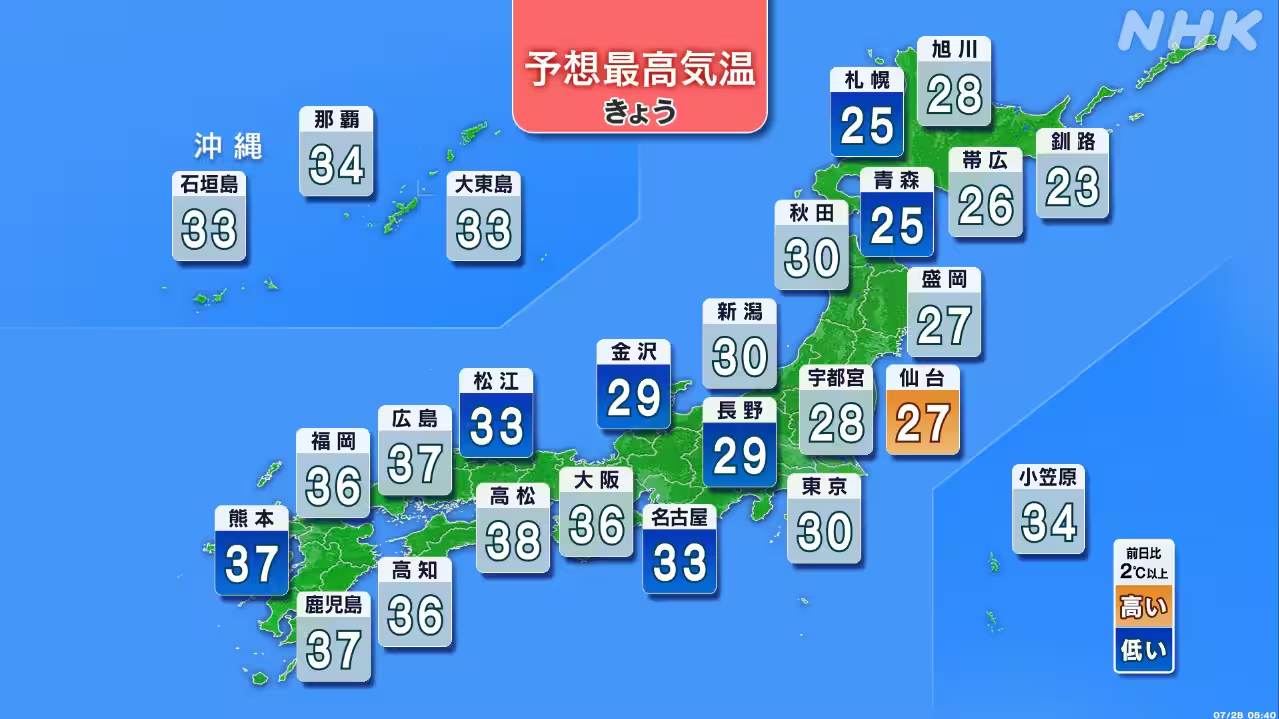
The Japan Meteorological Agency has issued urgent warnings for widespread atmospheric instability spanning from the Tohoku region to Kyushu on 28 July 2026. The forecast outlines a dual threat of dangerous heat and extreme rainfall, prompting authorities to urge caution against landslides and flooding in low-lying areas. The instability is attributed to the influence of a developing low-pressure system, which is expected to intensify following the emergence of Typhoon 13 on the previous day.
In a significant climatological development, western Japan experienced a sharp rise in temperatures on 27 July 2026. Kyushu recorded temperatures above 40 degrees Celsius for the first time since statistical records began. The Japan Meteorological Agency has forecast that this dangerous heat will persist, particularly affecting the western regions, compounding the risks posed by the incoming weather systems.
Concurrent with the heatwave, the agency has issued specific alerts for localized extremely heavy rain. As of 2:30 am on 28 July, approximately 100 millimetres of intense rain fell in one hour near Nanto Town in Toyama Prefecture. Based on this data, the Japan Meteorological Agency issued a "Recorded Short-Duration Heavy Rain" warning for the area, citing the imminent danger of disaster-related incidents.
A similar warning was subsequently issued for Itoigawa City in Niigata Prefecture. This alert was generated following radar analysis that indicated comparable conditions of intense, short-duration rainfall. The agency emphasized that these warnings were necessary due to the immediate threat of disasters associated with the heavy rainfall, urging residents in these specific locales to take immediate precautionary measures.
The broader forecast for 28 July indicates that the entire region from Tohoku to Kyushu will face highly unstable atmospheric conditions. While the heavy rain is expected to be localized, the potential for widespread impact remains high. Authorities are monitoring the situation closely as the weather patterns evolve, with the exact duration and intensity of the rainfall subject to change as the atmospheric instability develops further.