Japan Meteorological Agency Admits System Failure During Typhoon 6 Warnings
The national weather authority confirmed on 2 June 2026 that a malfunction in its disaster warning system failed to release specific high-risk weather alerts during active typhoon conditions in western Kochi.
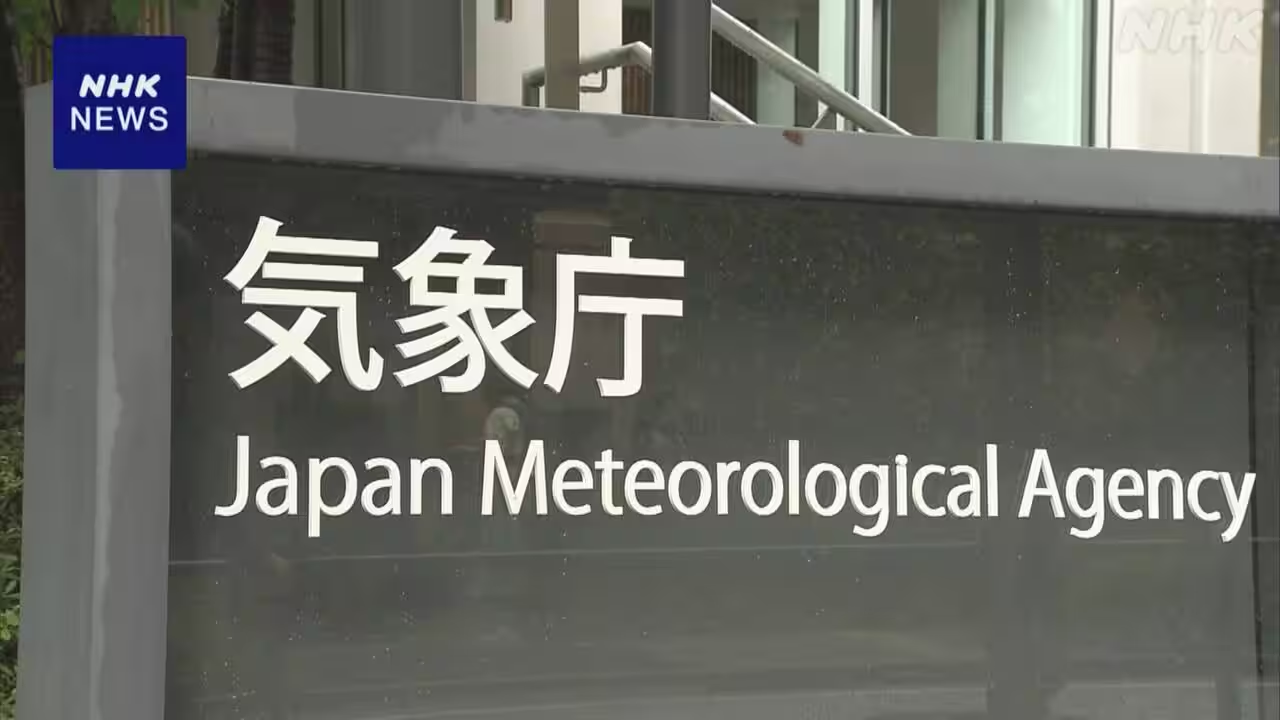
The Japan Meteorological Agency announced on 2 June 2026 that a technical malfunction within its weather disaster warning system prevented the proper issuance of critical alerts. The agency confirmed that 'linear precipitation band imminent prediction' and 'linear precipitation band occurrence' warnings were not appropriately released during severe weather events in western Kochi Prefecture on the afternoon of the same day.
The failure occurred during two specific timeframes, approximately 5:30 pm and 7:00 pm, when conditions were conducive to the formation of linear precipitation bands. These weather phenomena are significant in Japan, often associated with heavy rainfall and flash floods, making timely and accurate warnings essential for public safety and disaster mitigation.
While the Japan Meteorological Agency is the primary national authority responsible for issuing weather and disaster warnings, the agency acknowledged that the system glitch impacted the automated release of these specific alerts. The malfunction affected the timing and accuracy of the notifications during active weather events, raising questions about the reliability of the automated components of the national warning infrastructure.
At the time of the incident, Typhoon 6 was active in the region, contributing to the complex meteorological landscape. Although other alerts were issued, such as landslide disaster warning areas in Ito City, Shizuoka, the specific failure in Kochi Prefecture highlights a vulnerability in the system's ability to disseminate high-priority information during concurrent weather crises.
The specific cause of the system glitch, whether stemming from a software bug or hardware failure, has not been disclosed by the agency. Furthermore, the full extent of the malfunction beyond the specified afternoon in Kochi Prefecture remains undetailed, leaving uncertainty regarding whether other regions or timeframes were similarly affected by the technical error.