Japan launches world’s first trial sale of fully farmed eels
The initiative marks the debut of eels bred entirely from eggs in a controlled environment, moving away from reliance on wild juvenile stocks.
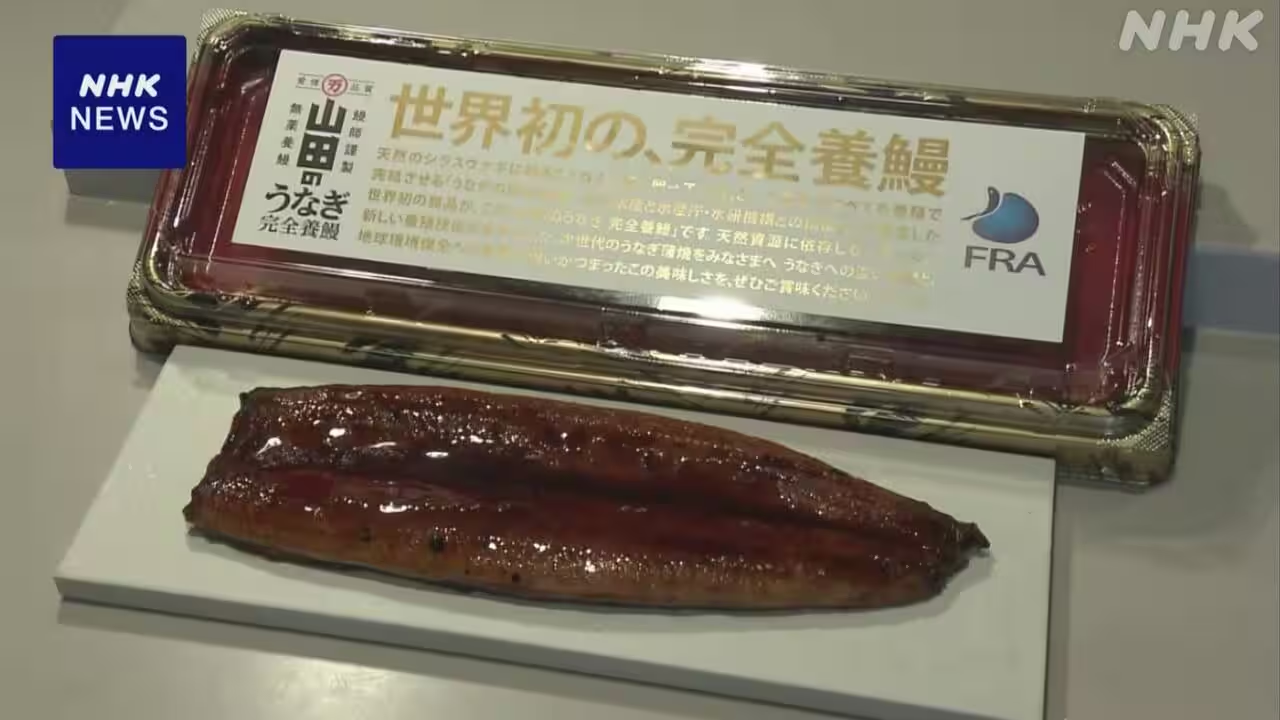
Japan has commenced the world’s first trial general sale of eels produced through "complete farming," a method that involves hatching eggs and raising the fish to maturity in a controlled environment. The trial began on 29 May 2026, marking a significant shift in aquaculture practices as the industry seeks to decouple production from the capture of wild juvenile eels, known as glass eels.
According to NHK News Japan, the initiative is designed to address long-standing concerns regarding the extinction risks facing wild eel populations. By establishing a closed-loop breeding system, the project aims to protect natural resources while simultaneously ensuring a stable supply of eels for domestic consumption and international markets.
The development carries substantial weight for the Japanese food sector, where eel is a culturally significant ingredient. Traditional aquaculture has historically depended on sourcing wild juveniles, a practice that has drawn criticism for contributing to population declines. Complete farming offers a potential alternative, though its scalability and long-term viability remain subjects of observation as this is the first time such products have reached the general public.
Market response to the trial will be closely monitored, particularly regarding pricing, consumer acceptance, and availability beyond the initial phase. While the stated objectives include resource protection and supply stability, these outcomes are yet to be proven at a commercial scale. The trial serves as a critical test case for the aquaculture industry’s ability to sustain production without depleting wild stocks.
As the trial proceeds, stakeholders in the fisheries and food industries will assess whether complete farming can serve as a viable model for other species facing similar conservation challenges. The success of this initiative could influence future policy directions and investment in sustainable aquaculture technologies across Asia and beyond.