Japan issues severe weather warnings as Typhoon 7 approaches amid rainy season damage
Heavy rain linked to an active rainy season front has already caused damage in Kyushu, while Typhoon 7 is forecast to move rapidly toward the main islands later this week.
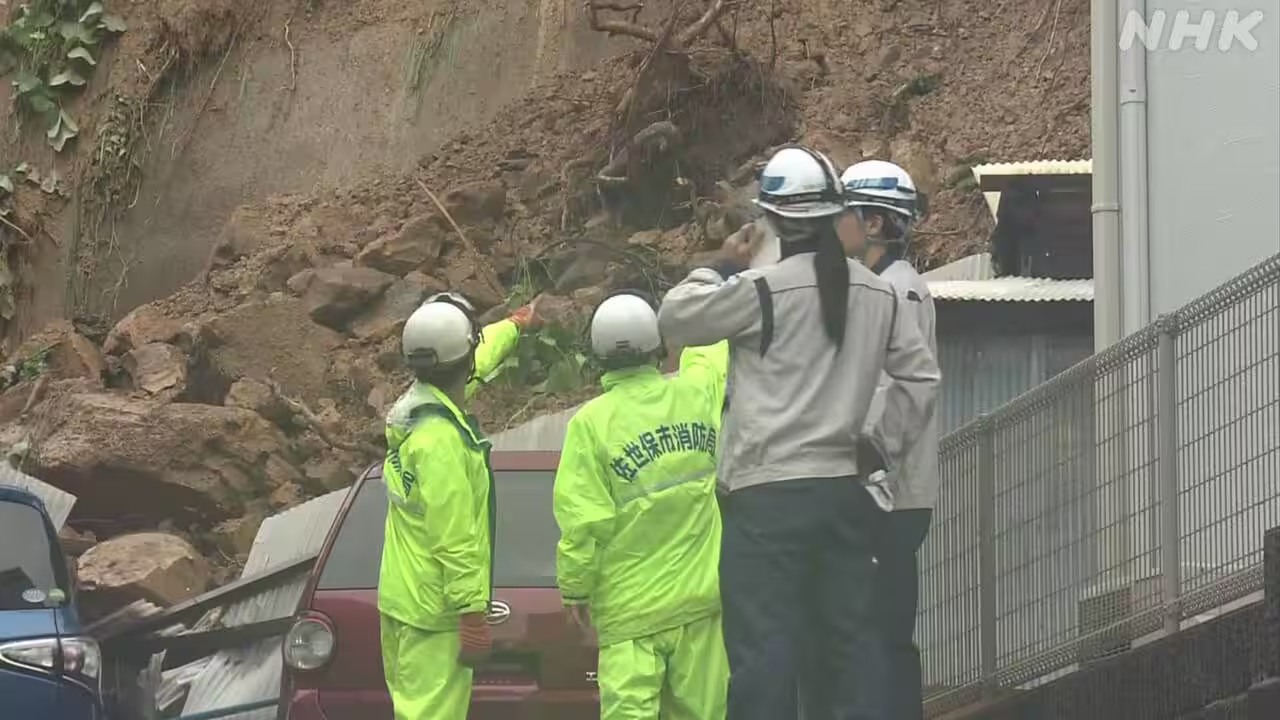
The Japan Meteorological Agency has issued disaster meteorological information warnings for heavy rain across western and eastern Japan, urging strict caution from residents as the country contends with compounded weather threats. The alert, released on 25 June 2026, remains in effect until around 27 June, as authorities monitor the trajectory of Typhoon 7 and the intensifying activity of the stagnant rainy season front.
Damage has already been reported in Kyushu, where the rainy season front has produced significant rainfall. According to reports from NHK, the front’s activity has intensified, contributing to the current hazardous conditions. The meteorological agency highlighted the need for heightened vigilance as the weather systems continue to evolve, with the potential for further infrastructure disruption and safety risks across the affected regions.
Typhoon 7 is currently approaching Okinawa and the Amami Islands, a movement expected to continue through 26 June. Forecast models indicate that the storm will accelerate after passing these southern territories, moving rapidly toward Kyushu, Shikoku, Kinki, Tokai, and the Kanto/Koshinetsu regions. This projected path places a broad swath of the country’s population and critical infrastructure in the storm’s potential impact zone.
The convergence of the typhoon and the active rainy season front presents a complex challenge for disaster preparedness. While the Japan Meteorological Agency has provided updated warnings, the exact trajectory and speed of Typhoon 7 remain subject to change as it nears landfall. Officials are advising residents in the path of the storm to review evacuation plans and secure essential supplies ahead of the expected arrival.
This meteorological event occurs against a backdrop of other recent incidents, including a magnitude 8.2 earthquake that triggered a tsunami advisory for Japan’s Pacific coast. However, the Japan Meteorological Agency has clarified that the seismic activity and the subsequent tsunami advisory are separate events unrelated to the current weather conditions. Authorities continue to monitor both the meteorological and geological situations independently to ensure public safety.